Bookkeeping Basics Every Pilates Studio Owner Must Know
Class packs, memberships, and multiple platforms create unique accounting challenges. Here's how to avoid the costly mistakes most new studio owners make.


Key Takeaways
- Revenue timing creates accounting complexity: When a client buys a $250 ten-pack, cash accounting records all revenue immediately while accrual accounting recognizes $25 per class as the pack is used—most boutique Pilates studios can use simpler cash-basis accounting that matches how money actually moves.
- Multiple platforms multiply reconciliation problems: Revenue flows through membership software like Mindbody, payment processors, and bank accounts with different timing, batching, and reporting methods, making monthly reconciliation the single most critical bookkeeping task.
- Equipment purchases require different treatment: A reformer costing $3,000-$5,000 is a fixed asset tracked on your balance sheet and depreciated over time, not an expense like yoga mats—missing this distinction costs you major tax deductions.
- Instructor misclassification carries serious risk: The IRS has been cracking down on studios treating employees as independent contractors, with consequences including back taxes, penalties, and potential lawsuits from staff seeking lost wages or benefits.
- Separate business accounts from day one: A dedicated business checking account and credit card simplify tax filing, enable accurate budgeting, and prevent the nightmare of untangling personal and business expenses later.
- Seasonal cash flow requires planning: Summer and December attendance drops while January and September bring enrollment surges—maintaining 3-6 months of operating expense reserves protects studios through predictable seasonal dips.
Why Studio Bookkeeping Is Different From Other Small Businesses
Pilates studios are booming. StudioGrowth reported that 80% of new signups in February 2026 were boutique Pilates studios, reflecting the fastest-growing segment in boutique fitness. Yet most new studio owners discover quickly that fitness bookkeeping isn't generic small-business accounting.
The fundamental challenge: revenue flows through multiple systems before hitting the bank, including membership platforms, class packs, personal training invoices, payment processors, chargebacks, refunds, and timing differences. When a client purchases an annual contract, the IRS and GAAP require you to recognize revenue as earned monthly over the contract term, not all at once. Get it wrong and your January profit-and-loss statement looks artificially inflated from New Year's resolution annual sign-ups while February shows a loss despite steady attendance.
Cash vs. Accrual Accounting: Which One You Actually Need
Here's the scenario that confuses every new studio owner: A client buys a 10-pack for $250 in January. Cash-basis accounting records $250 of revenue on the sale date, matching when money lands in your bank. Accrual-basis accounting recognizes $25 per class as the pack gets used over the next three months.
A studio doing $400,000 annually on class packs might show exceptional January revenue from three prepaid teacher trainings, then terrible February numbers because nothing new sold while existing packs got used. Cash-basis profit-and-loss statements exaggerate these swings while accrual smooths them.
For most boutique Pilates studios in 2026, cash basis works fine. It matches how money actually moves and aligns with how your tax return gets filed. Financially healthy studios should generate 70-80% of revenue from recurring memberships and class packages, with average monthly revenue per member ranging $100-$200 depending on market and membership structure. Cash accounting handles this model cleanly when billing occurs consistently—problems only show up with mid-month prorations, inconsistent discounts, or deferred revenue complications.
The Platform Reconciliation Trap
Most Pilates studios run on Mindbody, with Pike13 and WellnessLiving as common alternatives. Each platform tracks sales differently, batches deposits differently, and reports revenue differently. When you add retail sales, workshop fees, private sessions, and teacher training programs, you have four to six revenue streams hitting your bank account through different payment processors on different schedules.
Monthly reconciliation becomes the single most critical bookkeeping task. You're matching what your scheduling software says you sold against what actually deposited in your bank account, accounting for processing fees, refunds, chargebacks, and timing gaps. When choosing software, look for dual functionality that syncs sales and billing data from gym management software with accounting software to minimize errors and save time on manual data entry.
Common Platform Integration Issues
Members billed on the first of the month for that month create clean timing. Problems emerge with mid-month billing, prorated memberships, or when discounts and credits get applied inconsistently across systems. A $150 monthly membership charged on the 15th might show as June revenue in Mindbody but deposit in July in your bank statement, creating a reconciliation gap that compounds monthly if not tracked.
Critical Mistakes New Studio Owners Make
Common mistakes include forgetting small expenses like a $10 yoga mat or $20 Facebook ad that add up over time, and misclassifying transactions so owners miss deductions. New gym owners often use personal finances for initial purchases and setup fees, causing confusion at tax time if the behavior continues.
The fix is immediate: Open a business checking account and credit card before you buy anything. All business expenses go through business accounts. This single change makes budgeting easier and simplifies tax filing dramatically. Many small business owners make the mistake of using Excel to manage books, which is prone to errors and time-consuming with large amounts of data.
Equipment and Depreciation: The Overlooked Deduction
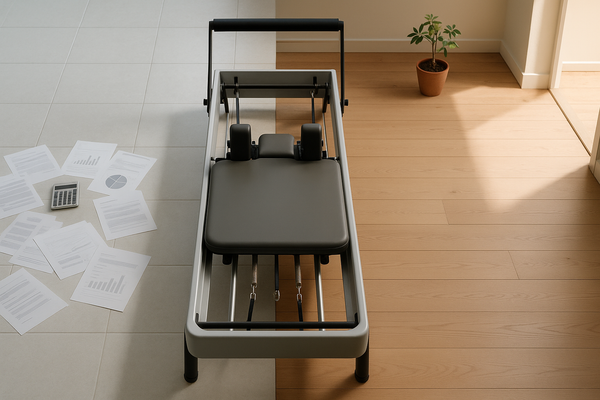
A new reformer costs $3,000-$5,000, and most studios own 6-12 of them. That represents $18,000-$60,000 in capital equipment tracked on your balance sheet as fixed assets, not supplies. Equipment depreciation is a major deduction that generic bookkeepers frequently miss because they don't understand fitness-specific capital expenditures.
When you purchase a reformer, you don't expense the full amount immediately. You capitalize it as an asset and depreciate it over its useful life, typically five to seven years. This creates an annual tax deduction while accurately reflecting that the equipment retains value and will eventually need replacement.
Instructor Classification: The Expensive Mistake
Misclassifying staff can lead to serious consequences including back taxes, penalties, and fines from the IRS or state agencies. Employers may be held responsible for unpaid overtime, benefits, or workers' compensation coverage. In some cases, misclassification results in lawsuits from staff seeking lost wages or benefits.
The general rule: Personal trainers who set their own schedules, work for multiple studios, and handle their own marketing or billing often qualify as independent contractors. Instructors who teach your scheduled classes using your equipment, wear your uniform, and follow your curriculum are typically employees regardless of how you pay them.
The IRS has been cracking down on and auditing studios for treating employees as independent contractors, causing studios to scramble over proper classification. The financial exposure is substantial: You become liable for the employer portion of payroll taxes you should have been paying, plus penalties and interest going back three years.
Software Selection for Studio Bookkeeping
Most small Los Angeles Pilates studios use QuickBooks Online or QuickBooks Desktop, with online bookkeeping services handling the categorization work including state-specific expense categories. The key is integration capability with your studio management platform.
Look for accounting software that can import transactions automatically from your bank accounts and integrate with Mindbody, Pike13, or WellnessLiving. Manual data entry creates errors and consumes hours every month. Even if the integration isn't perfect, starting with 80% of transactions imported correctly saves significant time compared to entering everything manually.
When to Hire a Professional vs. DIY
A bookkeeper handles ongoing monthly work recording transactions and reconciling accounts; a CPA files taxes and provides strategic advice. Most studios need both, but at different stages.
In your first year with straightforward revenue and few instructors, you can likely handle monthly bookkeeping yourself using QuickBooks and reconciling against your studio management software. Once you hit $200,000 in annual revenue, hire multiple instructors, or add complex revenue streams like teacher training programs, the time cost of DIY bookkeeping exceeds the cost of hiring a professional.
A bookkeeping professional offers clear, accurate reports that simplify tax filings and payroll while saving time and reducing stress during tax season. The decision point is usually when you're spending more than eight hours monthly on bookkeeping or when you're uncertain whether your numbers are accurate.
Seasonal Cash Flow Planning
Summer brings decreased attendance as members travel; December sees similar patterns around holiday travel. January and September represent peak enrollment periods driven by New Year's resolutions and back-to-school schedules. Understanding these patterns allows studios to plan marketing pushes, adjust schedules, and manage cash flow strategically.
To mitigate seasonal risk, maintain cash reserves covering three to six months of operating expenses. Implement flexible staffing using independent contractors or part-time instructors during lower-demand periods. Diversify revenue through online classes, which maintain steadier income during travel seasons.
For profitable studios, group classes generate 50-70% of total revenue, private sessions contribute 15-30%, class packages and subscriptions 10-15%, and add-ons like merchandise and workshops 5-10%. This diversification helps smooth seasonal volatility.
What This Means for Studio Operators
Editorial analysis, not reported fact:
The studios that thrive past year three have bookkeeping systems in place before they need them. Waiting until tax season or until you're facing an IRS audit on instructor classification creates expensive emergencies. Start with the fundamentals: separate business accounts, monthly reconciliation, proper equipment capitalization, and conservative instructor classification.
If you're currently using personal accounts for business expenses, open business accounts this week. If you're not reconciling monthly, block two hours on your calendar for the 5th of each month and treat it as non-negotiable. If you have any uncertainty about whether instructors are properly classified, consult an employment attorney now rather than after an audit notice arrives.
The bookkeeping work feels administrative and unglamorous compared to teaching or growing your studio, but it's the infrastructure that determines whether your studio can scale or whether you're building on a foundation that will collapse under financial scrutiny. Club Pilates franchises show a median Average Unit Volume of $969,000 with typical owner earnings around $160,000 annually—but those numbers depend on sound financial management from day one.
Sources & Further Reading
- Accounting for Gyms: Bookkeeping for Pilates Studios, comprehensive guide to revenue recognition and cash flow management
- Bench: Los Angeles Pilates Studios Bookkeeping Guide, software selection and local considerations (June 2026)
- WellnessLiving: Legal Differences Between Fitness Contractors and Employees, classification criteria and compliance guidance (October 2025)
- The Core by Pilates.com: Employee vs. Independent Contractor, IRS enforcement trends and audit risks (November 2024)
- Dojo Business: Pilates Profitability Analysis, revenue mix and margin benchmarks (October 2023)
- StudioGrowth Industry Report, boutique Pilates growth trends (February 2026)
Editorial coverage of publicly reported industry developments. The Pilates Business has no commercial relationship with any companies named.