Pilates Studio Profit Margins: Revenue & Cost Breakdown 2024
Pilates studios averaged $347,000 in annual revenue with 15-20% profit margins in 2023. Startup costs range from $50,000 to $500,000+ depending on scale and location.

Key Takeaways
- Pilates studios averaged $347,000 in annual revenue in 2023, with boutique fitness operators reporting median profits of 15-20% after stabilization.
- Startup costs for a Pilates studio range from $50,000 for a small operation to over $500,000 for a full-scale boutique with 10+ reformers.
- Instructor compensation typically represents 30-40% of revenue, with rates varying from $25-75 per class depending on location and experience.
- Successful studios balance class-based revenue with privates, teacher training, and retail to diversify income streams and improve margins.
- Break-even timelines average 18-24 months, with location, lease terms, and initial capital reserves being critical success factors.
Revenue Benchmarks for Pilates Studios
Understanding the financial landscape of Pilates studio ownership starts with realistic revenue expectations. According to IBISWorld's 2023 Pilates and Yoga Studios industry report, Pilates studios in the United States averaged $347,000 in annual revenue. However, this figure masks significant variation based on studio size, location, and business model.
Boutique fitness operators, including Pilates studios, typically see profit margins of 15-20% after the business stabilizes, according to data from the American Council on Exercise. High-performing studios in premium markets can push margins above 25%, while studios in their first two years often operate at break-even or modest losses as they build clientele.
The ClassPass Studio Insights Report found that successful Pilates studios generate 60-70% of revenue from class packages and memberships, with the remainder coming from private sessions, retail, and specialized programs like teacher training or workshops.
Startup Costs and Initial Investment
Launching a Pilates studio requires significant upfront capital, with costs varying widely based on scale and location. A Fit Small Business analysis breaks down typical startup ranges:
- Small studio (2-4 reformers): $50,000-$150,000, including used equipment, minimal buildout, and basic marketing
- Mid-size studio (5-8 reformers): $150,000-$300,000, with new equipment, moderate renovations, and professional branding
- Premium boutique (10+ reformers): $300,000-$500,000+, featuring high-end equipment, extensive buildout, and comprehensive marketing campaigns
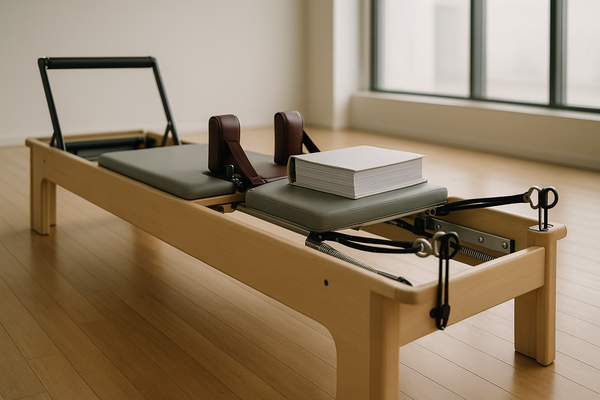
Equipment represents one of the largest line items. Balanced Body, a leading manufacturer, prices new reformers from $3,500-$6,500 per unit, with clinical-grade models exceeding $8,000. Ancillary equipment including chairs, towers, barrels, and small props typically adds $15,000-$30,000 for a full studio setup.
Lease deposits and first-month rent in urban markets can consume $10,000-$30,000 upfront. Square's small business research recommends budgeting 3-6 months of operating expenses as a cash reserve, adding $30,000-$75,000 to initial capital requirements for most studios.
Instructor Compensation Models
Labor costs represent the largest ongoing expense for Pilates studios, typically consuming 30-40% of total revenue according to Mindbody's fitness business benchmarks. Compensation structures vary by market, studio size, and instructor experience.
Per-class rates range from $25-$45 for newer instructors in smaller markets to $50-$75 for experienced instructors in major metropolitan areas, based on PayScale salary data. Private session rates typically range from $35-$60 per hour for the instructor, with clients paying $80-$150 per session depending on location.
Many studios use hybrid models combining base pay with performance incentives. Common structures include:
- Flat rate per class (most common for independent studios)
- Percentage of class revenue, typically 40-50% for established instructors
- Tiered rates based on class size, rewarding instructors who build following
- Salary plus bonus for lead instructors managing schedules or teacher training
The Pilates Method Alliance 2023 Industry Survey found that 68% of studio owners reported difficulty finding and retaining qualified instructors, putting upward pressure on compensation in competitive markets.
Revenue Diversification Strategies
Successful studios rarely depend solely on group classes. Athletech News reporting on studio business models highlights multiple revenue streams that improve profitability:
Private and semi-private sessions generate higher per-hour revenue despite lower volume. Studios typically charge $80-$150 for privates and $50-$75 per person for duets, with instructor compensation of 40-50% of the session fee.
Teacher training programs can contribute 10-15% of annual revenue for established studios. Comprehensive certification programs range from $3,000-$5,000 per student, with studios hosting 1-3 cohorts annually.
Retail sales of grip socks, apparel, and props typically add 3-5% to top-line revenue with margins of 50-60%. ToeSox and similar vendors offer wholesale programs specifically for studio operators.
Workshops and specialty programming including prenatal Pilates, injury rehabilitation, and athlete-specific training allow studios to command premium pricing of $50-$100 per participant for 90-120 minute sessions.
Timeline to Profitability
Most Pilates studios require 18-24 months to reach consistent profitability, according to Small Business Administration guidance for service businesses. The timeline depends heavily on initial capital reserves, location quality, and marketing effectiveness.
A typical growth trajectory shows:
- Months 1-6: Building awareness, operating at 20-40% capacity, burning through reserves
- Months 7-12: Reaching 50-60% capacity, approaching break-even on monthly operations
- Months 13-18: Stabilizing at 65-75% capacity, generating modest monthly profit
- Months 19-24: Achieving target 75-85% capacity, recouping initial investment
Entrepreneur magazine's analysis of boutique fitness economics notes that studios opening with insufficient capital reserves often fail before reaching profitability, even when the underlying business model is sound. The recommendation is to secure financing covering 12-18 months of operations rather than assuming rapid client acquisition.
Critical Success Factors
Financial outcomes vary dramatically based on execution. Research from Mindbody's State of the Fitness Industry report identifies key differentiators between thriving and struggling studios:
Location selection drives long-term success more than any other single factor. Studios in high-visibility retail locations with convenient parking see 30-40% higher class fill rates than those in second-floor or industrial spaces, despite higher lease costs.
Pricing strategy must balance market positioning with volume. Studios charging $28-$35 per class (or $150-$220 for monthly unlimited packages) hit the sweet spot in most mid-size markets, while premium urban markets support $40-$50 per class.
Scheduling optimization maximizes instructor efficiency. Successful studios fill 6:00 AM, 9:00 AM, 12:00 PM, and 5:30-7:00 PM slots consistently, while minimizing off-peak classes that run at 30-40% capacity.
Technology integration reduces administrative overhead. Studios using Mindbody, Pike13, or Walla for scheduling, billing, and client management report 5-8 hours per week in time savings compared to manual systems.
What This Means for Studio Operators
Editorial analysis, not reported fact:
The financial realities of Pilates studio ownership require both entrepreneurial ambition and conservative planning. While $347,000 in average annual revenue and 15-20% margins can support a comfortable single-owner operation, the 18-24 month runway to profitability demands either substantial savings or external financing.
Prospective studio owners should approach the business with $75,000-$150,000 in accessible capital for a modest studio, or significantly more for a premium boutique concept. The temptation to undercapitalize and "figure it out" has ended countless studio dreams at month 14, just before the business would have turned the corner.
For existing operators, the data points toward clear optimization opportunities: diversify beyond group classes, implement technology to reclaim administrative hours, and resist the urge to add marginal time slots that dilute instructor compensation and owner attention. A studio running 25 well-attended classes weekly will outperform one offering 40 classes at 50% capacity.
The instructor compensation challenge is particularly acute. Studios that build reputation for fair pay, professional development, and community will win the talent war. Those treating instructors as interchangeable contractors will face perpetual turnover that undermines client relationships and brand consistency.
Sources & Further Reading
- IBISWorld Pilates and Yoga Studios Industry Report, covering market size, revenue benchmarks, and industry trends
- American Council on Exercise: Understanding Fitness Business Financials, profit margin benchmarks for boutique fitness
- Fit Small Business: How to Open a Pilates Studio, detailed startup cost breakdowns
- Mindbody Fitness Studio Financial Benchmarks, labor cost and operational metrics
- PayScale Pilates Instructor Salary Data, compensation ranges by market and experience
- Pilates Method Alliance 2023 Industry Survey, instructor workforce trends
- Athletech News: Pilates Studio Business Models, revenue diversification strategies
- Mindbody State of the Fitness Industry 2023, success factors and industry trends
This article is editorial coverage of publicly reported industry developments. The Pilates Business has no commercial relationship with any companies named.