Smart Reformers & AI in Pilates Studios: 2026 Guide
Connected reformers with AI form correction are entering studios as Pilates adoption jumps to 45%. What instructors and operators need to know about integration, ROI, and training gaps.

Key Takeaways
- Smart reformers with AI-driven form correction and adaptive resistance are entering studio operations in 2026, using motion sensors to provide real-time feedback while instructors focus on cueing and connection.
- Studios offering Pilates classes grew from 17% in 2021 to 45% in 2025 on the Mariana Tek platform, making technology-driven differentiation increasingly urgent as mainstream adoption accelerates.
- Human-AI collaboration in fitness education produces better outcomes than either alone, according to 2025 academic research showing instructors using GPT-4 created more innovative, tailored classes while learning faster through the interaction.
- Instructor certification programs now need smart equipment literacy alongside traditional anatomy and cueing, as Pilates moves beyond weekend certificates toward structured career pathways.
- iFIT's acquisition of Reform RX signals consolidation around connected reformer technology, with industry leaders predicting machines will fuse biomechanics, AI, and human-centered design to prioritize longevity and mastery over transformation alone.
Why Connected Reformers Are Entering Studios Now
Pilates is entering what Athletech News calls its "intelligent era", where reformers layer motion sensors, AI-driven form correction, and adaptive resistance profiles onto the classical apparatus. This shift arrives as studios offering Pilates classes jumped from 17% to 45% between 2021 and 2025 on the Mariana Tek platform, intensifying competition and making differentiation through technology newly urgent.
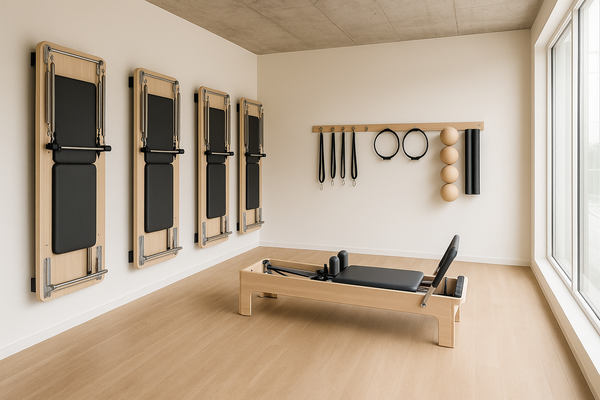
Modern smart reformers measure spring tension, carriage speed, and body alignment in real time, providing visual or haptic feedback to clients during movement. Where traditional reformers required instructors to split attention between cueing breath, correcting form, and managing equipment adjustments, connected machines handle baseline alignment monitoring while teachers focus on individualized progression and emotional safety. According to the Athletech News equipment forecast, these machines transform reformers from high-maintenance studio assets into data-connected tools that attract wellness-focused members and broaden demographic reach.
What AI Actually Does in the Studio (And What It Cannot Replace)
The practical role of artificial intelligence in Pilates settings centers on three functions: form analysis through computer vision, resistance adaptation based on fatigue indicators, and class planning augmentation. Smart reformers use embedded sensors to detect whether a client's pelvis tilts during footwork or if their shoulders elevate during arm springs, offering corrective prompts through connected screens or instructor dashboards. Resistance profiles adjust dynamically when sensors detect compensatory movement patterns, reducing injury risk during unsupervised portions of hybrid or self-guided sessions.
Academic research published in 2025 demonstrates the collaborative potential. A study on human-AI co-performance in fitness education found that a Pilates instructor working with GPT-4 produced better outcomes than either alone. Classes became more innovative and tailored, problems were solved faster, and the instructor reported accelerated learning through the interaction. The research identified a collaborative dynamic where AI augmented planning and feedback while the instructor filtered and contextualized suggestions to fit individual students.
What remains irreplaceable is the instructor's ability to read a client's emotional state, adjust cueing tone mid-exercise based on confidence levels, manage group dynamics, and provide the motivational scaffolding that sustains six-month and twelve-month client journeys. Per Pilates Journal's 2026 industry predictions, Pilates retains clients longer than almost any other modality precisely because of these human teaching elements.
The Business Case: ROI, Retention Lift, and Premium Pricing Justification
Connected reformers carry upfront costs 40% to 60% higher than traditional equipment, but operators report three revenue pathways that justify the investment. First, smart equipment enables tiered pricing structures where AI-integrated classes command $8 to $12 premiums per session, positioned as "precision Pilates" or "data-optimized" offerings. Second, retention rates improve when clients receive progress tracking dashboards showing objective gains in range of motion, stability metrics, and movement quality over time.
Third, hybrid programming becomes viable. Studios can offer supervised small-group sessions where one instructor manages eight clients on connected reformers with AI handling real-time form monitoring, compared to traditional four-client limits for safe manual correction. This doubles effective class capacity without sacrificing safety or outcomes. According to iFIT's perspective on future equipment, machines will fuse biomechanics and AI to create training experiences that prioritize longevity, mobility, and mastery, allowing operators to rethink member journeys around sustained engagement rather than short-term transformation narratives.
Certification Gaps: Training Instructors for Technology-Integrated Studios
Current comprehensive Pilates certification requires 450 to 600 hours and costs $4,000 to $7,000 according to industry career guidance published in 2026, yet most programs devote minimal curriculum to smart equipment operation or AI collaboration principles. As Pilates Journal notes, instructors increasingly want apparatus certification to teach multiple modalities, but training pathways have not yet incorporated technology literacy alongside traditional cueing and anatomy.
The skills gap is concrete: instructors need to interpret motion sensor dashboards mid-class, override AI suggestions when they conflict with injury history or pregnancy modifications, and explain data outputs to clients without triggering fixation on metrics over experience. Studios adopting smart reformers report the most success when they implement 20-hour technology integration modules covering equipment calibration, data privacy protocols, and effective AI-assisted cueing patterns before rolling out new machines to the teaching schedule.
Practical Implementation Roadmap for Independent and Mid-Size Studios
Studios considering smart equipment should phase adoption across three stages. Stage one involves piloting two to four connected reformers in a dedicated "tech studio" space, limiting use to intermediate and advanced clients who already understand classical repertoire. This controls variables during the learning curve and generates case studies before full buildout.
Stage two integrates technology into instructor continuing education. Monthly skill-shares where teachers demo how they incorporated AI feedback into progressions, troubleshoot sensor calibration issues, and share client communication strategies build collective competency faster than top-down training alone. Documenting these sessions creates an internal knowledge base.
Stage three expands equipment investment only after retention and pricing lift metrics confirm ROI from the pilot phase. Studios should negotiate vendor agreements that include firmware updates, sensor recalibration service, and data export capabilities to prevent vendor lock-in. Establishing data governance policies before scaling protects both studio liability and client privacy as movement data accumulates.
What This Means for Studio Operators
Editorial analysis — not reported fact:
The jump from 17% to 45% studio adoption in four years signals Pilates is no longer a boutique offering but a mainstream retention tool that fitness facilities deploy to compete with specialists. For independent studios, this creates simultaneous threat and opportunity. The threat is commoditization as big-box gyms add reformer rooms with smart equipment budgets that dwarf independent capital reserves. The opportunity lies in positioning technology as an enhancement to expert teaching rather than a replacement, something large operators struggle to operationalize given instructor turnover and training inconsistency.
Smart studios will invest in instructor development and technology in parallel, recognizing that connected reformers without skilled teachers interpreting the data produce mediocre outcomes. The instructors who thrive in this transition will be those who view AI as a co-teacher handling repetitive monitoring tasks so they can focus on the nuanced, relationship-driven work that builds decade-long client loyalty. Studios that wait for technology to become "mature" risk entering the market after pricing power and differentiation windows close.
Sources & Further Reading
- Athletech News: Pilates and the 2026 Equipment Forecast — Analysis of the "intelligent era" in Pilates equipment and iFIT's Reform RX acquisition
- Mariana Tek: 2026 Pilates Trends Report — Studio adoption data showing growth from 17% to 45% and market timing implications
- Human–AI Co-Performance in Fitness Education (2025) — Academic research on instructor-GPT-4 collaboration outcomes
- Pilates Journal: 2026 Industry Predictions — Leader perspectives on retention drivers and instructor certification trends
- Wellsphere: Pilates Instructor Requirements and Career Guide 2026 — Certification costs, hour requirements, and career pathway expectations
Editorial coverage of publicly reported industry developments. The Pilates Business has no commercial relationship with any companies named.