How AI & Automation Are Redefining Pilates Studio Ops in 2026
US Pilates studios save 8–10 hours weekly with AI scheduling and connected reformers. The debate has shifted from whether to adopt technology to how to implement it without losing personalization.

Key Takeaways
- Pilates participation surged 40% between 2019 and 2025, rising from 9.2 million to 12.9 million US participants, driving operational complexity that legacy pen-and-paper systems can no longer handle.
- Studio management software market growth: expected to expand from $120 million in 2024 to $250 million by 2033 at a 9.2% compound annual growth rate, as 44% of studios upgraded digital platforms between 2023 and 2025.
- AI-powered scheduling saves 8–10 hours weekly of administrative work per studio, allowing owners to focus on client results, community retention, and revenue growth through platforms like Anolla that automate waitlists and resource allocation.
- Connected reformers capture movement data down to the thousandth of a second using real-time sensors, providing immediate feedback on form and intensity while preserving the instructor's role in cueing and connection.
- Hybrid revenue advantage: studios combining in-person and digital memberships report 30–40% higher revenue per client, while 92% of Pilates studios using automated booking software maximize revenue.
- Technology complements, not replaces: the consensus among studio operators is that AI protects personalized service by handling routine tasks, but human expertise in technique, safety, and empathy remains irreplaceable.
Why US Pilates Studios Reached an Automation Inflection Point in 2026
The debate inside the Pilates industry has shifted from whether to adopt technology to how to implement it without sacrificing the personal touch that defines boutique studios. Pilates participation in the United States grew 40% between 2019 and 2025, climbing from 9.2 million to 12.9 million participants. This surge brought operational complexity that pen-and-paper scheduling and legacy gym CRMs struggle to manage.
Over 40,000 yoga and Pilates studios now operate across the country, and the studio management software market is projected to grow from $120 million in 2024 to $250 million by 2033, reflecting a 9.2% compound annual growth rate. Between 2023 and 2025 alone, 44% of studios upgraded their digital platforms, signaling that technology adoption is no longer optional for competitive operations.
Three Operational Layers Where AI Delivers Measurable Studio Efficiency
The smartest Pilates studios in 2026 are not automating everything. They are automating the right things to reclaim time for what matters most: instructing, connecting, and nurturing community. Emerging best practices focus on three operational layers where artificial intelligence adds demonstrable value without eroding the personal experience clients expect.
Client Acquisition and Qualification
AI-powered support agents embedded on studio websites now function as 24/7 front desk assistants trained on a studio's specific offerings, pricing structure, intro packages, policies, and schedule. Instead of waking up to vague inquiries like "Do you have beginner classes?", studio owners receive contextualized lead summaries: "This person is new to Pilates, interested in privates, available weekday mornings, and has mild back pain." This allows instructors to personalize outreach and match clients with appropriate services from the first touchpoint.
Scheduling and Resource Optimization
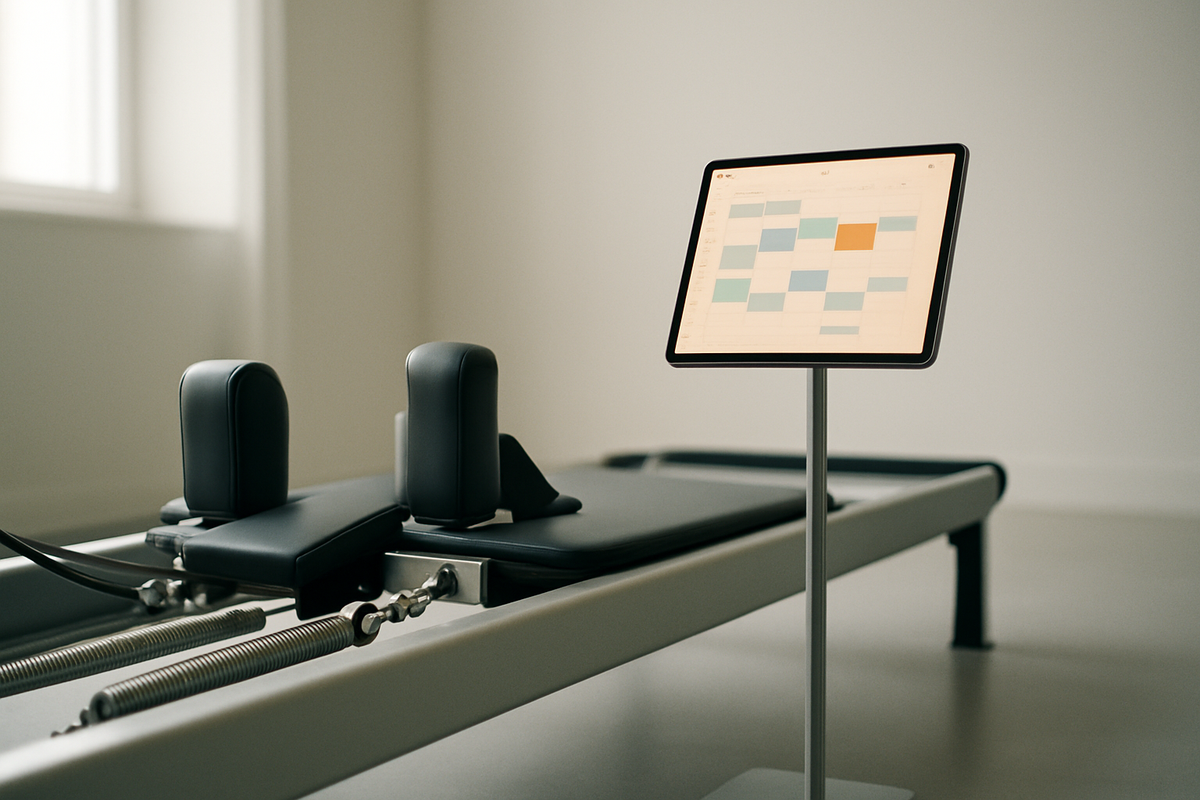
Platforms built specifically for boutique Pilates studios, such as Anolla, use AI-based automation to fill waitlists, recommend substitute instructors, account for cleaning and setup breaks, and schedule reformers, Cadillacs, chairs, and mat spaces with the nuance of an experienced studio manager. According to industry reporting, the average Pilates studio saves 8–10 hours of administrative work weekly by deploying these systems, freeing up capacity to focus on client results, community retention, and upselling strategies.
Personalized Communication and Retention
Modern studio management platforms automatically trigger messages based on real client behavior, not static calendar rules. A client who misses two consecutive sessions receives a check-in; someone nearing their tenth class gets an email celebrating consistency and offering a discounted class pack. This allows studios to personalize communication with the same care they apply to sessions, without manually drafting every message.
Connected Reformers and the Intelligent Equipment Era
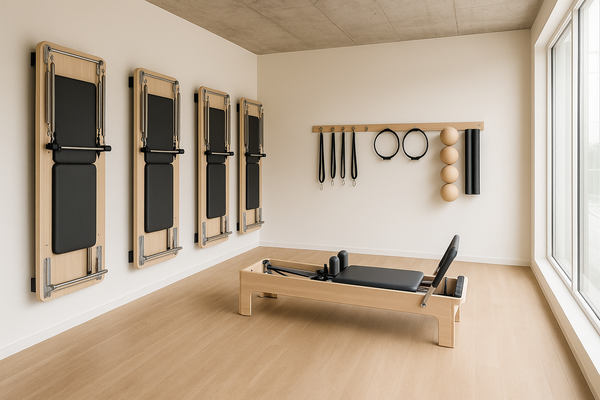
When iFIT acquired Reform RX in 2024, a connected reformer company bridging traditional Pilates with modern technology, it signaled a broader industry shift: Pilates equipment now shares the same technological DNA as connected treadmills and bikes. Reform RX reformers feature advanced performance-tracking tools including real-time movement sensors and MyScore heart-rate technology, capturing movement down to the thousandth of a second and delivering immediate feedback on form, intensity, and progress.
In December 2024, Reform RX secured $5.1 million in funding to expand globally, and the global Pilates equipment market is projected to grow by USD 146.3 million from 2024 to 2028 at an estimated compound annual growth rate of about 12%. In 2026, the industry consensus is that Pilates has entered its "intelligent era": reformers and platforms quietly adapt to the individual, measuring effort, guiding alignment, and elevating technique without breaking instructional flow. The technology does not replace instructors; it empowers them with data and frees them to focus on cueing, correction, and connection.
Studio Management Software Market Consolidation and Platform Selection
The fastest-growing US boutique Pilates studios in 2026 are choosing AI-native, boutique-purpose-built platforms rather than retrofitting legacy gym CRMs. Market leaders include Vibefam, Anolla, Glofox, WellnessLiving, and Momence. Subscription fees for boutique Pilates platforms in 2026 range from roughly $150 to $500 per month for a single-location studio, though the bigger cost driver is usually payment-processing markup, which adds 0.3% to 1.5% of annual revenue.
Despite this proliferation of tools, 11.5% of studios still operate on pen-and-paper systems, often to avoid setup complexity and administrative overhead. Newer contenders Walla (6.6% market share) and Momence (5.7%) are gaining traction as full studio-management systems with built-in marketing and CRM, not just booking tools. Research indicates that 92% of Pilates studios maximize revenue by using automated booking software, and studios combining in-person and digital memberships report 30–40% higher revenue per client.
The AI Skepticism Reality Check: Protecting Personalization, Not Replacing It
Most Pilates studio owners describe the same tension: "I built this business on relationships. I don't want robots replacing that." The emerging industry consensus is that AI, when used well, can actually protect highly personalized studios by handling routine tasks and freeing human bandwidth for connection, not by automating away the instructor's role.
Technology is valuable as a complement, not a replacement. Motion analysis tools and apps can provide insights, but human expertise remains essential for cueing technique, ensuring safety, and adapting to individual needs in real time. The strongest studios invest in good equipment and well-trained instructors first; technology comes afterward to amplify their effectiveness.
Emerging risks that operators should flag include over-automation that replaces trainers entirely, losing human empathy and real-time safety checks; clients trusting AI too much and ignoring their own physical feedback, leading to overtraining; and lack of transparency about when a decision is AI-driven versus human-driven, especially in recovery and nutrition advice.
Digital Platforms Reshape Pilates Instructor Education and Certification
The technology wave is extending beyond studio operations into instructor training itself. Balanced Body Education developed a student platform called CLARA that harnesses digital systems to augment in-class practical learning, with rollout to all new students beginning in early 2026. Meanwhile, The Pilates Academy unveiled an innovative digital platform to provide accessible, structured Pilates instructor training worldwide, and the platform was recognized as the Best Online Pilates Teacher Training Program in the US for 2025.
These platforms reflect the same philosophy driving studio software adoption: technology can standardize foundational knowledge and track progress, but the mentorship, hands-on correction, and teaching practicum require human instructors.
What This Means for Studio Operators
Editorial analysis — not reported fact:
The studios that will thrive in the next three years are not the ones that resist technology or the ones that automate indiscriminately. They are the ones that deploy intelligent automation strategically to reclaim time and mental bandwidth for the irreplaceable human work: teaching excellent movement, building trust with clients, and nurturing community.
If you are still scheduling classes manually or chasing no-shows with individual texts, you are spending 8–10 hours per week on tasks that software now handles reliably. That is 8–10 hours you could spend refining your teaching, developing specialty programming, or personally onboarding new clients. The return on investment for a $150–$500/month platform is not just operational efficiency; it is your capacity to do the work that only you can do.
Connected equipment is worth considering if your studio emphasizes performance metrics, progress tracking, or attracts data-motivated clients. But it is not a substitute for skilled instruction. The reformer that tracks spring resistance to the millisecond still cannot see when a client is gripping their jaw or holding their breath. Your eye and your cue remain irreplaceable.
If you are evaluating platforms, prioritize those built specifically for boutique Pilates rather than general-purpose gym software. Ask whether the platform handles equipment-specific scheduling (reformer, chair, tower), integrates client communication, and provides transparent pricing on payment processing fees, which often exceed the base subscription cost.
Finally, be transparent with your clients about what is automated and what is not. If an AI agent fields their initial inquiry, let them know a human instructor will follow up. If you use motion sensors during sessions, explain how the data informs your cueing. Transparency builds trust, and trust is the foundation of retention.
Sources & Further Reading
- Statista: Pilates Participation in the US, 2006–2025 — tracks the 40% growth in US Pilates participation between 2019 and 2025
- Business Research Insights: Studio Management Software Market Report — projects market growth from $120M in 2024 to $250M by 2033
- iFIT Acquires Reform RX press release — details the December 2024 acquisition and connected reformer technology
- TechCrunch: Reform RX Secures $5.1M in Funding — covers the December 2024 funding round and global expansion plans
- WellnessLiving: How Pilates Studios Maximize Revenue with Automated Booking — reports that 92% of studios using automated booking software maximize revenue
- Balanced Body Education CLARA Platform announcement — describes the digital student platform rolling out in early 2026
- The Pilates Academy Digital Platform Launch — details the online instructor training platform recognized as best in the US for 2025
Editorial coverage of publicly reported industry developments. The Pilates Business has no commercial relationship with any companies named.