The Differentiation Imperative: Defining Your Pilates Philosophy in 2026
As Pilates shifts from trend to permanent category, studios that cannot articulate their teaching philosophy risk becoming generic. How Classical vs. Contemporary identity, instructor leadership, and mission-driven positioning now determine business survival.

Key Takeaways
- Classical vs. Contemporary identity remains the foundational divide in Pilates teaching, with Classical instructors emphasizing original apparatus and exercise order, while Contemporary practitioners prioritize flexibility and modification—but survey research reveals both sides may stereotype each other's approach.
- Instructor leadership style directly impacts client satisfaction and retention, with 2024 research showing transformational and transactional leadership positively correlating with class satisfaction and psychological well-being in studio settings.
- Comprehensive Pilates now represents a small fraction of the market, as mat-only instruction and substantially modified exercises dominate the fitness industry despite bearing little resemblance to Joseph Pilates' original method.
- Mission statements and philosophical positioning have shifted from marketing copy to business strategy as studios define whether they emphasize boutique experience, athletic performance, rehabilitation, or community wellness to differentiate in a saturated 2026 market.
- Industry leaders predict 2026 marks Pilates' transition from trend to permanent category, requiring long-term brand building focused on integrity, quality, and reputation rather than chasing social media momentum.
Why Teaching Philosophy Became Non-Negotiable in 2026
Pilates has reached an inflection point. After years of explosive growth fueled by group Reformer classes and social media visibility, the method faces what industry leaders described to Pilates Journal in May 2026 as a maturation moment. Studios and instructors who thrived during the boom now confront a harder question: what do you actually stand for when the novelty fades?
The stakes are high because the identity crisis is real. A 2024 peer-reviewed study published in the Herald of Health and Care found that "the generic use of the term 'Pilates' continues to be a challenge when trying to interpret the method used in clinical interventions and practice, with most publications not specifying which exercises nor the technical specifications of apparatus that were used." When even clinical researchers cannot define what "Pilates" means in a given context, consumers face an even murkier landscape.
Classical vs. Contemporary: The Identity Divide That Defines Your Studio
Every Pilates instructor eventually chooses a side, even if they resist the label. An international survey of Comprehensive Pilates teachers published in 2019 documented how practitioners identify their teaching as either Classical or Contemporary, tracing their lineage back to first-generation teachers who learned directly from Joseph Pilates.
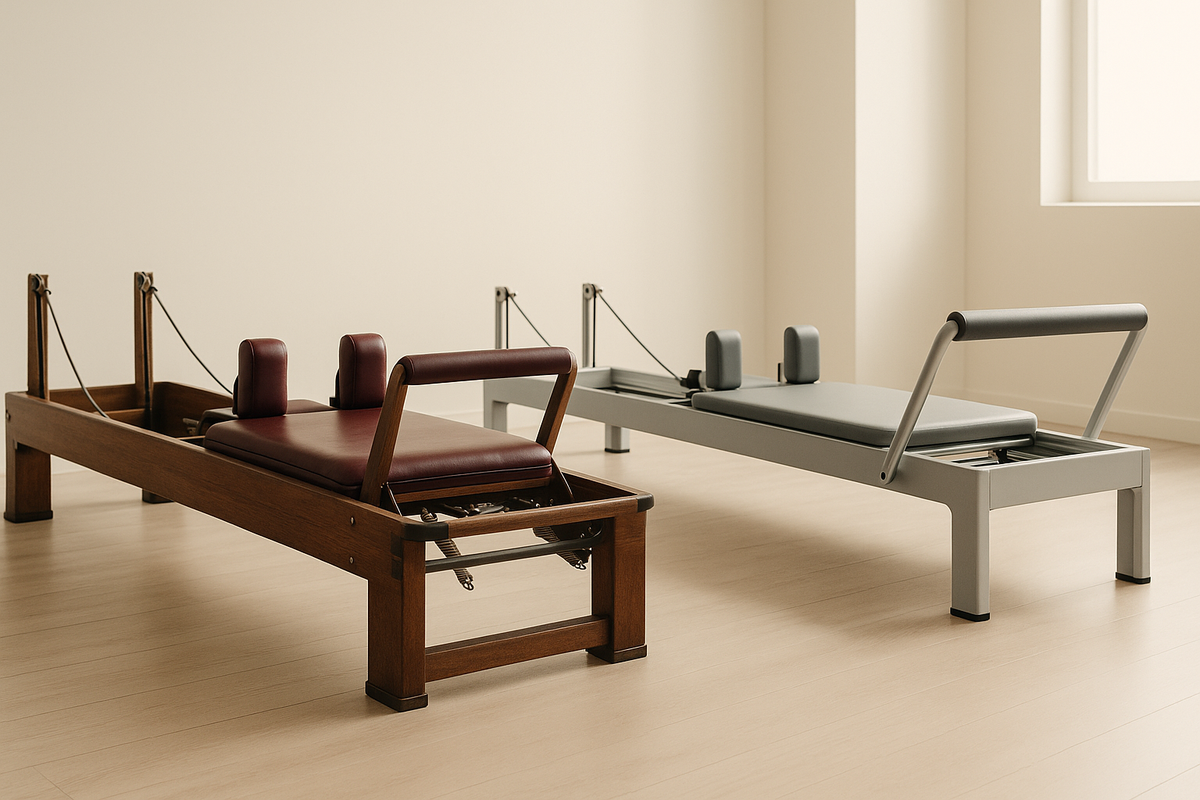
The distinctions are clear on paper. Classical Pilates adheres closely to the original Method, draws on a range of original apparatus, and executes exercises in their original order. Contemporary Pilates also builds on the original Method but permits modification of exercises and apparatus with greater flexibility in sequencing. Yet the same survey revealed something more contentious: discourse indicating stereotyping between camps. Classical teachers described their own practice as "authentic," while Contemporary instructors used terms like "strict" and "inflexible" to characterize Classical work.
This tension reflects a broader industry debate. Controversies surrounding Pilates often center on authenticity versus commercialization, with purists arguing that contemporary variations dilute Joseph Pilates' original principles while adapters counter that modern fitness science and inclusivity demand evolution.
Joseph Pilates' Original Vision: Still Relevant or Historical Artifact?
Joseph Pilates articulated a philosophy that remains the north star for serious practitioners, even as interpretations diverge wildly. He famously stated that "Contrology [Pilates] is complete coordination of body, mind, and spirit," framing the method as holistic rather than purely physical. Pilates described physical fitness as "the first requisite of happiness" and stressed that true wellness required the mind to wholly engage in controlling the body.
The problem is that today's landscape bears little resemblance to that vision. Comprehensive Pilates now represents a small proportion of teaching under the label 'Pilates', with mat-only instruction dominating the market. Practices that are unrecognizable as the original method now fill boutique studios, with substantially modified exercises and minimal apparatus work. This raises an uncomfortable question for studio operators: can you claim the Pilates name while abandoning the Pilates method?
How Instructor Philosophy Drives Client Satisfaction and Business Results
Philosophy is not abstract when it shapes how instructors lead a class. A 2024 study published in BMC Sports Science, Medicine and Rehabilitation explored how Pilates instructors' leadership styles affect class satisfaction and psychological well-being. Findings revealed that transformational and transactional leadership styles were positively correlated with both outcomes, suggesting that how an instructor embodies their teaching philosophy directly impacts client experience.
According to an Athletech News analysis published in February 2026, instructor education has become the critical infrastructure that allows Pilates to scale without losing integrity. The report noted that "the key differentiator now is judgment: knowing the work, seeing the person, landing the cue and knowing when you're out over your skis." In other words, technique matters less than the discernment that comes from a coherent teaching philosophy.
Mission Statements and Positioning as Competitive Strategy
Generic studios lose in 2026. ClassPass guidance published in March 2026 emphasized that a mission statement explains the purpose of the studio while values shape culture and client experience. Positioning might emphasize boutique experience, athletic performance, rehabilitation support, or community-centered wellness, and strong positioning helps clients understand why they should choose you over the Reformer studio three blocks away.
Gaby Noble, owner of Exhale Pilates, told Pilates Journal that building a loyal team and retaining clients required creating "a really special environment and ethos" that allowed her to "focus on vision, culture, and creating spaces where not just clients, but also teachers, can grow and thrive." Mission is not a tagline; it is the operational framework that determines who you hire, how you train, and what you deliver daily.
Inclusivity and Adaptability as Philosophical Commitments, Not Add-Ons
The most forward-looking studios are reframing philosophy around accessibility. Inclusive teaching begins with letting go of the idea of a "perfect" Pilates body or movement, focusing instead on adaptability, curiosity, and respect for individual experience. This does not mean abandoning rigor; it means recognizing that students now seek classes that feel thoughtful, contemporary, and creatively sequenced.
Industry leaders speaking to Pilates Journal in May 2026 predicted that the future of Pilates blends classical principles with innovative class structure and intelligent variations. The challenge is distinguishing genuine adaptation from dilution masquerading as inclusivity.
The 2026 Imperative: Long-Term Brand Building Over Trend Chasing
The Pilates Journal industry roundtable in May 2026 made clear that Pilates is no longer a fleeting TikTok trend. Participants noted that those who "jumped on the bandwagon" in 2025 now appreciate the deeper physical and mental benefits Pilates offers, making it a valued lifestyle choice rather than a fad. The industry is shifting from niche to necessity as new demographics enter and group Reformer formats gain mainstream traction.
This creates opportunity for studios that deliver consistency, quality, and innovation, but only if they articulate what they believe. Industry leaders advised studios to "think long-term, not short-term" and "focus on building a strong reputation and a name that stands for integrity and excellence" rather than chasing the next viral moment.
What This Means for Studio Operators
Editorial analysis—not reported fact:
If you cannot articulate your teaching philosophy in two sentences, you do not have one. And in 2026, that ambiguity is a liability. Clients who stayed for convenience during the boom now have dozens of options within a ten-minute drive. The studios that will thrive are those that answer the question: why does your version of Pilates matter?
Start with the Classical versus Contemporary question, not as a binary choice but as a framing device. Where do you sit on the spectrum, and why? Are you preserving lineage, or are you adapting for modern bodies and scientific insight? Neither answer is wrong, but opacity is fatal. Your website, instructor bios, and introductory sessions should make your stance unmistakable.
Next, align your instructor education and leadership development with that philosophy. The February 2026 Athletech News analysis is correct: judgment is the differentiator. If your philosophy emphasizes rehabilitation, your continuing education budget should reflect that. If you prioritize athletic performance, your instructors need to understand programming and periodization, not just choreography.
Finally, operationalize your mission statement. It should govern hiring decisions, class design, pricing strategy, and community engagement. If your mission emphasizes inclusivity, but your class descriptions assume prior Reformer experience, you have a philosophy problem masquerading as a marketing problem. Clients can feel the disconnect, even if they cannot name it.
Sources & Further Reading
- Pilates Journal industry leader roundtable, May 2026—Predictions and strategic guidance for studios navigating Pilates' maturation phase
- Pilates in 2024: Useful Clinical Tool or Commercial Catchphrase, Herald of Health and Care, 2024—Peer-reviewed study examining teaching framework challenges and identity questions in modern Pilates
- International survey of Comprehensive Pilates teacher practice, PubMed, 2019—Research documenting Classical versus Contemporary identity divide and thematic analysis of teacher perspectives
- Why Instructor Education Is the Real Growth Engine Behind Pilates, Athletech News, February 2026—Analysis of education infrastructure as competitive differentiator in scaling Pilates brands
- Instructor leadership styles and their impact on class satisfaction and psychological well-being, BMC Sports Science, Medicine and Rehabilitation, 2024—Empirical study linking transformational and transactional leadership to client outcomes
- What You Don't Know About Being a Pilates Studio Owner, Pilates Journal—Gaby Noble of Exhale Pilates on building studio culture and operational philosophy
- How to Open a Pilates Studio, ClassPass Partners Blog, March 2026—Strategic guidance on mission, values, and positioning for new studio operators
Editorial coverage of publicly reported industry developments. The Pilates Business has no commercial relationship with any companies named.