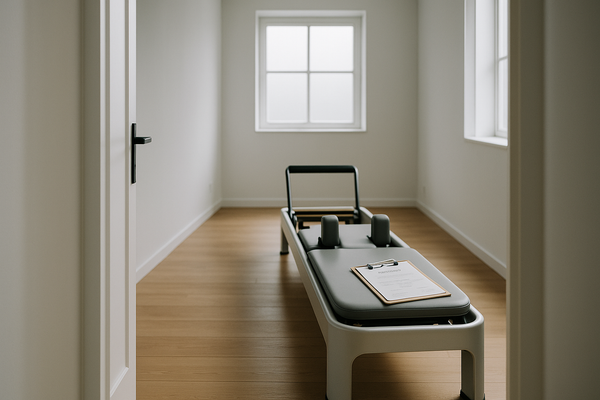
The Pilates Instructor Shortage: Why Demand Exceeds Supply
Reformer bookings grew 66% year-over-year, yet instructor availability now limits studio growth more than demand. What operators can do in Q2 2026.

Key Takeaways
- Instructor availability and reformer count now limit growth more than demand: Reformer Pilates bookings grew 66% year-over-year, yet qualified instructors remain scarce as major franchises race to open 100+ new locations by end of 2026.
- Certification standards create a time and cost barrier: The Pilates Method Alliance recommends 450 hours of comprehensive training, with traditional programs costing $5,000 to $7,000 and requiring months to complete.
- Instructor compensation creates a recruitment advantage: Average gross annual Pilates instructor salary is approximately $69,000, with instructors holding advanced certifications earning 27% more than baseline-certified peers.
- The supply-demand mismatch creates operational vulnerability: Studios expanding schedules without staffing depth experience instructor burnout, class quality inconsistency, and lost revenue from unfilled time slots.
- Flexible training pathways are emerging: Some providers now offer 300-hour Mat and Reformer programs with online modules and custom payment plans to lower entry barriers while maintaining quality standards.
Why Qualified Instructors Have Become the Industry's Hidden Ceiling
As of April 2026, the Pilates industry faces a paradox: demand has never been higher, yet growth is constrained not by client interest or equipment capacity, but by the availability of qualified instructors. Reformer Pilates ranked as the most booked fitness category for three consecutive years, while major franchises like Pilates Addiction target 100+ studio openings by the end of this year. But according to industry analysis published in January 2025, one of the biggest challenges the industry faces is finding qualified instructors to meet increasing demand.
The operational reality is stark: instructor availability and reformer count limit growth more than demand, and studios that expand schedules without staffing depth face burnout, inconsistent class quality, and unfilled slots that erode margins. This is not a future risk but a Q2 2026 constraint affecting studio operators trying to capitalize on the current boom.
How Certification Standards Create a Supply Bottleneck
Pilates has evolved beyond the weekend certification model that characterized early boutique fitness categories. The Pilates Method Alliance recommends a minimum of 450 hours of training for comprehensive certification, with the National Certified Pilates Teacher (NCPT) exam serving as the gold standard for independent, third-party credentialing. Most studios now require a recognized teacher training program, not a brief workshop.
The financial and time investment is substantial. Traditional comprehensive programs cost $5,000 to $7,000 and require months of training. While some accelerated 300-hour Mat and Reformer programs offer a more accessible entry point, the pathway still represents a significant barrier for career changers or existing fitness professionals looking to add Pilates credentials. According to recent program announcements, training providers are responding with flexible options including online modules and custom payment plans to lower these barriers.
Why Standards Matter for Studio Quality and Liability
Industry leaders emphasize that Pilates is a progressive methodology built on quality of movement and most effective when guided by skilled instructors dedicated to supporting individual goals. For studio operators, instructor quality is both a liability consideration and the primary differentiator in an increasingly crowded market. Clients can now access Pilates franchises, luxury boutiques, big-box gyms, and medical facilities; the quality of instruction determines retention and word-of-mouth growth.
The Financial Reality: Instructor Earnings vs. Studio Margins
The economics of instructor compensation directly affect recruitment. Average gross annual Pilates instructor salary is approximately $69,000, with instructors who hold advanced certifications earning 27% more than baseline-certified peers. For comparison, this places experienced Pilates instructors above median earnings for many allied health and fitness roles.
However, compensation models vary widely. Studios paying per-class rates of $25 to $45 compete with facilities offering salaried positions, benefits, and continuing education stipends. Studios that treat instructors as interchangeable hourly labor face higher turnover, while those investing in professional development and competitive total compensation build stable, skilled teams. The shortage means instructors have leverage; studios that fail to recognize this lose talent to competitors or see instructors launch independent practices.
Tactical Solutions for Studio Operators Facing the Shortage Now
Operators cannot wait for the training pipeline to catch up with demand. Several strategies can alleviate immediate staffing pressure while building long-term resilience:
Create In-House Training Pipelines
Partner with accredited training programs to host cohorts on-site or offer tuition assistance for employees willing to commit to teaching a minimum number of classes post-certification. This converts front desk staff, fitness generalists, and loyal clients into qualified instructors with built-in studio loyalty.
Offer Competitive Total Compensation Packages
Shift from per-class rates to hybrid models that include base pay, class bonuses, and benefits such as continuing education credits, health insurance contributions, or retirement matching. Transparently communicate total compensation value to differentiate from competitors.
Design Flexible Scheduling That Prevents Burnout
Cap weekly teaching hours per instructor at sustainable levels (typically 15 to 20 contact hours), cross-train instructors for multiple modalities to add variety, and build buffer capacity so sick days or vacations do not cascade into schedule gaps. Expanding schedules without staffing depth leads to burnout, inconsistency, and lost revenue.
Leverage Technology for Efficiency
Use scheduling software that allows clients to book across multiple instructor schedules, reducing the pressure on any single teacher to cover all prime time slots. Implement waitlist automation to maximize class fill rates without manual instructor coordination.
Build a Mentorship and Continuing Education Culture
New instructors need runway before they can confidently teach complex apparatuses or work with special populations. Offer shadowing, co-teaching, and regular feedback cycles. Invest in advanced training opportunities to retain experienced instructors who might otherwise leave for higher-paying clinical or specialty roles.
What This Means for Studio Operators
Editorial analysis — not reported fact:
The instructor shortage is not a temporary hiccup; it is a structural feature of a maturing industry with rising standards and accelerating demand. Studio operators who treat instructors as a commodity will find themselves unable to staff peak hours, forced to turn away clients, or sacrificing quality to fill schedules. Those who view instructor recruitment and retention as a strategic priority will gain a durable competitive advantage.
For studios planning expansion in the second half of 2026, the talent pipeline must be part of the growth plan from day one. Before signing a lease or ordering reformers, ask: Where will the instructors come from? What compensation and support will keep them? How will we maintain quality as we scale? Studios that answer these questions with concrete systems rather than optimism will be the ones that successfully ride the Pilates boom into 2027 and beyond.
The franchise model's aggressive growth targets assume an elastic supply of qualified labor. If that assumption proves false, the bottleneck will not be consumer demand or capital; it will be the human expertise required to deliver the method with integrity. Independent studios have an opportunity here: by offering better working conditions, deeper mentorship, and more authentic professional community than franchise operators, they can attract and retain the talent that will determine long-term success.
Sources & Further Reading
- 2026 Pilates Predictions from Industry Leaders (Pilates Journal) — December 2025 roundtable covering instructor availability as a growth constraint
- Pilates Industry Statistics 2026 (Wellyx) — April 2026 data on booking trends and growth metrics
- Pilates Teacher Training Program Details (Fitness Mentors) — March 2026 overview of accelerated certification pathways and flexible training options
- Can the Pilates Franchising Boom Continue? (Athletech News) — December 2025 analysis of franchise expansion plans and operational constraints
- Pilates Instructor Requirements, Certification, Salary & Career 2026 (Wellsphere) — March 2026 comprehensive career guide including PMA standards and compensation data
- The Growing Demand for Pilates Instructors: Addressing the Shortage (Precision Pilates Training) — January 2025 analysis of supply-demand mismatch
Editorial coverage of publicly reported industry developments. The Pilates Business has no commercial relationship with any companies named.