Design-Driven Studios Redefine Pilates in 2026
Leading studios are investing in hospitality-level design, integrated recovery, and small-group intimacy to differentiate in a saturated market.

Key Takeaways
- Design as differentiation: Leading studios in 2026 are investing in hospitality-level aesthetics—think maroon walls with gold fixtures at 727 Studio in Miami, arched mirrors at Beau Monde, and three-floor townhouse renovations at Reforming Pilates NYC—to position themselves as wellness destinations rather than simple workout facilities.
- Recovery integration is becoming standard: Standout studios like Studio Trio (opening March 2026 in Pennsylvania) and 727 Studio bundle reformer classes with infrared saunas, cold plunges, and dedicated recovery rooms, treating post-workout care as part of the core offering rather than an add-on.
- Franchise brands are scaling aggressively: JETSET Pilates opened 24 new locations in 2025 and now has over 270 studios open or in development, while Bodybar Pilates targets 70+ new studio openings in 2026 and reported nearly $44 million in systemwide sales with 65% year-over-year growth.
- Small-group intimacy replaces large classes: Studios are capping sessions at 6-8 participants to prioritize personalized feedback and technique correction, responding to member demand to be seen by instructors rather than lost in groups of twenty.
- Hospitality thinking drives operations: The new flagship Reforming Pilates location in Manhattan's Flatiron district exemplifies the shift, housing multiple studio concepts—reformer classes, heated mat sessions, and private training—within a restored townhouse designed to feel like a luxury hospitality experience.
Why Design Has Become a Competitive Weapon in 2026
Pilates studios are no longer competing solely on instructor credentials or reformer quality. In 2026, the physical environment has become a primary differentiator as the percentage of fitness facilities offering Pilates grew from 17% in 2021 to 45% by this year. With saturation increasing, studios that deliver hospitality-level design are positioning themselves as wellness destinations where membership feels exclusive rather than transactional.
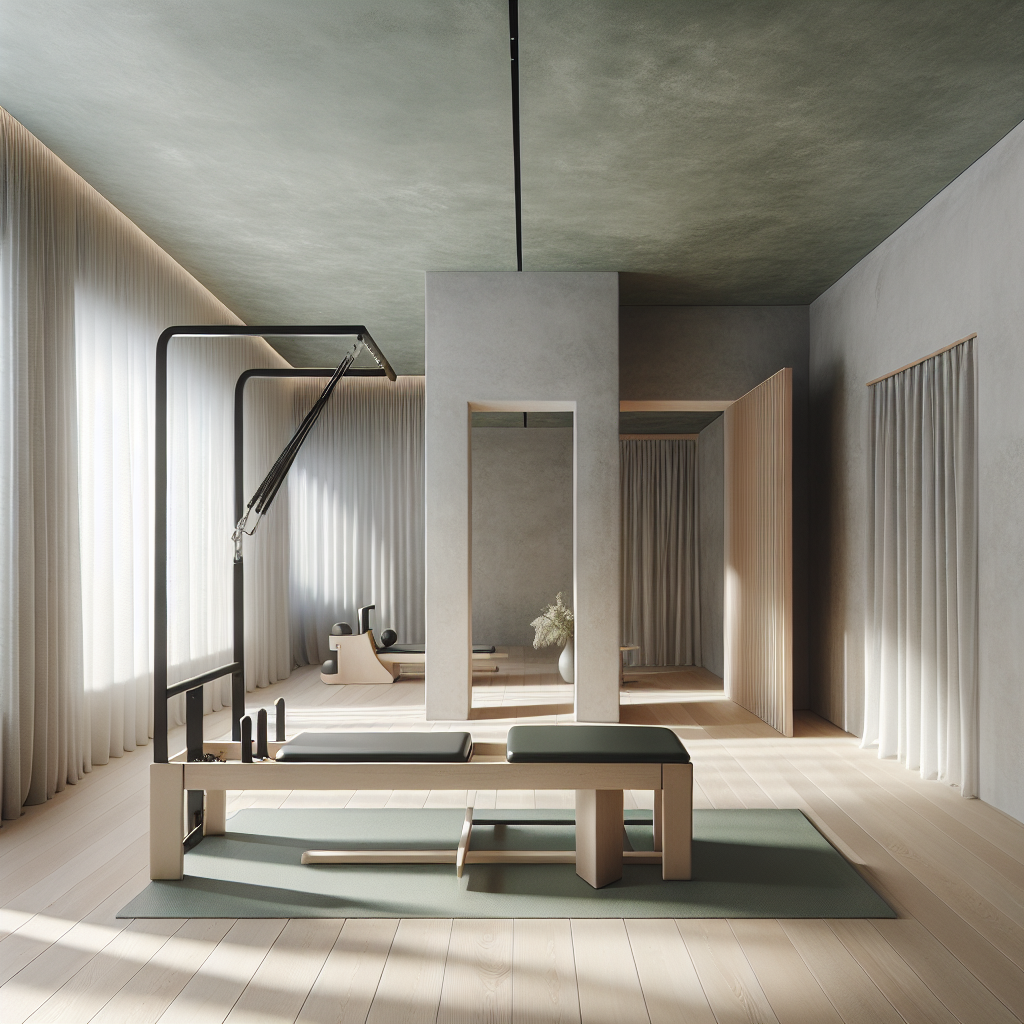
In Miami, three studios profiled by Well+Good illustrate this shift. 727 Studio features maroon walls, gold fixtures, and a built-in Recovery Sanctuary offering infrared sauna and cold-plunge therapy. Beau Monde operates with soft neutrals, signature arched mirrors, and custom hybrid reformers designed for slow, music-synced repetitions that create a European spa sensibility. Meanwhile, New York Pilates emphasizes clean minimalism with natural light, sculptural reformers, and curated soundtracks designed to feel both luxurious and grounding.
The most ambitious example may be Reforming Pilates' new Manhattan flagship in Flatiron, a multimillion-dollar, three-floor renovation inside a restored New York townhouse. The space houses multiple studio concepts under one roof—reformer classes, heated mat sessions, and private training—each designed to feel like a distinct hospitality experience rather than a generic fitness room.
Recovery-Integrated Models Turn Post-Workout Care Into Core Programming
Where studios once treated recovery as an optional upsell, leading operators in 2026 are embedding it into their core business model. This shift reflects member expectations that wellness encompasses both the workout and the wind-down, with recovery modalities like infrared saunas and cold plunges no longer considered luxuries but standard amenities.
Studio Trio, opening in March 2026 on Pennsylvania's Main Line, exemplifies this integration. The 2,400-square-foot facility operates on three pillars: Pilates reformer classes, a progressive strength training room, and a dedicated recovery room with a traditional Swedish sauna and cold plunge. By designing recovery as a standalone pillar rather than an afterthought, Studio Trio positions itself as a complete wellness destination.
In Miami, Fuze House brought infrared-heated mat Pilates to Sunset Harbour and South Miami, operating classes at 95°F and above to turn traditional mat work into a detoxifying, circulation-boosting experience. Similarly, 727 Studio's Recovery Sanctuary gives members sauna and cold-plunge access as part of the standard experience, not as an add-on service.
Franchise Brands Scale Rapidly While Maintaining Design Standards
The franchise sector is expanding aggressively in 2026, but the most successful brands are pairing growth with design sophistication rather than cookie-cutter buildouts. This dual focus allows franchisors to scale while preserving the elevated aesthetic that differentiates boutique Pilates from budget gym offerings.
JETSET Pilates closed 2025 with 24 new studio openings across Texas, Florida, Georgia, North Carolina, New Jersey, Massachusetts, Colorado, and Washington, D.C., bringing its total footprint to over 270 studios open or in development. The brand also opened a new headquarters in Miami's Wynwood neighborhood, designed by globally recognized architecture firm Kobi Karp, signaling that even franchise operations are prioritizing architectural credibility.
Bodybar Pilates revealed plans for over 70 new studio openings in 2026, with 40 slated for Q3 and Q4, while targeting an additional 130 to 200 units in development. The brand generated nearly $44 million in systemwide sales in the most recent reporting period, reflecting 65% year-over-year growth, with its membership base growing to over 18,000 members (a 30% year-over-year increase).
Studio Pilates International entered 2026 with an updated Average Unit Volume (AUV) of $888,774 for its U.S. studios, with 125+ studios open worldwide and more than 70 in development. Meanwhile, Strong Pilates is planning a 2,302-square-foot studio opening in Boston this summer, bringing its hybrid model that combines Pilates, cardio, and strength training using proprietary machines like the Rowformer and Bikeformer.
Small-Group Intimacy Replaces High-Capacity Class Models
Large group classes are falling out of favor in 2026 as members increasingly demand personalized attention and technique feedback. Studios are responding by capping sessions at 6 to 8 participants, a shift that directly impacts studio economics but aligns with client preferences for intimacy and individualized coaching.
Industry observers note that clients no longer want to get lost in a group of twenty. Small-group formats allow instructors to provide real-time corrections and build stronger relationships with members, fostering the community-driven culture that differentiates boutique Pilates from large-scale gym group fitness. This trend also supports premium pricing, as members perceive greater value when they receive sustained instructor attention throughout the session.
Operational Sophistication: Hybrid Models and Hospitality Thinking
Beyond design and class size, operational maturity is defining the 2026 studio landscape. Successful operators are adopting hybrid physical-digital models, sustainability-focused infrastructure, and hospitality-inspired service standards that elevate the member experience at every touchpoint.
Hybrid models are becoming mainstream, with studios offering members a mix of in-person reformer sessions and at-home mat Pilates via studio apps. This flexibility accommodates varied schedules while maintaining engagement and recurring revenue. On the sustainability front, studios are investing in modular, space-efficient systems that align with Pilates' minimalist ethos while reducing environmental footprint.
Hospitality thinking extends beyond aesthetics into service delivery. Studios are training staff in member recognition, personalized programming, and intentional culture-building, treating each client interaction as an opportunity to reinforce brand positioning. This approach mirrors boutique hotel operations more than traditional fitness facilities, reflecting the broader industry shift toward experience-driven business models.
What This Means for Studio Operators
Editorial analysis — not reported fact:
If you are planning a new studio or evaluating how to differentiate an existing facility, the 2026 landscape suggests three strategic priorities. First, design is no longer optional. Members now expect environments that photograph well and feel intentionally curated, which means investing in lighting, acoustics, finishes, and spatial flow comparable to boutique hospitality. Budget for an interior designer or architect who understands wellness spaces, not just generic commercial buildouts.
Second, consider whether your business model can support integrated recovery. Infrared saunas, cold plunges, and dedicated recovery rooms are moving from luxury amenities to competitive necessities. If your square footage or capital constraints make full integration unrealistic, explore partnerships with nearby recovery studios or mobile providers to offer members access without bearing the full infrastructure cost.
Third, revisit your class capacity and pricing strategy. Capping sessions at 6 to 8 participants requires higher per-head pricing to maintain revenue, but it also supports retention by delivering the personalized experience members increasingly demand. If you currently run classes of 12 to 20, test smaller formats in your most popular time slots and measure whether the pricing premium offsets the capacity reduction. Member feedback and retention data will clarify whether intimacy drives sufficient value to justify the shift.
Sources & Further Reading
- Well+Good profile of Miami Pilates studios including 727 Studio, Beau Monde, and Fuze House — covers design, recovery integration, and hospitality-driven studio concepts
- Well+Good coverage of Reforming Pilates' Flatiron flagship opening — details the three-floor townhouse renovation and multi-concept studio model
- Main Line Today feature on Studio Trio's March 2026 opening — explains the three-pillar model integrating Pilates, strength training, and recovery
- Franchising.com report on JETSET Pilates' 24 new studio openings in 2025 — includes headquarters details and total footprint data
- Athletech News on Bodybar Pilates' 70+ studio expansion plan for 2026 — provides systemwide sales, membership growth, and development pipeline figures
- Franchising.com announcement of Studio Pilates International's $888,774 AUV — covers U.S. studio performance and global development
- Boston Magazine on Strong Pilates' summer 2026 Boston opening — describes the hybrid workout model and proprietary equipment
Editorial coverage of publicly reported industry developments. The Pilates Business has no commercial relationship with any companies named.