The Six-Figure Independent Pilates Instructor in 2026
How independent Pilates instructors build $100K+ annual income through private sessions, online courses, and specialization without studio ownership overhead.

Key Takeaways
- Six-figure income is achievable for independent Pilates instructors without studio ownership: a weekly gross of $2,240 across 48 weeks equals $107,520 annually, built through stacked revenue streams rather than increased teaching hours.
- Private sessions generate premium income at $60–$100 per hour (higher in major metros), with ten weekly privates generating approximately $62,000 annually compared to the same schedule of group classes at significantly lower rates.
- Online courses and digital products exploded 147% in 2025, with instructors earning $3,000–$15,000 monthly from courses priced at $97–$297 and enjoying 90-95% profit margins on digital offerings.
- Equipment certification and specialization unlock premium pricing: reformer instructors earn $70–$150 per session versus $25–$50 for mat-only classes, with niche certifications like prenatal driving 30% booking increases.
- Independent practice requires minimal overhead ($0–$30,000 startup for home-based models) compared to boutique studio ownership ($75,000–$150,000+), avoiding the margin compression facing studio operators in 2026's saturated market.
- The highest earners generate less than 40% of income from regular group classes, instead diversifying across privates, online offerings, workshops, and master trainer certifications worth $5,000+ per course.
The Income Reality: Six Figures Without Fantasy
Pilates instructor pay typically ranges between $48,000 and $86,000 annually as of August 2026, but this average obscures a critical truth: some instructors are earning well into six figures with fewer hours than traditional full-time employment. The difference lies not in teaching more classes but in structuring income strategically.
The mathematics are straightforward. A weekly gross of $2,240 across 48 weeks equals annual gross of $107,520, placing instructors comfortably into six-figure territory. This milestone depends on building a strong private client book and commanding premium rates, not on filling every available teaching hour with low-margin group classes.
According to GymDesk's 2026 analysis, actual earnings span dramatically from as low as $20,000 for part-time instructors at chain studios to over $150,000 for independent practitioners. The pathway to the upper end of this range requires understanding which revenue streams scale and which simply consume time.
The Three Revenue Streams That Actually Scale
Instructors who break into six-figure earnings rarely rely on a single income source. Breathe Education reports that successful independent instructors typically stack a small in-studio schedule with privates and online offerings, where no single stream carries the entire annual income.
Private sessions represent the highest revenue per hour. Experienced instructors charge $50–$120 per hour for one-on-one work, with rates varying by market and reputation. Independent instructors usually charge $60–$100 for private sessions, with geography playing a significant role: one instructor increased rates from $65 per session in the Midwest to $125 after relocating to Boston.
Group classes provide steady baseline income. While margins per student are lower, regular group teaching creates predictable cash flow and maintains visibility. The key is treating group classes as one component rather than the entire business model.
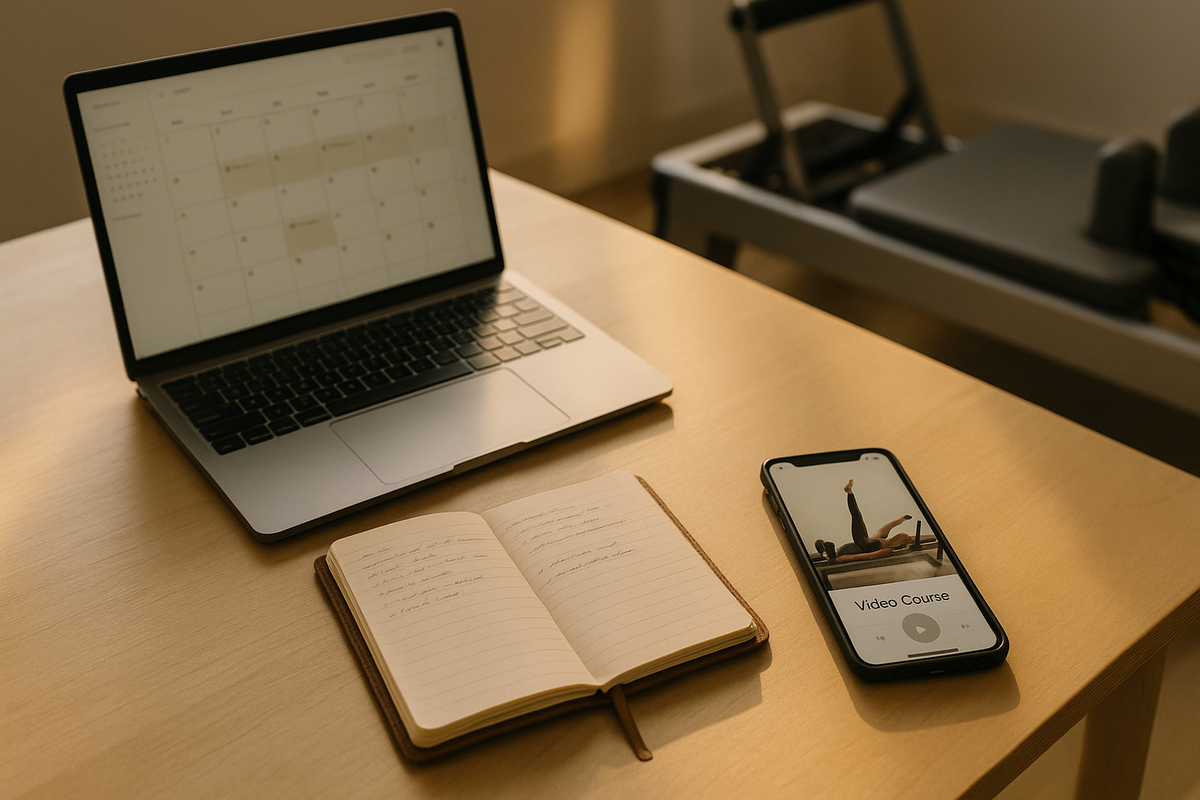
Online and digital offerings create scalability. Online Pilates courses grew 147% in 2025, with most successful courses selling for $97–$297 and instructors earning $3,000–$15,000 monthly. Digital products like courses and ebooks offer 90-95% profit margins, making them highly lucrative once created. Themed workshops such as "Pilates for Desk Workers" consistently sell out at $125 per person, providing premium income spikes that complement recurring revenue.
Why Certification and Specialization Are Non-Negotiable
The income gap between mat-only instructors and comprehensively trained practitioners has widened considerably. Mat-only credentials rarely meet 2026 studio hiring needs, with reformer instructors earning $70–$150 per session versus $25–$50 for mat classes as equipment training becomes essential.
One instructor profiled by JG Pilates started with a basic mat certification and couldn't understand why peers charged double, but saw income double within six months after investing in full equipment certification. The credential itself unlocks access to premium pricing tiers that mat-only instructors cannot command.
Specialization creates additional leverage. The same source notes that after obtaining prenatal and postnatal certification, one instructor became the go-to practitioner for expecting mothers and saw bookings jump 30%. Experienced instructors can also become master trainers, earning $5,000+ per course, adding a high-value revenue stream that requires minimal ongoing time investment.
The Overhead Advantage of Independent Practice
The 2026 market landscape increasingly favors independent instructors over independent studio owners. Private equity platforms are building regional density that allows them to out-market, out-recruit, and out-retain independents through scale advantages, making traditional boutique studio ownership structurally more challenging than 18 months ago.
Independent practice offers a compelling alternative. A low-cost solo business model enables instructors to make very good money with almost no overhead or setup cost, with versions of the model working for both online and brick-and-mortar approaches. Budget studio startup for solo instructors ranges from $30,000–$60,000 for 2–4 reformers, minimal renovation, and lean marketing, compared to $75,000–$150,000+ for full boutique studio buildouts.
Even simpler: a sole practitioner operating across several different studios as a contractor maintains the simplest operating model to earn income with minimal fixed costs, preserving flexibility while building a private client book that eventually reduces reliance on studio employment entirely.
Client Acquisition That Doesn't Depend on Paid Ads
For independent instructors, client acquisition operates differently than studio marketing. Instagram remains necessary but insufficient, with instructors who treat social content as their primary acquisition channel while neglecting local SEO, referral systematization, and retention optimization leaving significant revenue on the table.
Studios with active ambassador programs report 20 to 35 percent of new member acquisitions attributable to ambassador referrals, a strategy independent instructors can adapt by systematizing client referrals through incentives and structured asks. Free trial offers (1-day, 3-day, or 7-day) remain the most common and effective lead generation tactic, with the key being ease of claim and compelling enough experience to drive 30-60% conversion.
Local SEO, Google Business Profile optimization, and strategic partnerships with complementary wellness providers (physical therapists, chiropractors, nutritionists) generate qualified leads without ongoing ad spend, building sustainable acquisition channels that compound over time.
The Digital Revenue Opportunity in 2026
Digital products represent the highest-margin revenue stream available to independent instructors. With 12.5 million people in the U.S. practicing Pilates in 2025, demand for accessible online instruction has never been higher.
The economics are compelling: most successful Pilates courses sell for $97–$297, with top instructors generating $3,000–$15,000 monthly from course sales alone. Creation requires upfront time investment but produces an asset that generates revenue without trading additional hours for dollars.
Live virtual group classes, recorded on-demand libraries, and specialized workshops create a diversified digital portfolio. Importantly, online offerings do not cannibalize in-person private clients; they serve different segments and often create pathways for online students to eventually book premium in-person sessions.
Income Trajectory and Market Timing
New instructors usually make $35,000–$45,000 annually; by year 3–5, earnings typically reach $55,000–$75,000; instructors with 5+ years and a strong brand can hit $80,000–$120,000+. This progression requires patience and strategic skill-building, but the path is proven and replicable.
The current market context actually favors this approach. While studio count grew just 0.2% and industry revenue declined 0.8% in 2026, demand continues rising. Independent instructors can offer the personalization, specialization, and authentic client relationships that scaled operations struggle to replicate, positioning independence as differentiation rather than disadvantage.
What This Means for Studio Operators
Editorial analysis, not reported fact:
The independent instructor model represents the most accessible path to six-figure income in 2026 Pilates because it inverts the traditional business equation. Rather than taking on overhead, staff management, and marketing costs to build a studio that may struggle against well-capitalized competitors, independent practitioners can focus purely on credential development, client experience, and revenue stream diversification.
The instructors best positioned for six-figure earnings in the next 24 months are those who: invest in comprehensive equipment certification and at least one specialization, build a mixed model of 10-15 weekly private sessions supplemented by strategic group teaching, launch at least one digital product or online course, and systematize referrals rather than relying on paid acquisition. This is not a get-rich-quick model, but it is a get-solidly-compensated-for-expertise model that rewards business thinking as much as teaching skill.
For those currently employed at studios: treat that employment as a client acquisition channel for your independent practice, not your primary business model. The goal is building a book of private clients who value your specific expertise enough to follow you wherever you teach, creating independence that no studio schedule change or compensation shift can threaten.
Sources & Further Reading
- GymDesk: How Much Do Pilates Instructors Make, comprehensive 2026 salary data and income model breakdowns
- Breathe Education: How Much Do Pilates Instructors Earn, six-figure earning paths and independent business models
- Juno Cal: Pilates Instructor Salary US 2026, detailed income mathematics and 48-week projections
- JG Pilates: Pilates Instructor Salary, career progression and specialization impact analysis
- Studio Growth: How Much Do Pilates Instructors Make, employment models and independent practice income ranges
- Teachery: How to Sell Pilates Course Online, online course growth statistics and pricing data
- The Pilates Business: Hybrid Digital Revenue Models, digital product economics and workshop pricing strategies
- The Pilates Business: Private Equity Pilates Consolidation, market consolidation trends and independent positioning
- LeadSuite: Yoga Studio Lead Generation USA 2026, client acquisition funnels and referral program effectiveness
Editorial coverage of publicly reported industry developments. The Pilates Business has no commercial relationship with any companies named.