Studio Merchandise: What Sells and What Doesn't in 2026
Merchandise tied to Pilates hit $45B in 2025, but most studios stock the wrong products. Here's what works, what fails, and how to avoid the tote bag trap.

Key Takeaways
- Market opportunity: Merchandise tied to Pilates reached $45.04 billion in 2025 and is projected to hit $66.89 billion by 2030, but contributes only 8% of typical studio revenue when executed well.
- What sells: Utility-tested products clients use weekly—grip socks, reformer towels, water bottles, and branded apparel—drive 67% of total product sales, with 48% of members purchasing annually.
- What fails: Tote bags, keyrings, and mugs that studios pick for launch photos rather than client utility, resulting in dead inventory and margins below 12.7% at independent studios.
- Profitability range: Median retail margins are 20% for fitness-only clubs and 22.6% for multi-unit operators, but drop to 12.7% for independents who overstock or select poorly.
- Execution strategy: Start with small batches of high-use products, track inventory turnover, and leverage trending aesthetics like the "purple Pilates princess" look that drives demand on TikTok.
The $45 Billion Merchandise Opportunity Most Studios Miss
Merchandise sales tied to Pilates reached $45.04 billion in 2025 and are projected to grow to $66.89 billion by 2030, representing an 8% compound annual growth rate. Yet for most studio operators, retail contributes just 8% of total revenue—when it contributes at all. Approximately 48% of members purchase studio-branded merchandise annually, and non-dues operations make up 29.5% of total revenue at fitness clubs according to the Health & Fitness Association's 2025 Report.
The disconnect is not market demand. It is execution. Yoga mats, apparel, and accessories form 67% of total product sales, and in-studio retail corners improve per-member spending by 18%. The problem is that most studios stock merchandise chosen for the studio, not for the client.
Why Most Studio Merchandise Gathers Dust
The tote bag problem is not the tote bag. It is the thinking that produced it. A studio decides it needs merchandise, picks the items that look good in a launch photo, prints its logo on them, and wonders why nothing moves. The items fail because they do not pass the utility test: clients have no reason to use them weekly.
Common mistakes include overstocking, poor product selection, and a lack of promotion. Some studios dive into retail and overstock on expensive apparel that ties up cash. Others neglect to track sales data or forget merchandising displays that drive attention and conversions.
The Hidden Costs Nobody Mentions
Hidden costs include inventory storage, display fixtures, POS setup, and credit-card fees. Staff training time and slow-moving stock that ties up cash flow are often overlooked. The median retail margin is 16.5% for all clubs, 20% for fitness-only clubs, and just 12.7% for independent clubs according to the 2017 IHRSA Profiles of Success—meaning independents who get product selection wrong operate at break-even or worse.
What Actually Sells: The Utility Test
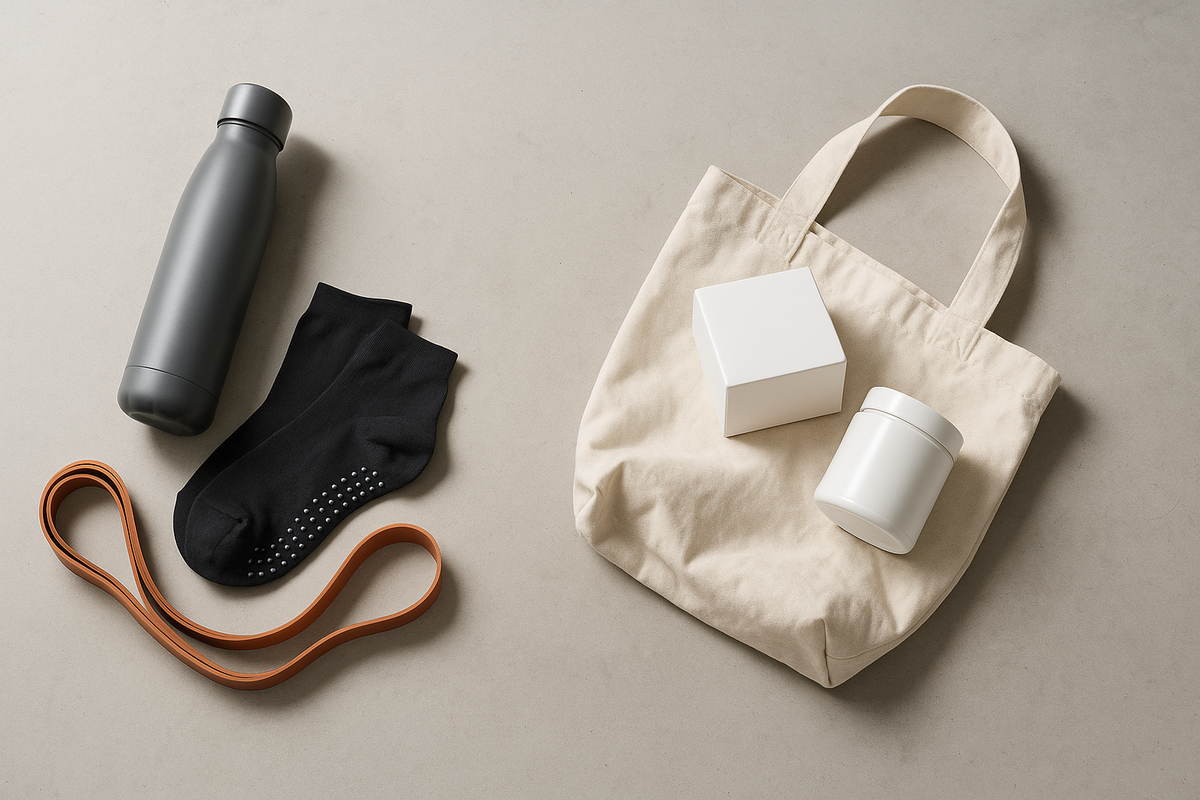
A reformer studio's merchandise is the kit clients actually use: grip socks, reformer towels, water bottles, the branded app and printed flow cards. The kit, the towel, and the bottle pass. The tote bag, keyring, and mug do not. High-velocity products are items clients use weekly, and merchandise as strategic revenue means treating product curation with the same rigor as class programming.
Focus on high-use, brand-aligned products like mats, water bottles, grip socks, resistance bands, and apparel. Add small impulse items near checkout and branded gear to boost visibility and loyalty. Trends like the "purple Pilates princess" aesthetic, popularized on TikTok, have amplified demand for elegant, functional products such as grip socks, reformers, and branded apparel.
Grip Socks as the Hero Product
Done well, a small, curated grip sock range improves client experience and adds a useful margin. Approximately 46% of studio members purchase branded merchandise directly through fitness centers because of convenience and product quality preferences. Studios that treat grip socks as hero product report margins between 75% and 80%, and clients who forget their socks become repeat buyers.
Execution Strategy: Small Batches and High Turnover
The key to moving retail from shelf to sale is prioritizing quality over quantity. Choose reputable brands and suppliers known for producing durable, practical, and stylish merchandise that reflects the standards of your fitness studio. Start with small batches of products your members already use, such as gloves, wraps, bags, and training accessories. Once you know what sells, you can reorder with more confidence.
Buy your merch in small batches at first, so you're not caught with items that hand around forever unless they're top sellers. Keep an accurate count of Pilates equipment, accessories, and retail items to avoid shortages or overstocking. Identify which products are most popular among clients and adjust purchasing accordingly to optimize inventory investment.
Leveraging Emerging Trends
Eco-friendly products account for approximately 28% of merchandise sales due to increasing sustainability awareness, and online wellness merchandise sales increased by 31% between 2023 and 2025 because of growing digital shopping adoption. Over 800 studios are already selling their own brand through custom merchandise suppliers, indicating scalable demand for branded merchandise operations.
Women contribute nearly 73% of total merchandise purchases across Pilates and yoga studios worldwide, making alignment with trending aesthetics and sustainability values essential to product selection.
The Economics: Margin Targets by Studio Type
For facilities that are part of a chain or multi-club group, the retail margin is 22.6%; for independent clubs it's 12.7%. The difference comes down to bulk purchasing power, inventory discipline, and supplier relationships. Multi-unit operators negotiate better wholesale pricing and move inventory faster because they can shift product between locations.
Independent studios should target a 20% margin by stocking only proven SKUs in small batches. Stock items members actually use, like premium grip socks or branded outerwear. Avoid tying up capital in slow-moving inventory. The goal is inventory turnover every 60 to 90 days, not a retail wall that looks impressive on Instagram.
What This Means for Studio Operators
Editorial analysis, not reported fact:
Merchandise is not a revenue savior, but it is a margin opportunity when treated as a strategic extension of the client experience rather than a branding exercise. Studios that begin with five to ten SKUs, track sell-through weekly, and ruthlessly cut underperformers will outperform operators who launch with 40 items and hope for the best. The purple Pilates princess aesthetic is not a passing fad—it signals client willingness to invest in gear that telegraphs identity and community belonging. Studios that align product selection with this trend, prioritize eco-friendly materials, and make online purchasing seamless will capture incremental revenue without the inventory risk that has sunk countless retail experiments.
Start with grip socks. Add water bottles and reformer towels. Test branded apparel in small batches. Track margin by SKU, not by category. If an item does not turn over in 90 days, discontinue it. This is not retail as theater. It is retail as client service, and the studios that understand the difference are the ones building defensible non-dues revenue in 2026.
Sources & Further Reading
- Business Research Insights: Pilates and Yoga Studios Market Report, market size, merchandise sales percentages, and member purchasing behavior data
- Global Growth Insights: Pilates & Yoga Studios Market 2030 Projections, market growth forecasts and online sales trends
- Health & Fitness Association: Rethinking Retail Non-Dues Revenue, margin benchmarks by club type and 2025 revenue composition
- QuickCoach: Reformer Pilates Merchandise Guide, utility test framework and product selection strategy
- PilatesGoods Custom Merchandise, supplier example with 800+ studio clients
- Dojo Business: Pilates Studio Market Growth, TikTok trend analysis and purple Pilates princess aesthetic
Editorial coverage of publicly reported industry developments. The Pilates Business has no commercial relationship with any companies named.