The Strength Shift: Pilates Studios Add Weights in 2026
How boutique Pilates studios are integrating 10-20+ lb weights, AI-powered reformers, and strength-forward programming to capture market growth and justify premium pricing.

Key Takeaways
- Pilates + strength fusion is now a market imperative: Studios blending heavy weights (10-20+ lbs) with reformer work are expanding their addressable market as hybrid formats outpace traditional Pilates-only programming in 2026.
- Equipment innovation is enabling the shift: Connected reformers with AI-driven form correction launched in March 2026 now feature motion sensors and adaptive resistance profiles, transforming reformers into smart strength-building platforms.
- Pricing power follows hybrid programming: Pilates memberships cost 48% more than other modalities, and strength-forward fusion classes justify premium pricing through measurable muscle-building results clients can feel.
- A certification gap threatens quality control: Traditional Pilates teacher training programs don't systematically address weight loading, periodization, or hypertrophy programming, creating risk as studios add strength components without instructor preparation.
- Digital platforms are mainstreaming the category: The Peloton/lululemon Studio partnership packages Pilates alongside Strength, Yoga, and Cardio, signaling that Pilates is now positioned as a core component of strength-building ecosystems, not standalone recovery.
- Gen Z expects measurable strength outcomes: Younger boutique fitness clients drive demand for strength-focused formats that deliver hypertrophy and endurance gains, not just flexibility or aesthetics.
Why Pilates Studios Are Adding Heavy Weights in 2026
Boutique Pilates studios face a market inflection point. Pilates now represents over 43% of primary studio modalities, but client expectations have shifted beyond traditional reformer repertoire. The fastest growth in 2026 is coming from strength-forward classes centered on muscular endurance, control, and full-body efficiency.
Studios are responding by integrating 10-20+ lb weights into reformer and mat programming. The Reformery in New York offers strength-focused mat Pilates classes utilizing a 20 lb bar and two 10 lb weights, while Pilates Underground Utah combines reformer, cadillac, jump board, and heavy weights in single sessions. This isn't cross-training or add-on programming. It's a fundamental repositioning of what Pilates delivers: measurable muscle building, improved stability, and endurance clients can track.
The business case is clear. Pilates classes cost 25% more than non-Pilates classes on average, and hybrid strength formats justify even higher price points by addressing client demand for results-driven programming that traditional mat or reformer work alone doesn't satisfy.
How Equipment Makers Are Enabling Strength-Pilates Hybrids
The reformer itself is changing. In March 2026, equipment maker Balanced Body launched a connected reformer with real-time form correction via AI sensors, targeting both home and studio hybrid users. According to Athletech News reporting on the 2026 equipment forecast, the modern reformer now shares DNA with smart treadmills and bikes: motion sensors, AI-driven form correction, and resistance profiles that adapt in real time.
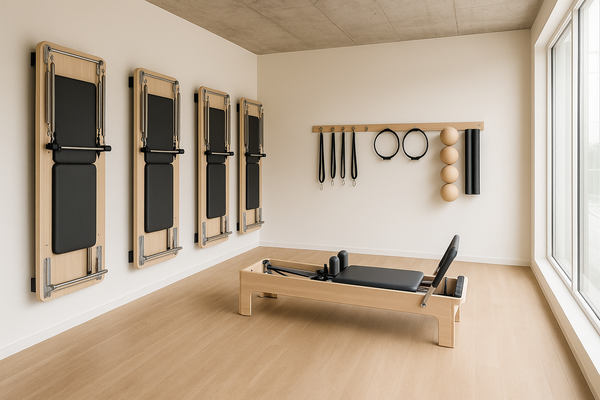
Tower-capable reformers expand vertical exercise options and enable hybrid formats that blend jumpboard intervals for power and reactive control with traditional carriage work. Professional studio reformers now support programming that moves fluidly between Pilates principles and strength periodization, allowing instructors to layer weight loading onto familiar movement patterns without switching equipment mid-class.
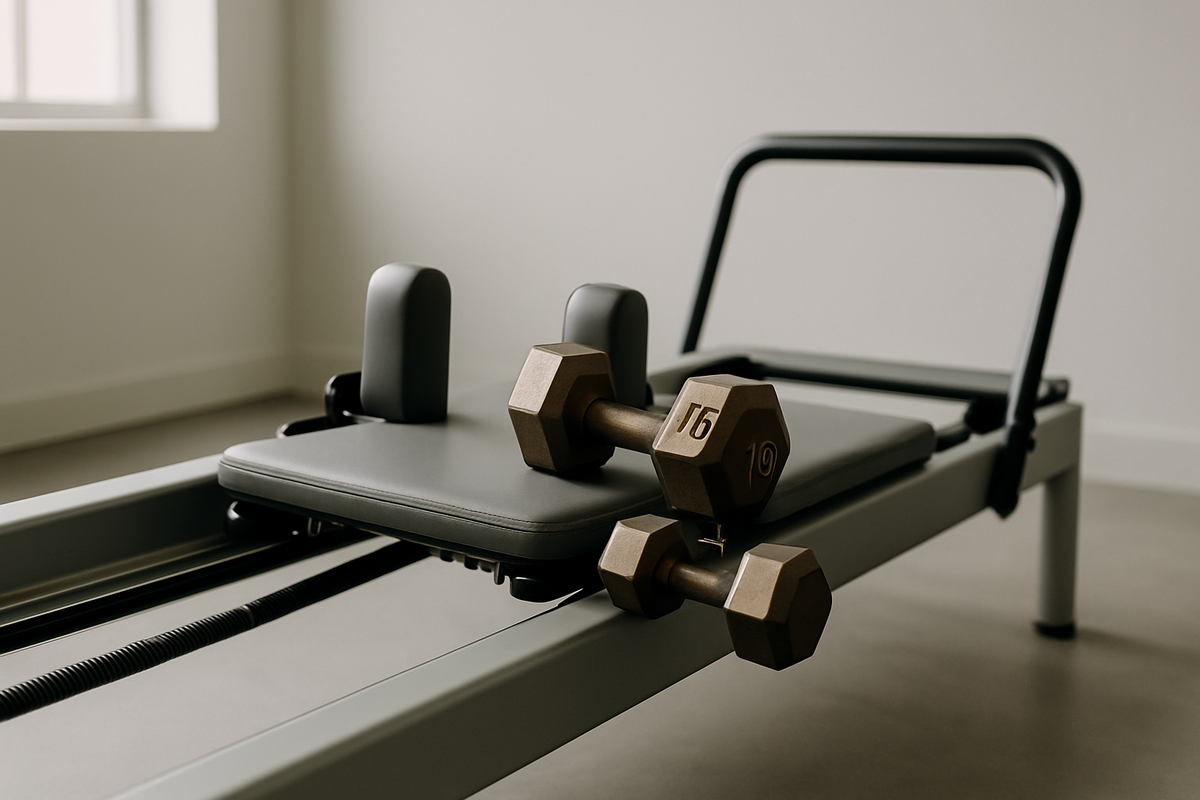
This equipment evolution matters because it removes friction. Studios no longer need separate strength zones or class formats. A single 50-minute session can integrate reformer springs, jumpboard power intervals, and 15 lb dumbbells without logistical compromise.
The Programming Shift: From Flexibility to Hypertrophy
Client expectations have moved beyond lengthening and core stability. The global Pilates market grew 8.2% year-on-year in January 2026, driven by rising demand for low-impact rehabilitation fitness post-injury. But the strongest growth segment wants more than recovery. Gen Z and millennial clients expect measurable strength outcomes: visible muscle development, progressive overload, and endurance gains they can quantify.
Studios are responding with strength-based programming that uses 10-20+ lbs of weight in controlled, small-range repetitions. Some blend Pilates with Barre Sculpt movements, using light weights and props for muscle fatigue. Others, like STRONG Pilates, founded by ex-F45 owners, combine cardio and resistance training using hybrid machines like the Rowformer and Bikeformer.
According to Pilates Addiction leadership quoted in a January 2026 industry predictions roundup: "In 2026, people will shift toward efficient, intelligent training that actually builds longevity, and that's where Pilates Addiction will lead in the category. The era of break down workouts is over; Pilates is how people will build themselves up."
The Certification Vacuum Threatening Quality Control
Hybrid programming is outpacing instructor preparation. Traditional Pilates certification programs don't systematically address weight loading, periodization, or hypertrophy programming. IM=X offers cross-conditioning certification that incorporates strength-training and cardiovascular elements not inherent in traditional-style Pilates, and Balanced Body's Bodhi Suspension System teacher training brings Pilates principles to suspension training. But comprehensive strength + Pilates certifications that cover progressive overload, muscle fiber recruitment, and injury prevention under load remain sparse.
This gap creates risk. Studios adding 20 lb bars and heavy dumbbells to mat classes without instructor training in biomechanics under load may compromise form, increase injury risk, and dilute the precision that differentiates Pilates from general group fitness. The credential vacuum is especially acute for reformer-based strength programming, where spring resistance and external weights interact in ways traditional mat certifications don't address.
How Digital Platforms Are Mainstreaming Pilates + Strength Fusion
The lululemon Studio platform, which offers thousands of Peloton classes, packages Pilates alongside Strength, Yoga, Cardio, Meditation, and Stretching as standard modalities. This signals a category shift: Pilates is no longer positioned as standalone recovery or niche flexibility work. It's a component of strength-building ecosystems, programmed interchangeably with resistance training and HIIT.
For boutique studios, this mainstreaming cuts both ways. Digital platforms validate hybrid programming and expand the addressable market by normalizing Pilates as strength training. But they also compress differentiation. If clients can access Pilates + strength fusion via a $39/month app, studios must justify premium pricing through in-person cuing, equipment quality, and community that apps can't replicate.
Per a February 2026 Merrithew analysis of Pilates trends, STRONG Pilates co-founder noted: "Pilates continues to be the most popular fitness format around the world, and we can expect to see continued innovation driven by growing competition, the rise of hybrid formats and the role of technology in personalising the fitness experience."
What This Means for Studio Operators
Editorial analysis — not reported fact:
Studio operators face three immediate decisions. First, equipment: will your reformers support jumpboard intervals, tower work, and external weight integration, or does your programming require equipment upgrades to deliver hybrid formats safely? Second, instructor competency: do your teachers have formal training in weight loading, periodization, and cueing under resistance, or are you layering strength onto Pilates without the biomechanics foundation to protect clients and differentiate your offering?
Third, positioning: are you explicitly marketing strength outcomes (muscle building, endurance, progressive overload) or relying on legacy Pilates messaging (core stability, lengthening, flexibility) that no longer matches what hybrid formats actually deliver? Studios that answer these questions clearly will capture the 8.2% annual market growth. Those that drift into undifferentiated fusion without instructor preparation or equipment investment risk commoditization as digital platforms and franchises scale hybrid programming faster and cheaper.
The certification gap is your tactical near-term opportunity. Investing in strength-specific continuing education for your instructor team (biomechanics, load management, hypertrophy principles) creates defensible quality and safety advantages that apps and underqualified competitors can't match. The studios winning in late 2026 won't be the ones adding weights first. They'll be the ones adding weights correctly, with instructor competency and programming integrity that justifies premium pricing and builds long-term client trust.
Sources & Further Reading
- Mariana Tek: 6 Trendsetting Boutique Fitness Studios to Watch in 2026 — Industry data on Pilates market share, pricing premiums, and hybrid studio models including STRONG Pilates
- Future Data Stats: Pilates Market Analysis — January 2026 global market growth figures and demand drivers
- Athletech News: Pilates and the 2026 Equipment Forecast — March 2026 Balanced Body connected reformer launch and smart equipment trends
- Pilates Journal: 2026 Pilates Predictions from Industry Leaders — January 2026 perspectives from Pilates Addiction and STRONG Pilates leadership on strength-forward programming
- The Reformery New York — Example of strength-focused mat Pilates programming with 20 lb bars and heavy weights
- Pilates Underground Utah — Studio offering reformer, cadillac, jumpboard, and heavy weight integration
- IM=X Pilates Education — Cross-conditioning certification incorporating strength-training elements
- Balanced Body Pilates Certification — Bodhi Suspension System teacher training and complementary modalities
- lululemon Studio — Peloton partnership platform packaging Pilates with Strength, Yoga, and Cardio classes
- Merrithew: Pilates Trends Defining the Next Chapter of the Industry — February 2026 analysis of hybrid formats and technology personalization
Editorial coverage of publicly reported industry developments. The Pilates Business has no commercial relationship with any companies named.