ADA Compliance for Pilates Studios: 2026 Legal Guide
ADA lawsuits hit 8,667 in 2025, with fitness businesses facing rising enforcement. Physical facilities, booking platforms, and adaptive programming all require compliance.
Key Takeaways
- ADA Title III lawsuits surged to 8,667 cases in 2025, with over 5,000 targeting website accessibility—a 37% year-over-year increase that puts Pilates studios at growing legal risk for both physical and digital barriers.
- Physical compliance spans parking, entrance ramps, equipment spacing, restrooms, and signage, with "readily achievable" modifications required for businesses to remove architectural barriers when feasible without excessive difficulty or expense.
- Website and booking platform accessibility is now a primary enforcement target, with studios held liable for third-party vendor failures—keyboard navigation and screen reader compatibility are non-negotiable for class scheduling systems.
- The DOJ sued LA Fitness in October 2024 for charging extra fees to disabled members and maintaining inaccessible equipment layouts, signaling aggressive federal enforcement against fitness businesses of all sizes.
- Approximately 26% of Americans live with disabilities, representing a significant untapped market for adaptive Pilates programming that also helps satisfy ADA programmatic access requirements.
- Website compliance costs range from $1,500 to $7,500, while lawsuit settlements average $30,000—making proactive audits a cost-effective risk mitigation strategy, potentially offset by the federal Disabled Access Tax Credit of up to $5,000 annually.
Why ADA Enforcement Is Accelerating for Boutique Fitness
ADA Title III lawsuits reached 8,667 filings in 2025, with more than 5,000 cases targeting digital accessibility failures. Fitness and wellness businesses experienced a 28% increase in web accessibility demand letters between 2023 and 2025 as serial plaintiffs expanded focus beyond retail into service businesses.
The Department of Justice filed suit against Fitness International (LA Fitness) in October 2024, alleging architectural barriers preventing wheelchair users from accessing pools and fitness equipment, plus discriminatory fees charged to members with disabilities. This case demonstrates that federal enforcement now extends well beyond website-only violations to programmatic access and pricing practices. Pilates studios face unique vulnerabilities because specialized equipment configurations, tight studio footprints in older buildings, and reliance on third-party booking platforms create multiple compliance exposure points.
Physical Facility Requirements: The Readily Achievable Standard
Title III of the ADA mandates that fitness centers remove architectural barriers when modifications are "readily achievable"—defined as changes accomplished without much difficulty or expense. This subjective standard has become a litigation flashpoint, particularly for studios in pre-1991 buildings that lack modern accessibility features.
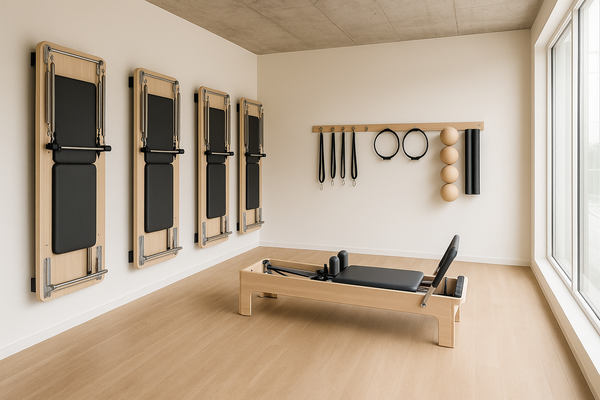
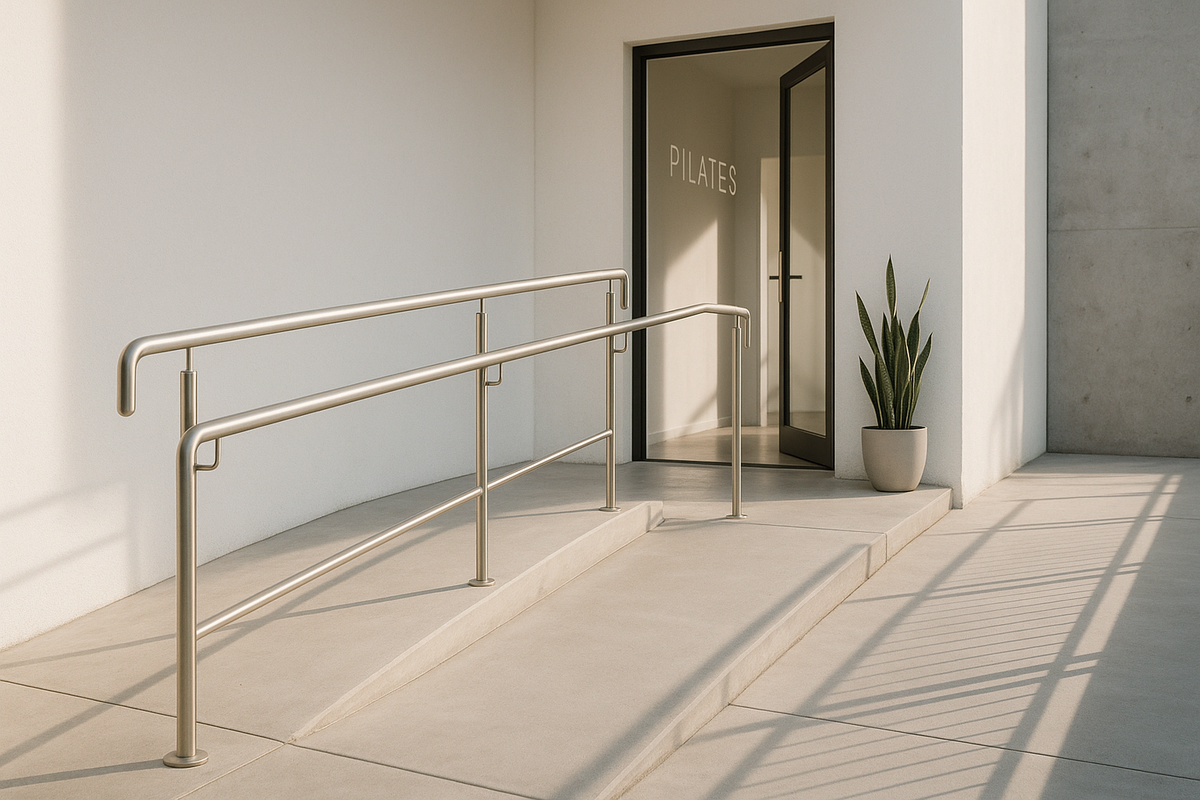
Core physical compliance elements include accessible parking with clear pathways to the entrance, ramp or lift alternatives when steps are present at the main door, and interior routes wide enough for wheelchair navigation. Pilates studio layouts must separate front-of-house and class areas while meeting ADA accessibility requirements alongside restroom, ventilation, and fire code standards. Equipment placement is critical: reformers, chairs, and towers must have accessible routes that allow wheelchair users to transfer onto apparatus or participate in modified exercises.
Common Physical Barriers in Pilates Studios
Reception desks must accommodate seated clients, restroom stalls require grab bars and turning radius clearances, and signage needs tactile and large-print alternatives for visually impaired clients. Many studios occupy commercial spaces built before 1991 that lack these features, complicating retrofit decisions. Certificate of occupancy inspections now routinely verify ADA compliance alongside fire safety, making accessibility gaps a barrier to legal operation in new or renovated spaces.
Digital Accessibility: Your Booking Platform Is Your Liability
More than 5,000 ADA lawsuits in 2025 targeted websites that failed to support keyboard navigation or screen reader software. Pilates studios using third-party scheduling platforms like Mindbody, Momence, or Pike13 face a critical compliance trap: ADA Title III liability attaches to your business, not your vendor. If a client cannot book a class using assistive technology, your studio is legally responsible even when the software is provided by an external company.
Studios must audit booking systems for Web Content Accessibility Guidelines (WCAG) 2.1 Level AA compliance, verifying that all functions operate via keyboard alone, forms include proper labels for screen readers, and color contrast meets minimum ratios. If your current platform fails accessibility testing, you must require vendor remediation, switch to an accessible alternative, or provide an equivalent accessible booking method such as phone reservations with identical class availability and pricing.
Website Compliance Costs and Settlement Risk
Website ADA compliance typically costs $1,500 to $7,500 for most small business sites, while average lawsuit settlements reach $30,000. This cost disparity makes proactive audits and remediation a straightforward risk mitigation investment. Studios can partially offset accessibility upgrades through the IRS Disabled Access Credit (Form 8826), which provides a 50% tax credit on qualified expenditures between $250 and $10,250, yielding a maximum annual credit of $5,000.
Programmatic Access and Instructor Training Requirements
The ADA extends beyond physical space to programmatic aspects, requiring that fitness classes and activities be inclusive and accessible. Staff must understand how to assist clients with disabilities, modify exercises appropriately, and communicate policies without discrimination. This obligation creates both compliance necessity and business opportunity.
Adaptive Pilates instructor Anna Sarol noted the conspicuous absence of wheelchair users in Pilates studios, highlighting a market gap that studios can address through specialized programming. Pilates exercises can be simplified, supported, or performed seated to accommodate different mobility levels, and equipment-based work often proves more accessible than mat classes because springs and straps provide mechanical assistance.
Studios pursuing adaptive programming should invest in instructor certifications focused on disabilities, modify class descriptions to explicitly welcome adaptive participants, and ensure staff training covers communication protocols and equipment modifications. Approximately 26% of Americans live with some form of disability, representing a substantial client base that remains underserved in boutique fitness.
Proactive Compliance Strategies and Audit Frameworks
Certified Access Specialist (CASp) inspections provide detailed facility audits with actionable recommendations, helping studios identify violations before they trigger lawsuits. These inspections assess entrance accessibility, interior circulation paths, equipment spacing, restroom configurations, and signage compliance against current ADA Standards for Accessible Design.
A phased remediation approach prioritizes high-risk, low-cost fixes first: updating website accessibility, training staff on disability etiquette and modification protocols, and addressing parking or entrance barriers. Larger capital improvements such as restroom renovations or equipment reconfiguration can follow a timeline based on financial capacity, though studios should document good-faith compliance efforts to demonstrate responsiveness if challenged. Studios in California face stricter state-specific requirements and more active plaintiff activity, making geographic risk assessment part of comprehensive compliance planning.
What This Means for Studio Operators
Editorial analysis, not reported fact:
ADA compliance is no longer optional risk management for Pilates studios. The convergence of rising lawsuit volume, aggressive DOJ enforcement, and serial plaintiff targeting of digital accessibility creates urgent pressure for owners to audit both physical facilities and online booking systems. Studios operating in pre-1991 buildings face the most complex remediation decisions, balancing retrofit costs against the "readily achievable" standard that courts interpret case-by-case based on business resources.
The business case extends beyond liability avoidance. Approximately one-quarter of potential clients live with disabilities, yet most Pilates studios remain functionally inaccessible to wheelchair users, visually impaired prospects navigating websites, or clients requiring exercise modifications. Studios that proactively embrace accessibility through adaptive programming, inclusive marketing, and universal design principles can differentiate in a crowded market while satisfying legal compliance requirements that intersect with labor law, insurance, and occupancy permitting.
The most immediate action items: audit your booking platform for keyboard and screen reader compatibility, conduct a self-assessment of parking and entrance accessibility, train instructors on basic adaptive modifications, and budget for a professional CASp inspection if your facility predates modern accessibility codes. The federal Disabled Access Tax Credit makes initial compliance investments more affordable, and the litigation cost differential between proactive remediation and reactive settlement strongly favors prevention.
Sources & Further Reading
- United States v. Fitness International (LA Fitness), October 2024 DOJ lawsuit alleging ADA Title III violations
- 2025 ADA Web Lawsuit Trends, documenting 8,667 Title III filings and digital accessibility enforcement patterns
- ADA Title III Standards for Fitness Centers, legal framework and readily achievable modification requirements
- ADA Compliance Guide for Gyms and Fitness Centers, covering physical and digital accessibility obligations
- Certified Access Specialist (CASp) Inspection Guide, facility audit frameworks and remediation strategies
- Adaptive Pilates and Disability Advocacy, instructor perspectives on accessibility gaps in Pilates studios
- Website ADA Compliance Cost Analysis, budgeting guidance for digital accessibility upgrades
Editorial coverage of publicly reported industry developments. The Pilates Business has no commercial relationship with any companies named.