AI & Automation in Pilates Studios: 2026 Operations Guide
AI-native platforms save studio managers 8–10 hours weekly. Connected reformers track movement to the thousandth of a second. But trust remains low—here's what works.

Key Takeaways
- AI-native studio management platforms are saving studio managers and instructors 8–10 hours per week by automating scheduling, waitlist management, substitute instructor recommendations, and equipment allocation without replacing human judgment.
- AI chatbots trained on studio-specific data automate up to 79.3% of repetitive booking requests and 52.4% of first-level technical questions, providing 24/7 front desk coverage with context-aware responses about client history, availability, and needs.
- Connected reformers with motion sensors and real-time biometric feedback track movement to the thousandth of a second, offering AI-driven form correction and adaptive resistance profiles while instructors retain their essential role in reading client intent and emotional state.
- Hybrid teaching models combining in-studio and virtual delivery expanded to 37% of studios between 2023 and 2025, with the most successful 2026 instructors teaching across formats to reach global audiences and diversify revenue.
- Trust in AI wellness tools remains low despite adoption: only 33% of Gen Z, 43% of Millennials, and 17% of Boomers trust AI apps for wellness, making instructor-first positioning and human-in-the-loop design essential for client retention.
- The Pilates and yoga studios market is projected to reach $520.6 billion by 2035 at 14.3% CAGR, with over $1.4 billion allocated globally in 2023–2024 toward product development, studio expansion, and digital integration.
Why 2026 Marks the Pilates Studio Automation Inflection Point
Pilates studios face operational complexity that generic fitness software cannot address: equipment rotation, cleaning breaks between sessions, waitlist prioritization for members versus drop-ins, and instructor certifications that determine who can teach which apparatus. In 2026, AI-native booking platforms like Anolla have risen to prominence by handling Pilates-specific scheduling challenges with intelligent automation that fills waitlists, recommends substitute instructors based on certification and client history, and accounts for reformer turnaround time.
The result is measurable time savings. According to industry reporting, average time per studio manager and instructor decreased by 8–10 hours per week when adopting AI-native platforms. This is not speculative technology. Studios are deploying these tools at scale in 2026, freeing instructors to focus on teaching, connection, and community building rather than administrative firefighting.
AI Chatbots Acting as 24/7 Front Desk Coverage
Client inquiries arrive around the clock, but most studios cannot staff reception beyond business hours. An AI-powered support agent trained on the studio's offerings, pricing, intro packages, policies, and schedule can handle initial contact, qualify leads, and provide context to studio owners. Instead of waking up to a vague "interested in classes" message, operators see detailed intent: "This person is new to Pilates, interested in privates, available weekday mornings, and has mild back pain."
Performance data shows the impact. Context-aware AI assistants automate up to 79.3% of repetitive booking requests and up to 52.4% of first-level technical questions by analyzing each client's training history, package choices, and studio visits in real time. This frees human staff to handle nuanced consultations, injury modifications, and relationship building that require empathy and judgment.
Connected Reformers Layering Data onto Pilates Heritage
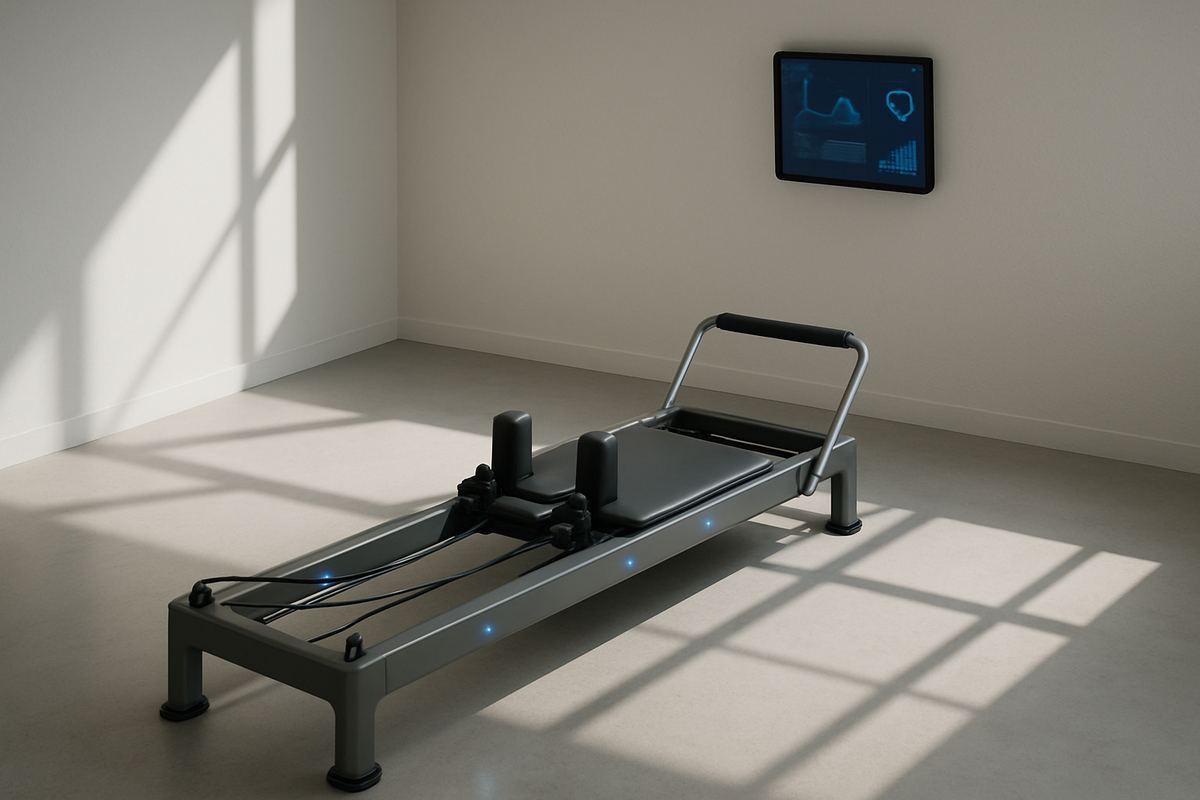
The reformer has always been Pilates' signature apparatus. In 2026, motion sensors and AI-driven feedback are transforming it from a mechanical tool into a data-connected platform. Reform RX's model is the world's first connected reformer, enabling users to participate in streamed on-demand classes, connect to wearables, and receive meaningful workout metrics. The machine tracks user movement to the thousandth of a second, showing real-time biometric data during the session.
Adoption is accelerating. In 2023, over 85 brands introduced Pilates equipment compatible with smart fitness apps and virtual class streaming, and more than 220,000 units of smart-compatible Pilates gear were sold globally. Connected reformers with touch screens, voice-guided instruction, and form correction tools are gaining momentum as studios seek to differentiate their offerings and attract wellness-focused members who expect technology integration.
AI Form Correction and Real-Time Biometric Feedback
Wearable technology and integrated sensors now offer sophisticated motion tracking that monitors posture correction and exercise performance. Around 34% of fitness studios introduced AI-assisted workout tracking technologies capable of monitoring posture correction and exercise performance. Devices like smartwatches and fitness bands provide real-time feedback, alerting users to adjustments needed to perform Pilates movements correctly, which enhances effectiveness and minimizes injury risk.
However, technology has clear limits. No algorithm can fully replicate the experience of an instructor who knows your history and reads your movement. AI cannot sense that you're pushing through pain rather than challenge. It won't soften a correction when you're feeling frustrated, or push you further when it can see you have more to give. That intuitive, responsive decision-making remains the instructor's domain, making AI a co-pilot rather than a replacement.
Hybrid and Virtual Delivery Expanding Instructor Reach
Approximately 37% of studios adopted virtual fitness platforms between 2023 and 2025 to expand customer reach and improve accessibility. The most successful instructors of 2026 teach both in-studio and online, expanding career potential and reaching students anywhere in the world. Online classes, private coaching, virtual corporate wellness programs, and on-demand content continue to grow rapidly.
Immersive VR experiences are emerging as a premium offering. Club Pilates on Meta Quest immerses users in transformative Pilates, where cutting-edge VR technology meets expert-led classes. The Alo Moves XR app on Meta Quest 3 offers an extensive library of classes captured in volumetric 3D, providing a lifelike experience that makes it easier for users to follow along with poses and movements accurately. The immersive nature of VR creates a focused and calming environment, resulting in more satisfying sessions.
The AI Trust Gap and Instructor-First Positioning Strategy
Adoption does not equal trust. 64% of Gen Z and 59% of Millennials have used an AI-powered fitness or wellness app, but only 33% of Gen Z, 43% of Millennials, and 17% of Boomers actually trust AI apps for their wellness. This trust gap creates both a challenge and an opportunity for studios that position AI correctly.
The winning approach is instructor-first. Position AI as a co-pilot, not a replacement. Keep humans in the loop. Members don't want a robot telling them how to train. They want a coach who uses smart tools to serve them better. Studios that frame technology as empowering instructors rather than replacing them will retain clients who value human connection while benefiting from operational efficiency.
Market Investment Signaling Long-Term Commitment
Capital is flowing into Pilates technology at scale. The Pilates equipment market saw robust investment activity in 2023–2024, with more than $1.4 billion allocated globally toward product development, studio expansion, and digital integration. Over 230 boutique studios received funding to scale their offerings with modern reformers, while over 50 fitness technology startups introduced app-connected Pilates equipment lines.
The broader market trajectory is compelling. The Pilates and yoga studios market is projected to reach $520.6 billion by 2035, growing at 14.3% CAGR. This growth is fueled by wellness demand, demographic shifts toward preventive health, and technology enabling new service delivery models that were impossible five years ago.
What Technology Studios Are Actually Deploying in 2026
Technology now underpins discovery, delivery, and retention for Pilates studios. Branded apps handle booking, waitlists, challenges, and referral loops; on-demand video fills travel and off-peak gaps; wearables feed progress data; connected reformers and AI cueing improve form and engagement. The competitive landscape includes AI-native platforms like 1club standing out for automation and modern workflows, while established tools like Mindbody and Glofox offer broader feature sets at greater cost and complexity.
Operational advice from early adopters emphasizes restraint. Keep integrations lightweight at first (booking plus payments plus email plus basic video) to avoid tech bloat and protect margin. Studios that over-engineer their tech stack early often face integration headaches, training burdens, and subscription costs that compress already thin margins. Start with tools that solve your highest-friction problems, then layer in sophistication as staff and clients adapt.
What This Means for Studio Operators
Editorial analysis — not reported fact:
If you are evaluating AI and automation tools in 2026, prioritize solutions that save instructor and manager time on repetitive tasks (scheduling, rebooking, payment follow-up, basic client questions) while preserving human judgment for teaching, relationship building, and nuanced client support. The 8–10 hour weekly time savings reported by early adopters translates directly into capacity for higher-value activities: designing workshops, mentoring newer instructors, or building community programming that drives retention.
Do not adopt technology for technology's sake. The trust gap data is clear: clients will tolerate AI in administrative roles but resist it in coaching roles. Frame any AI deployment as empowering your instructors to be better teachers, not as a cost-cutting measure that reduces human contact. If your marketing or onboarding materials emphasize AI-driven form correction without equally emphasizing the irreplaceable role of your certified instructors, you risk alienating the 57–83% of clients (depending on generation) who do not trust AI for wellness guidance.
For connected reformers and smart equipment, evaluate ROI carefully. If your client demographic skews toward wellness-focused professionals who expect technology integration and data tracking, connected equipment can differentiate your studio and justify premium pricing. If your client base values simplicity and traditional Pilates heritage, a $15,000 connected reformer may deliver less value than investing that capital in instructor continuing education or studio ambiance. Match the technology to your market, not to industry hype.
Finally, if you are considering hybrid or virtual delivery, recognize that this is no longer experimental. With 37% of studios already offering virtual platforms as of 2025, the question is not whether to offer online options but how to integrate them without cannibalizing in-studio attendance. Bundle virtual access as a retention tool for traveling clients or off-peak engagement rather than positioning it as a cheaper alternative to in-person sessions. Successful hybrid models treat online and in-studio as complementary rather than competing.
Sources & Further Reading
Editorial coverage of publicly reported industry developments. The Pilates Business has no commercial relationship with any companies named.