Building a Welcoming Reception and Retail Area on a Budget
Studios allocate 50-100 sq ft for reception and retail, where visitors form seven-second impressions. Grip socks deliver 75-80% margins and drive 15-25% of retail revenue.

Key Takeaways
- Reception areas drive retention: Studios allocate 50 to 100 square feet for reception, check-in, and retail display—visitors form impressions within seven seconds, making this the most critical square footage for membership conversion.
- Budget-smart build-outs cost $15,000 to $20,000: A minimal but professional front-of-house includes a reception desk ($300–$1,000), tablet POS system ($200–$600), layered lighting, and branded signage ($500–$3,000), with paint, flooring, and clean lines delivering impact without spa-level finishes.
- Grip socks generate 15–25% of retail revenue: Required for hygiene and safety on reformers, grip socks deliver 75–80% margins when studios buy at $4 per pair and retail at $14–$16, with multi-location operators reporting five-figure annual revenue from socks alone.
- Initial retail inventory requires $5,000: This budget covers high-use items like mats, resistance bands, water bottles, and a starting grip sock inventory of 100–200 pairs, positioned to hit $1,500 in monthly retail sales from day one.
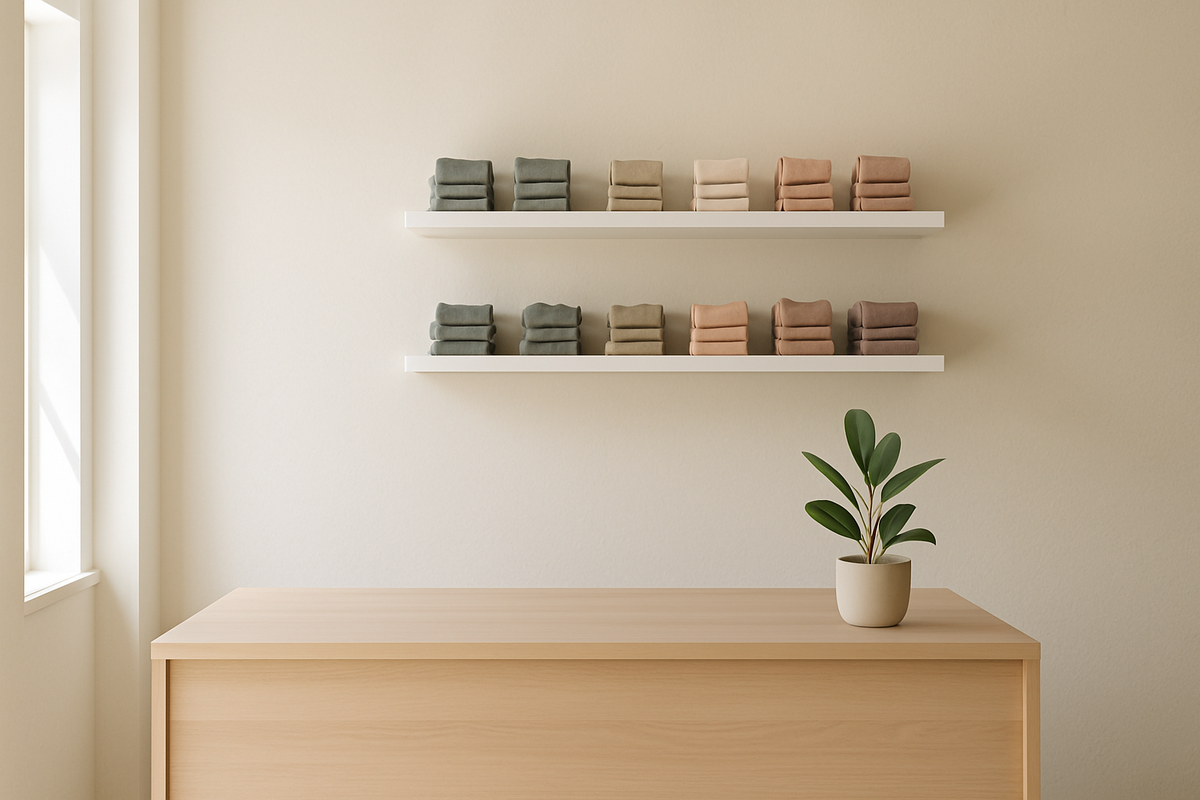
- Compact displays maximize revenue per square foot: Wall-mounted grid racks, floating shelves, and slimline corner units turn even 20 square feet of retail space into profitable displays without crowding the reception flow.
Why Reception Design Comes First
Most wellness studio budgets concentrate on reformers, mirrors, and practice flooring, while the entry sequence receives whatever capital remains. This is a significant misstep. Research shows that visitors form impressions within the first seven seconds of entering your space, making the reception area arguably your most important square footage. Studios with strong retention often have entry sequences that are disproportionately well-designed relative to the rest of the space, because that is where the client experience actually begins.
For budget-conscious studio owners opening or renovating in 2026, this creates an actionable opportunity: first impressions and wholesale retail strategy can be achieved affordably without sacrificing impact. A compact but dedicated reception area signals professionalism from the first visit, which matters more than most owners expect for early membership conversion.
Space Planning for High-Impact Reception Areas
According to industry space planning guidelines, reception and waiting areas ideally occupy 100 to 150 square feet, plus additional space for changing rooms and storage. More pragmatically, studios can allocate 50 to 80 square feet for a minimal waiting area, or design their reception so it doubles as one. Even a minimal front-of-house occupies 60 to 100 square feet and avoids clients crowding the studio floor before class.
Critical elements from a buyer and investor perspective include clear check-in areas, logical cubby placement, and smooth traffic flow before and after class. Studios that feel chaotic during transitions often signal operational strain. Efficient front-of-house design supports retention and reduces staffing stress.
Budget Breakdown for a Professional Front-of-House
A basic build-out including paint, flooring, mirrors, lighting, and a small reception area typically costs $20,000 to $40,000, while a premium build-out with custom millwork and spa-like finishes can push $60,000 to $80,000. However, Pilates students notice the space, and clean lines and natural light matter to this audience. You do not need marble floors to create a beautiful studio.
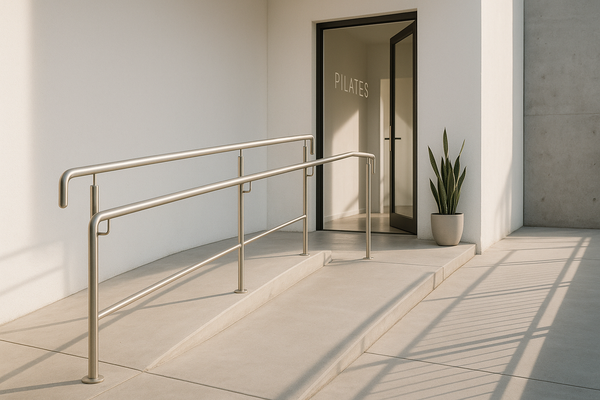
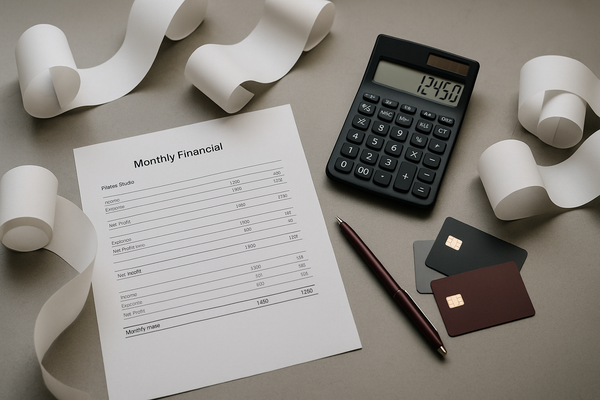
For studios working within tight budgets, allocating $15,000 for reception and branding delivers professional results. This includes a reception desk with computer workstation and storage ($300–$1,000), a POS system or tablet for check-in, payments, and retail sales ($200–$600), and waiting area seating for two to four clients. Exterior signage costs $500 to $3,000, studio logo and wall graphics $200 to $1,000, class schedule display $100 to $500, and price list and service menu $50 to $200.
Designing for Warmth Without Premium Finishes
Lighting sets the mood in any reception space. Natural light is ideal, but layered lighting including ambient, task, and accent fixtures can create warmth and sophistication. Pendant lights above the reception desk or LED backlighting add a modern touch without requiring custom electrical work.
Seating should feel inviting but not dominate the space. Clean, minimalist furniture with soft cushions works well for the waiting area. Do not overlook greenery: plants improve air quality and add a refreshing, inviting vibe. Low-maintenance options like succulents or snake plants are perfect for busy environments and cost less than $100 to install throughout the reception area.
Retail as Revenue Driver and Brand Extension
The $5,000 initial retail inventory budget covers the physical items needed before your first class, like yoga mats and small resistance bands. It also includes the initial retail inventory, perhaps branded water bottles or specialized grip socks. This budget must cover the inventory required to hit your target of $1,500 in monthly retail sales right out of the gate.
Focus on high-use, brand-aligned products like mats, water bottles, grip socks, resistance bands, and apparel. Add small impulse items near checkout and branded gear to boost visibility and loyalty. For sourcing, buy from a niche wholesaler specializing in the Pilates, yoga, and barre market. These partners already know the premium brands your clients love.
Grip Socks as the Hero Product
Grip socks stand out from other retail items for three reasons: they are required, not optional; they deliver exceptional margins; and they create recurring demand. The vast majority of reformer Pilates, barre, and mat-based studios require grip socks for hygiene and safety. Clients who forget their socks at home need to buy a pair at the front desk. This creates guaranteed, recurring demand that no other merchandise category enjoys.
A standard pair that costs $4 to produce retails at $14 to $16, delivering a 75 to 80 percent margin. Some multi-location studios report sock sales contributing 8 to 12 percent of total retail revenue. More specifically, grip socks account for roughly 15 to 25 percent of retail sales, with multi-location businesses reaching five-figure annual revenue purely from socks.
Studios starting with 100-pair test orders often scale to 500-plus pairs within a year as they refine color preferences, branding, and seasonal inventory cycles. Custom sock producers offer low minimum orders for studios on budget, allowing you to test branded versus unbranded inventory before committing capital.
Maximizing Retail Space in Compact Footprints
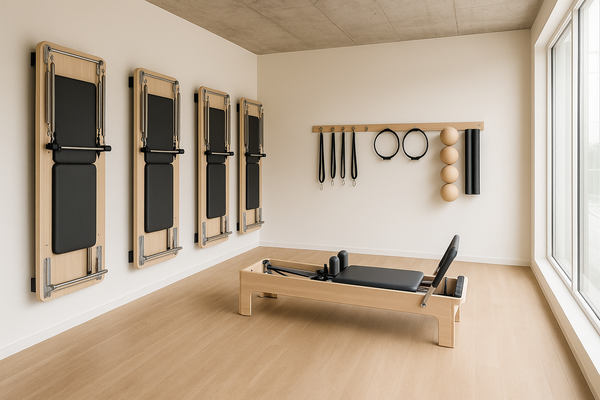
It is remarkable how even the smallest area can become a buzzing, profitable retail display. While reception counters are the obvious choice, look wider: utilize slimline corner units, wall-mounted grid racks, or a series of floating shelves. Vertical displays maximize revenue per square foot without crowding the reception flow.
Position grip socks and impulse items like hair ties and resistance loops at eye level near the check-in tablet. Place mats and larger equipment on lower shelves or floor displays. Keep branded apparel and water bottles visible but not blocking traffic flow. Even 20 square feet of dedicated retail space can generate $1,000-plus in monthly revenue when stocked with the right mix.
What This Means for Studio Operators
Editorial analysis, not reported fact:
The studios opening in competitive metro markets in 2026 are discovering that clean, intentional reception design pays for itself faster than premium flooring or custom millwork in the practice space. When prospective members walk through your door, they are evaluating whether your studio matches their expectations before they ever step onto a reformer. A cluttered, improvised reception area signals operational strain, even if your equipment and instructors are exceptional.
Budget constraints force prioritization, and that discipline often produces better outcomes. A $15,000 reception and branding build-out paired with a $5,000 retail inventory creates a professional first impression and an immediate revenue stream. Grip socks alone can cover your monthly retail target while you test and refine higher-ticket items like apparel and equipment accessories. The studios that treat their front-of-house as revenue-critical infrastructure rather than an afterthought are the ones building sustainable margins in a crowded market.
Sources & Further Reading
- Pilates Complete Guide, Dojo Business, covering equipment, space planning, and startup budgets
- How Much Does It Cost to Open a Pilates Studio, GymDesk, June 17, 2026
- Pilates Studio Size, Design & Layout, Boutique Fitness Broker, January 30, 2026
- A Guide to Modern Pilates Studio Design, Mariana Tek, October 4, 2024
- Sell Merchandise at Your Pilates Studio, WellnessLiving, February 19, 2026
- Wholesale Pilates Socks: Grip, Fit, and Margin in the Studio Sock Market, Dead Soxy, May 4, 2026
- First Impression: Reception Area, SignIn App, May 15, 2026
- Expert Series: Studio Retail Fundamentals, The Studio Edit, February 21, 2026
Editorial coverage of publicly reported industry developments. The Pilates Business has no commercial relationship with any companies named.