Class Size & Capacity Planning for Pilates Studios
Find your studio's profitability sweet spot: why 75-85% occupancy, 8-12 reformer class sizes, and waitlist strategy determine pricing power and retention.


Key Takeaways
- Reformer class sweet spot: Most independent studios achieve the best balance at 8-12 participants with an instructor-to-student ratio of 1:8 to 1:10, allowing for real-time form correction while maximizing revenue per session.
- Occupancy target range: Profitable studios maintain class occupancy rates between 75% and 85%; falling below 70% leaves revenue on the table, while consistently exceeding 90% risks instructor burnout and experience degradation.
- Equipment determines revenue ceiling: With commercial reformers costing $3,000 to $6,000 each, every empty machine during a session represents unrecoverable margin loss, making capacity planning a capital allocation decision.
- Waitlists signal pricing power: A consistently waitlisted class is not just a logistics problem but a hidden bottleneck that can cost studios revenue and a market signal that demand exceeds your current positioning and price point.
- Member retention depends on size: Group fitness participants prioritize small class size over both price and instructor, and about 40% of fitness studio members leave within a year when class experience deteriorates.
The Hard Constraint: Equipment Defines Your Revenue Ceiling
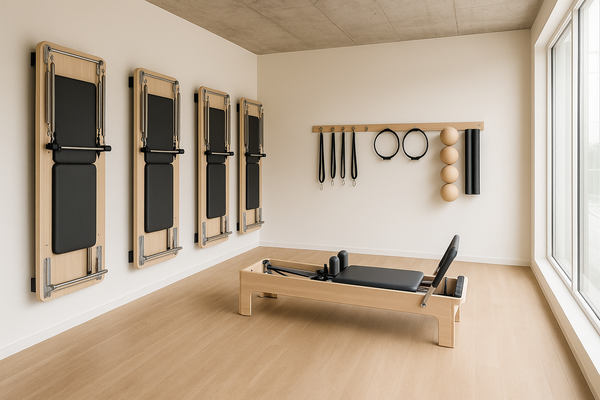
Unlike yoga or mat-based formats where capacity can flex with demand, reformer studios face a physical revenue limit. Commercial reformers cost between $3,000 and $6,000 each, plus ongoing maintenance, creating a capital-intensive foundation that determines everything else about your business model.
The standard capacity planning approach gets this backwards. Most owners acquire space, buy as many reformers as will fit, then try to fill classes around that fixed equipment count. Studio operators should decide target group class size first, then size reformer count and room dimensions to match. If you are planning group reformer classes of five to eight participants, that determines your equipment count, plus a small buffer for maintenance downtime and private sessions running in parallel.
The sweet spot for most independent studio owners is 10 reformers that can run full group classes of 8 students while maintaining 2 machines available for privates or consultations. This configuration balances upfront capital expenditure with scheduling flexibility and the ability to monetize multiple service tiers simultaneously.
Finding Your Class Size Sweet Spot by Format
Class size recommendations vary significantly by format, and the difference is rooted in both instructional needs and member expectations. The average reformer class size is 8 to 12 participants, with an instructor-to-student ratio of 1:8 to 1:10. These benchmarks exist because reformer Pilates requires real-time form correction to avoid injury, attention to individual alignment, and the ability to modify exercises across different fitness levels and injury histories.
Practitioner opinions on upper limits vary considerably. Some instructors run classes with a maximum of 5 participants, or 4 if they are beginners, calling this the threshold where they can keep track of everyone and offer true individual attention. Other boutique studios operate comfortably at 7 to 9. The difference often reflects instructor experience, studio positioning, and pricing strategy.
For mat-based Pilates, the math changes. Classes of 12 to 16 clients represent the sweet spot for most studios, delivering financial viability without sacrificing the instructor's ability to properly monitor form. Once mat classes exceed 20 participants, it becomes significantly harder to deliver the level of attention clients expect from Pilates, even without equipment constraints.
The Occupancy Rate That Drives Profitability
A profitable studio should maintain class occupancy rates between 75% and 85%, with this range balanced to stay profitable without compromising the premium member experience. Falling below 70% leaves significant revenue on the table, especially given the fixed cost structure of equipment and instructor payroll. Consistently exceeding 90% occupancy, however, introduces different risks.
High occupancy rates above 90% can degrade the high-touch form correction and personalized attention that Pilates members expect, and they accelerate instructor burnout. When every class runs at maximum capacity, instructors lose the margin to offer modifications, address individual questions, or create the calm, focused environment that differentiates Pilates from high-intensity group fitness formats.
Top-performing boutique studios consistently hit 70 to 75% or higher class utilization, and operating below that benchmark, which affects 57% of studios, erodes margins. This data point reveals the challenge: most studios are under-utilizing capacity, not over-packing classes. The solution is not necessarily larger classes but better scheduling, demand management, and pricing alignment.
When Waitlists Become Revenue Bottlenecks
A consistently waitlisted class feels like validation, proof that your studio has built something members want. But a waitlisted class might actually be a hidden bottleneck quietly costing your studio revenue, burning out your best clients, and capping your growth potential.
When demand consistently outpaces supply for a specific class time, instructor, or format, the market is sending a pricing and positioning signal. Members willing to join a waitlist are demonstrating higher willingness to pay. They are also more likely to be your most engaged clients, the ones who book ahead, show up reliably, and drive referrals. Forcing them into a waitlist queue week after week risks attrition to competitors with better availability.
Sustainable growth requires a plan: adding teachers, restructuring the schedule entirely, or redirecting some demand rather than trying to accommodate all of it at once. Every solution needs to be intentional. Adding a duplicate class at a less popular time may not work if the waitlist is instructor-specific. Raising prices on high-demand slots can shift some demand while increasing revenue per occupied reformer. The worst approach is ignoring the signal entirely.
Pricing Power Flows from Intentional Capacity Decisions
Class sizes are intentionally small, with most reformer classes limited to 6 to 10 participants, allowing instructors to give more personalized guidance compared to yoga or HIIT classes where 20 to 40 people in a room is common. This structural difference justifies premium pricing.
Across the U.S., the average price of a group Pilates class is about $25 to $35, with reformer sessions typically costing more because of equipment and smaller class sizes. The median Pilates class price in North America is approximately $32.50, with many boutique studios charging $40 to $50 for premium reformer classes.
The pricing-to-capacity relationship is direct. A studio that maintains strict 8-person reformer classes can command higher per-session pricing than one that regularly stretches to 12. About 40% of fitness studio members leave within a year, and poor class experience is one of the biggest reasons. Getting your class size right is one of the few factors fully within your control that directly impacts both pricing power and retention.
Operational Tactics for Managing Capacity
Because the instructor-to-student ratio is so tight, ideally 1:8 to 1:12, manual waitlist management is too slow to fill last-minute gaps. Implementing automated waitlists and strict, software-enforced cancellation policies ensures that no-shows are instantly replaced or monetized, preventing prime-time spots from going to waste.
Set soft capacity caps one spot below your physical maximum. If you have 10 reformers, cap group classes at 9. This creates breathing room for the instructor, allows late arrivals to set up without disrupting the class, and provides a buffer when equipment needs quick maintenance. A waitlist does not mean overbooking your class; it helps you control demand without going beyond your safe capacity, because Pilates instructors need enough space to guide clients properly, correct posture, and maintain a calm class environment.
Track occupancy rates by time slot, day of week, and instructor over rolling 30-day windows. This data reveals which scheduling blocks are underperforming and which are consistently oversubscribed. Use this information to adjust your schedule before making capital decisions about adding equipment or space.
What This Means for Studio Operators
Editorial analysis, not reported fact:
Capacity planning is not a one-time decision made during studio buildout. It is an ongoing strategic lever that affects pricing power, member retention, instructor sustainability, and capital efficiency. The studios that will thrive in 2026 and beyond are those that treat class size as a positioning decision, not just an operational constraint.
If you are consistently running at 90% or higher occupancy, resist the impulse to celebrate without examining whether you are leaving pricing power on the table or accelerating instructor burnout. If you are running below 70%, the problem is likely not your class size but your scheduling, marketing, or member engagement strategy. And if you have waitlists building week after week on the same classes, treat that as the market telling you something valuable about where to invest next.
Start by auditing your current state: calculate actual occupancy rates by class format and time slot, identify which classes have recurring waitlists, and survey your instructors about their capacity to maintain quality attention at current class sizes. Then make intentional decisions about where your studio sits on the spectrum between intimate boutique experience and financially optimized capacity utilization. Both models can succeed, but trying to operate in the middle without a clear strategy is where most studios struggle.
Sources & Further Reading
- Equipment Costs and Class Size: Reformer Pilates Studio, covering capital costs and instructor-to-student ratios
- Pilates Capacity Tips, addressing waitlist management and revenue bottlenecks
- Pilates Profitability, analyzing occupancy rate benchmarks and studio performance
- How Many Reformers for a Pilates Studio, providing equipment planning guidance
- Smaller Classes for Gym Member Retention, examining the relationship between class size and member retention
- How Much Should Pilates Classes Cost in 2026, detailing current pricing benchmarks across formats
Editorial coverage of publicly reported industry developments. The Pilates Business has no commercial relationship with any companies named.