AI Home Reformers Are Eating Studio Revenue in 2026
Pavo and PersonalHour's AI reformers offer premium coaching at home for $3,500 one-time. Studios running 6–7% margins can't compete on price or convenience.

Key Takeaways
- AI-powered home reformers are shipping now: Pavo Fitness surpassed $650,000 on Kickstarter and PersonalHour launched its AI coaching app May 2, 2026, offering real-time form correction and data-driven personalization at a fraction of studio membership costs.
- Studio margins cannot absorb a pricing war: Industry profit margins benchmark at 6–7% with staff wages consuming 44% of revenue, leaving studios with zero pricing power against $2,000–$3,500 one-time equipment purchases that replace $200–$300 monthly memberships.
- First-visit retention is the crisis point: Return rates from first to second visit trail the broader studio fitness average, meaning studios lose clients before demonstrating the human advantage over AI coaching.
- 50% of reformers will be app-connected by 2030: According to Athletech News industry forecasts, connected equipment will become the default, forcing studios to compete on dimensions beyond equipment access.
- Staffing constraints limit studio response options: 62% of studio owners report hiring and retention challenges in 2026, making it difficult to scale premium service models or expand hybrid offerings while instructor pay averages $70,426 annually.
Why AI Home Reformers Represent an Existential Threat to Traditional Studios
On May 2, 2026, PersonalHour launched an AI-powered Pilates training app that delivers real-time form correction through motion-sensing technology, joining Pavo Fitness and iFIT's Reform RX in a rapidly expanding category of connected home reformers. These are not boutique experiments. They represent a fundamental shift in how affluent, tech-savvy Pilates clients will access premium instruction without ever setting foot in a studio.
The economics are stark. A studio membership in a major U.S. metro market runs $200–$300 monthly, or $2,400–$3,600 annually. A connected reformer costs $2,000–$3,500 as a one-time purchase, with app subscriptions ranging $20–$40 monthly. For a household with two users, the payback period is under 12 months. After that, the home setup delivers marginal-cost training indefinitely.
Per Athletech News reporting on 2026 equipment trends, 50% of reformers are expected to feature app connectivity by 2030. These machines combine studio-quality construction with AI-driven personalization, motion tracking, and progress analytics that most studio instructors cannot match without dedicated software infrastructure.
The Studio Profitability Squeeze Makes Price Competition Impossible
Industry benchmarks for 2026 show Pilates studios operate on 6–7% profit margins, with staff wages consuming 44% of revenue. Real estate, equipment maintenance, insurance, and marketing absorb the remainder. Studios have no cushion to compete on price, nor can they materially reduce costs without cutting instructor compensation or class quality.
Meanwhile, 62% of studio owners report hiring and retention challenges, limiting their ability to expand schedules, open new locations, or invest in hybrid models. Instructor pay averages $70,426 annually, with experienced instructors earning $80,000–$120,000+ in competitive markets. Studios cannot simultaneously raise wages to retain talent and lower prices to compete with home equipment.
The first-visit retention problem compounds the challenge. According to the Mariana Tek 2026 Pilates Trends Report, return rates from the first visit to the second visit for Pilates trail the broader studio fitness average. Studios lose potential long-term clients before they experience the community, hands-on correction, and personalized programming that justify premium pricing. A prospect who tries one session, finds it expensive and intimidating, can now purchase a Pavo or PersonalHour reformer and receive AI coaching that feels less judgmental and more convenient.
What AI Reformers Deliver That Studios Currently Do Not
Connected reformers offer four competitive advantages that traditional studios struggle to match: on-demand scheduling, real-time biomechanical feedback, longitudinal progress tracking, and privacy.
Data-driven personalization is a defining trend in 2026 Pilates equipment, with AI systems analyzing joint angles, movement velocity, and muscle activation patterns to deliver corrective cues. iFIT predicts that future machines will fuse biomechanics, AI, and human-centered design to create training experiences as intuitive as they are effective. For a client rehabbing a shoulder injury or managing pelvic floor dysfunction, having session-by-session data on range of motion and movement quality is a clinical asset most studios cannot provide without specialized software.
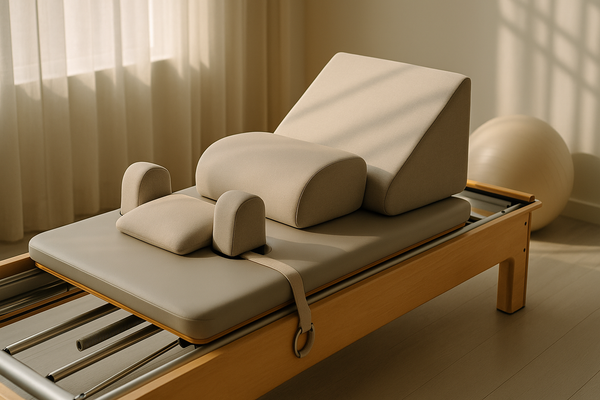
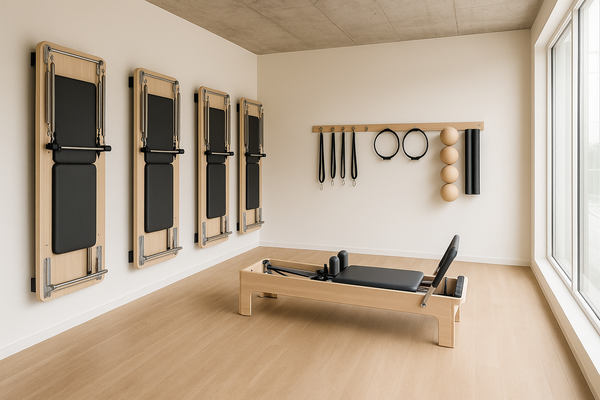
Pavo Fitness's Kickstarter campaign raised over $650,000, signaling strong consumer demand for luxury home equipment that doubles as functional furniture. PersonalHour offers studio-quality reformers designed for home use, foldable and portable, challenging the utilitarian aesthetic of traditional home gym equipment. These reformers appeal to design-conscious consumers who want high-performance equipment without sacrificing living space.
The Human Advantage AI Cannot Replicate
Despite the technical sophistication of AI coaching, human instructors retain critical advantages in emotional intelligence, real-time adaptation, and therapeutic relationships. As analyzed by Absolute Pilates, AI cannot sense when a client is pushing through pain rather than challenge, cannot soften corrections when someone is emotionally fragile, and cannot intuit when to push harder because it recognizes untapped capacity.
Instructors read body language, facial expressions, and energy levels to make split-second programming decisions. They build relationships that create accountability, celebrate milestones that motivate adherence, and provide the social connection that isolated home workouts lack. For prenatal clients, pelvic floor rehabilitation, and complex injury cases, the clinical judgment and empathetic presence of a skilled instructor remain irreplaceable.
The question is not whether human instructors are valuable. The question is whether studios are structuring their offerings to make that value legible and accessible to clients who now have a high-quality alternative at home.
What This Means for Studio Operators
Editorial analysis — not reported fact:
Studios cannot win a technology arms race against venture-backed hardware companies, nor can they compete on convenience against in-home equipment. The path forward requires repositioning studios as premium, outcomes-focused coaching environments that deliver what AI cannot: human connection, clinical expertise, and accountability.
First, fix first-visit retention. Given that Pilates clients who return for a second visit show strong long-term retention, studios must obsess over the new-client experience. Offer discounted two-session intro packages that guarantee a second touchpoint. Train instructors to prioritize hands-on correction and verbal encouragement for first-timers. Follow up within 24 hours with personalized video feedback or a text from the instructor.
Second, embrace hybrid models that incorporate technology rather than resisting it. Offer app-based programming for clients who travel or want to supplement studio sessions with home practice. Partner with reformer manufacturers to offer lease-to-own equipment that integrates with your studio's app ecosystem. Position your studio as the premium tier of a continuous coaching relationship, not a standalone service that competes with home workouts.
Third, specialize in high-value, high-margin services that require human expertise: prenatal and postnatal programming, pelvic floor therapy, post-injury rehabilitation, and advanced athletic conditioning. These clients will pay premium rates for instructors with specialized certifications and clinical backgrounds. Market outcomes, not sessions. Track client progress with objective metrics and share longitudinal data that demonstrates measurable improvement.
Fourth, invest in instructor development and retention. Instructors with 5+ years of experience and strong personal brands can earn $80,000–$120,000+, but only if studios create career pathways beyond hourly class rates. Offer salaries, benefits, and equity stakes for senior instructors. Train your team in business development, client retention, and technology integration so they become irreplaceable strategic assets, not interchangeable labor.
The studios that survive the connected-equipment wave will be those that stop competing on access to reformers and start competing on depth of coaching, strength of community, and precision of outcomes. AI can track reps and correct form. It cannot build the trust, accountability, and human connection that transform casual exercisers into lifelong practitioners.
Sources & Further Reading
- PersonalHour announces AI-powered Pilates training app and connected fitness ecosystem — May 2, 2026 product launch details
- Pavo Fitness's AI reformer blends luxury and data to reinvent home Pilates — Kickstarter campaign success and product positioning
- Pilates and the 2026 equipment forecast: The rise of intelligent, integrated movement — Athletech News analysis of connected reformer trends and iFIT acquisition of Reform RX
- Mariana Tek 2026 Pilates Trends Report — Industry data on client retention, first-visit return rates, and staffing challenges
- Pilates industry statistics: Margins, staffing, and profitability benchmarks for 2026 — Financial performance data and operational challenges
- Can AI replace your Pilates instructor? What the data and your body actually say — Analysis of AI limitations in coaching and human advantages
- Pilates instructor salary data — National average compensation as of January 2026
- Pilates instructor career path and earnings potential — Salary progression and burnout factors
- How PersonalHour is reinventing the Pilates reformer experience — Business model and product design philosophy
- Pilates in 2026: Trends and developments — Data-driven personalization and technology integration
Editorial coverage of publicly reported industry developments. The Pilates Business has no commercial relationship with any companies named.