Big-Box Gyms Deploy Reformer Pilates: Boutique Response
Crunch and Amped Fitness opened dedicated reformer studios in 2026, bringing instructor-led Pilates into HVLP gyms and forcing boutique operators to rethink competitive positioning.

Key Takeaways
- Big-box gyms are building dedicated reformer Pilates studios: Crunch Fitness in McKinney, Texas will open a 1,300 square-foot reformer studio with more than 10 machines in 2026, while Amped Fitness launched reformer programming called Aura Pilates at its Columbus, Georgia location in January 2026.
- High-value, low-price (HVLP) chains are targeting premium Pilates pricing without boutique overhead: HVLP operators can leverage existing member bases and lower acquisition costs to undercut boutique studios on class pricing while maintaining instructor-led quality.
- Pilates adoption across all studio types jumped from 17% in 2021 to 45% in 2025: Market demand continues expanding, but channel fragmentation means boutique studios now compete directly with gyms offering the same equipment and programming.
- Pricing pressure is structural, not temporary: Pilates memberships cost 48% more than other modalities and classes cost 25% more on average, creating an opening for bundled big-box pricing that can position reformer classes as value-adds rather than premium standalone offerings.
- Instructors increasingly seek apparatus certifications to teach across multiple venues: The trend signals instructors view HVLP opportunities as career expansion and revenue diversification, not replacement of boutique work.
- Community and specialization become the boutique moat: With equipment access no longer a differentiator, independent studios must compete on personalized programming, studio culture, and niche expertise rather than reformer availability alone.
Big-Box Chains Launch Dedicated Reformer Studios in 2026
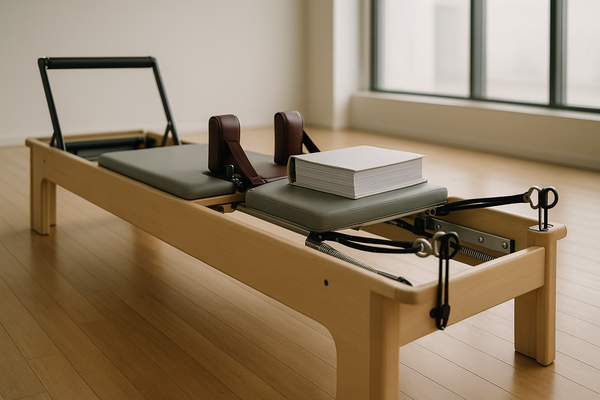
Reformer Pilates is moving out of the boutique-only lane. CR Fitness Holdings announced plans for its Crunch McKinney location to include a 1,300 square-foot dedicated reformer Pilates studio housing more than 10 machines when the $12 million, 40,000 square-foot facility opens later this year. The studio will offer small, instructor-led group classes within the larger gym footprint.
Just weeks earlier, in January 2026, Amped Fitness opened its Columbus, Georgia location with Aura Pilates, a reformer-based program focused on strength, mobility, and core control. Amped operates under a high-value, low-price (HVLP) model, combining budget membership pricing with boutique-style programming that traditionally commanded premium rates.
These openings mark a structural shift in competitive positioning. Big-box operators are not simply adding mat Pilates to group fitness schedules. They are replicating the instructor-led, equipment-based experience that independent studios built their businesses around, then embedding it within facilities that already serve thousands of members paying $10 to $30 per month.
Why HVLP Operators Can Undercut Boutique Economics
The unit economics favor the big-box model in ways that compress boutique margins. According to industry data compiled by Wellyx, Pilates memberships cost 48% more than other fitness modalities on average, and Pilates classes cost 25% more than non-Pilates classes. That premium pricing works when reformer access is scarce. When a gym with 3,000 existing members installs 10 reformers, scarcity evaporates.
HVLP chains can position reformer classes as value-added amenities rather than standalone profit centers. Member acquisition costs are already sunk into the core membership base. Facilities, front desk staff, and parking infrastructure are shared overhead. Per the Club Solutions Magazine coverage, one operator noted that equipment-based classes allow gyms to charge more for privates and small groups because clients do not have reformers at home, creating margin opportunity without requiring the $150 to $250 monthly unlimited memberships that boutique studios depend on.
The result is pricing pressure that does not rely on cutting instructor pay or reducing class quality. Big-box gyms can offer reformer classes at $15 to $25 per session, bundled into upgraded membership tiers, and still generate positive contribution margin while boutique studios require $30 to $45 drop-in rates to cover rent, utilities, and instructor compensation in standalone locations.
Market Demand Is Growing but Fragmenting Across Channels
Pilates is not contracting. The Mariana Tek 2026 Pilates Trends Report found that the percentage of studios offering Pilates classes grew from 17% in 2021 to 45% in 2025. Demand for strength-forward, low-impact training continues rising, driven by aging demographics, rehab-oriented programming, and consumers seeking alternatives to high-intensity interval training.
The problem for boutique operators is not market size. It is market fragmentation. When reformer Pilates was available only in specialized studios or high-end clubs, customer acquisition funneled toward a narrow set of providers. Now, a prospective client in McKinney, Texas can choose between a $200/month boutique unlimited membership or a $29.99 Crunch membership that includes reformer class access alongside strength training, cardio equipment, and other group fitness formats.
Industry leaders interviewed by Pilates Journal highlighted that the strongest growth is coming from strength-centered classes emphasizing muscular endurance, control, and full-body efficiency. HVLP gyms are well-positioned to serve that demand because their members already prioritize functional strength and cross-training over single-modality devotion.
How Instructors Are Responding to HVLP Expansion
Instructors are adapting by diversifying certifications and income streams. According to reporting from Pilates Journal, instructors increasingly seek apparatus certifications to teach multiple modalities, pursue digital engagement opportunities, and build revenue across venues rather than relying on a single studio employer.
This trend benefits HVLP operators. Certified instructors who teach reformer classes at boutique studios during peak morning and evening hours can fill midday or weekend slots at big-box gyms, accessing a different member demographic and supplementing income without cannibalizing their boutique schedules. The big-box gigs often come with benefits access, schedule stability, and reduced pressure to sell retail or private sessions.
For boutique studio owners, this creates retention risk. Top instructors who once relied exclusively on boutique work now have fallback options that provide income diversification. Studios that treat instructors as interchangeable labor rather than partners in community-building will lose talent to operators offering hybrid career paths.
What Boutique Studios Can No Longer Compete On
Equipment access is no longer a sustainable differentiator. A decade ago, owning 8 to 12 reformers created a defensible moat. Clients could not replicate the experience at home or in a typical gym. That exclusivity justified premium pricing and enabled boutique studios to capture customers willing to pay $200 to $300 per month for unlimited access.
Instructor quality, framed generically, also fails as a differentiator. HVLP gyms hire from the same certification pipelines and can offer competitive per-class rates, benefits, and scheduling flexibility. Telling prospective clients that your instructors are "highly trained" or "experienced" does not create meaningful separation when the Crunch location two miles away employs instructors with identical credentials teaching on comparable equipment.
The competitive pressure is not hypothetical. Life Time athletic clubs have expanded higher-end Pilates and recovery offerings while HVLP brands simultaneously push reformer programming downmarket. Boutique studios are compressed from both directions: premium clubs adding Pilates to justify $300+ memberships, and budget gyms adding it to compete on convenience and value.
What This Means for Studio Operators
Editorial analysis — not reported fact:
Boutique studios must shift competitive strategy from equipment and instructor quality to community depth and programming specialization. The operators who will retain members and pricing power in 2026 and beyond are those who build studios around specific populations, outcomes, or methodologies that big-box gyms cannot or will not replicate.
Specialization creates defensibility. Studios focused exclusively on prenatal and postpartum Pilates, older adult strength and balance, rehabilitation partnerships with physical therapy clinics, or athletic performance for specific sports build expertise and referral networks that HVLP gyms cannot match with generalist instructors teaching 45-minute all-levels classes. A reformer is a reformer, but a studio with a waitlist for its 12-week postpartum core restoration program has a moat.
Community must be intentional, not accidental. Members increasingly prioritize personalized experiences and strong studio culture over transactional group fitness. That means knowing client names, tracking individual progress, creating social connection outside of class time, and designing programming that adapts to member goals rather than running the same playlist on repeat. Big-box gyms optimize for throughput and scale. Boutique studios must optimize for retention and lifetime value.
Pricing strategy requires rethinking. Competing on unlimited monthly rates against gyms that bundle reformer access into $30 memberships is a losing game. Consider hybrid models: lower unlimited rates paired with premium privates and semi-privates, class packs designed for 2x/week committed clients, or corporate and healthcare partnerships that generate B2B revenue streams less exposed to consumer price sensitivity.
Finally, instructor retention becomes a strategic priority, not an HR afterthought. Studios that offer continuing education stipends, profit-sharing on privates, paths to ownership or equity, and genuine voice in programming decisions will keep top talent. Instructors who feel like contractors will leave for stability and benefits elsewhere.
Sources & Further Reading
- Club Solutions Magazine: Reformer Pilates at Amped Fitness — Coverage of the January 2026 Columbus, Georgia opening and HVLP strategy for apparatus-based programming.
- Athletech News: Crunch Fitness Reformer Pilates Studio Announced by CR Fitness — Details on the McKinney, Texas location and dedicated 1,300 square-foot reformer studio planned for 2026.
- Mariana Tek: 2026 Pilates Trends Report — Data on Pilates adoption growth from 17% of studios in 2021 to 45% in 2025.
- Wellyx: Pilates Industry Statistics — Pricing benchmarks showing Pilates memberships cost 48% more and classes cost 25% more than other modalities.
- Pilates Journal: 2026 Pilates Predictions from Industry Leaders — Insights on instructor certification trends, programming focus, and market demand drivers.
- Star Tribune: Life Time Athletic Country Clubs Growth — Context on premium club expansion and higher-end Pilates and recovery offerings.
Editorial coverage of publicly reported industry developments. The Pilates Business has no commercial relationship with any companies named.