Bodybar Pilates Franchise Costs: Complete 2026 Breakdown
Opening a Bodybar franchise requires $389,964 to $759,356. Reporting studios averaged $751,000 in sales and $182,143 net income in 2025 FDD data.

Key Takeaways
- Total initial investment: Opening a Bodybar Pilates franchise requires $389,964 to $759,356, with a median of $583,931, including a $60,000 franchise fee.
- Ongoing financial obligations: Franchisees pay a 7% royalty on gross sales, a 2% marketing fund fee, and must spend at least $3,000 monthly on local advertising.
- Reported profitability: Twenty-one studios averaged $751,000 in gross sales and $182,143 in net income (24.3% margin) in the 2025 FDD, with some studios achieving cash-flow positive status within 60 days.
- Equipment differentiation: Bodybar studios feature 14 Reformers versus competitors' typical 12, providing 17% greater revenue capacity per class cycle.
- 2026 growth trajectory: Bodybar reached its 100th studio milestone in September 2026, serves more than 21,000 active members, and generated $26 million in systemwide sales in the first half of 2026, a 36% year-over-year increase.
What It Costs to Open a Bodybar Pilates Franchise
The estimated initial investment for a single Bodybar Pilates studio ranges from $389,964 to $759,356, with a median investment of $583,931 based on the 2025 Franchise Disclosure Document. This range positions Bodybar competitively against established brands like Club Pilates, which requires an estimated $403,289 to $1,029,811 initial investment.
The $60,000 nonrefundable franchise fee is due upon signing the franchise agreement. Bodybar offers a $5,000 discount on this fee for qualifying active military personnel and veterans, bringing their franchise fee to $55,000.
Interested parties should have at least $100,000 in liquid capital available. Unlike many franchise systems, Bodybar does not publish specific net worth requirements, instead focusing on candidates who demonstrate natural leadership, management skills, and an appreciation for fitness.
Detailed Investment Breakdown
The 2025 FDD itemizes costs across 15 categories. The largest line items include leasehold improvements ($99,444 to $311,951), the Pilates equipment package ($124,300 to $128,700), and audio/visual systems ($23,830 to $39,730). Other required expenditures include training expenses ($1,500 to $7,125), instructor training programs ($7,500 to $9,000), real estate and licensing fees ($13,500 to $17,500), signage ($9,750 to $11,525), computer systems ($1,600 to $3,825), an initial inventory kit ($10,000), advertising and marketing ($16,500 to $17,500), insurance ($3,540 to $6,000), shipping ($1,000 to $1,500), professional fees ($3,500 to $45,000), and additional operating funds for three months ($14,000 to $90,000).
The founding instructor training program currently costs $7,500 for up to 10 participants. Additional attendees may join for $300 per person, up to the total number of Reformers in the studio.
Ongoing Fees and Revenue Requirements
Beyond the initial investment, Bodybar franchisees pay a 7% royalty fee on gross sales and contribute 2% to the brand marketing fund. Franchisees must also allocate a minimum of $3,000 per month to local advertising to support studio growth and brand visibility in their market.
The franchise model centers on recurring monthly memberships, which provide predictable revenue streams. Retail sales can contribute as much as 15% of gross revenue, creating an additional income channel beyond class fees.
Revenue and Profitability Performance
According to the 2025 FDD, 21 reporting studios averaged $751,000 in gross sales, with average gross profit of $719,516 (95.8% of revenue). After accounting for normalized expenses averaging $537,372 (71.6% of revenue), these studios reported average net income of $182,143, representing a 24.3% net margin.
Bodybar states that studios can achieve positive cash flow in as little as 60 days, though this timeline will vary based on local market conditions, membership ramp-up rates, and operational execution. The brand offers two ownership models: owner-operator and semi-absentee, each with different day-to-day management responsibilities and corresponding labor cost structures.
Competitive Equipment Advantage
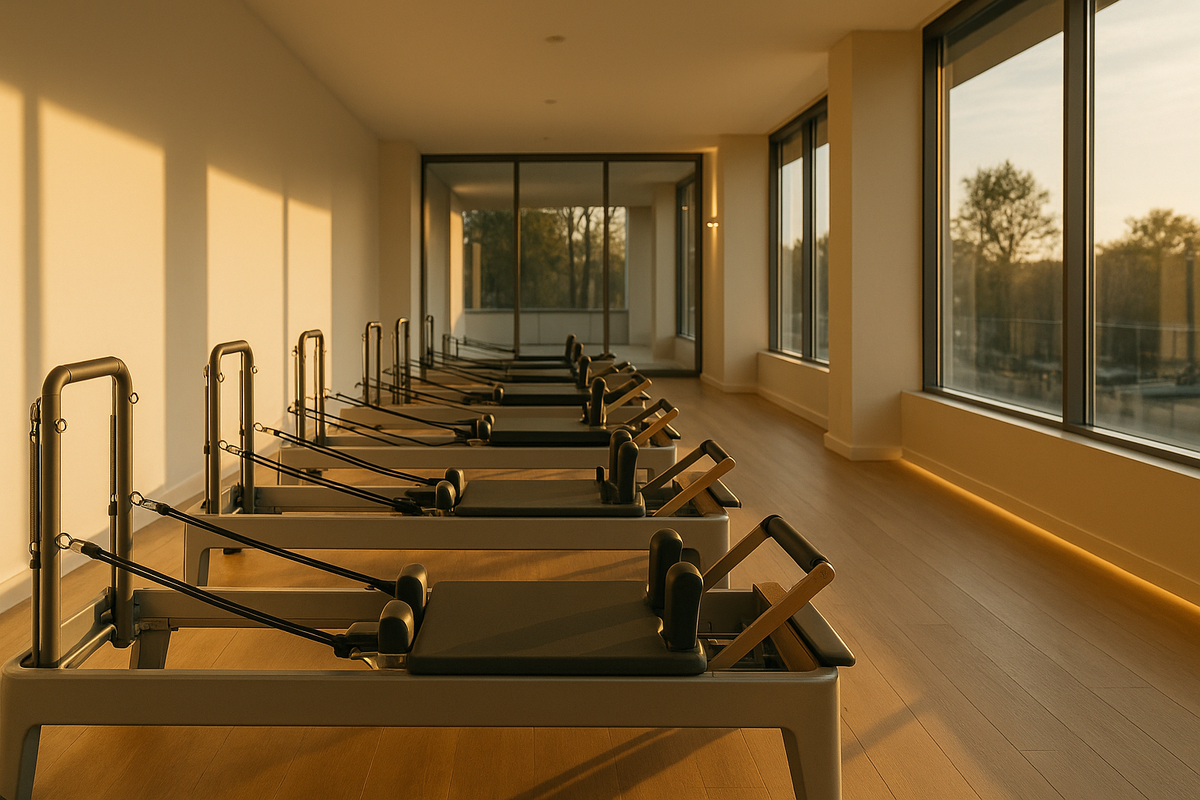
Bodybar differentiates itself through studio configuration. Each location features 14 Reformers, compared to the 12 Reformers typically offered by competitors. This 17% increase in equipment capacity translates directly to revenue potential, allowing studios to serve more clients per class cycle without proportionally increasing instructor labor costs.
Multi-Unit Development Economics
For qualified candidates pursuing multi-unit expansion, Bodybar offers area development agreements with tiered pricing. The area development fee structure scales based on committed studio count: two studios cost $110,000, three studios $155,000, four studios $200,000, five studios $240,000, six studios $275,000, ten studios $400,000, and eleven or more studios at $40,000 per location. These fees are payable upon signing the development agreement and are separate from individual franchise fees for each studio.
2026 Expansion Momentum and Territory Availability
Bodybar celebrated opening its 100th studio in September 2026 and reported serving more than 21,000 active members nationwide. The brand opened 21 new locations through September 2026 and signed 40 new territories while adding 17 franchise owners during that period.
The company expanded its footprint to 204 territories with 89 open studios as of early 2026. Bodybar generated $26 million in systemwide sales in the first half of 2026, representing a 36% year-over-year increase. This growth followed the brand's placement on Entrepreneur's 2026 Franchise 500 and the 2025 Inc. 5000 list after reporting 567% growth over three years.
The rapid expansion in signed territories (204 total with only 89 currently open) indicates both strong franchisee interest and significant development runway. For prospective franchise buyers, this suggests both competitive pressure for desirable territories and validation of the business model through franchisee commitments.
What This Means for Studio Operators
Editorial analysis, not reported fact:
The Bodybar investment profile targets operators with substantial capital reserves and confidence in the boutique Pilates market's continued growth. The $389,964 to $759,356 range demands more than double the liquid capital requirement, and the wide variance reflects significant optionality in real estate decisions and buildout specifications. Operators evaluating this franchise should model scenarios at both ends of the investment spectrum to understand how location quality, lease terms, and construction costs affect both upfront capital needs and ongoing occupancy expense ratios.
The 24.3% average net margin reported by 21 studios provides a meaningful benchmark, but operators must recognize this represents established locations willing to report financials, not necessarily representative of new studio performance during ramp-up. The 60-day cash-flow claim merits scrutiny against local market membership acquisition costs and competitive intensity. Operators should request detailed Item 19 breakdowns and speak with franchisees in comparable markets about realistic timelines to profitability.
The 14-Reformer configuration creates genuine operational leverage if class utilization remains high, but it also represents higher fixed equipment costs and larger square footage requirements that increase base rent obligations. Operators experienced with class-based fitness will recognize that the 17% capacity advantage only materializes if demand supports fuller class rosters consistently. In slower markets or during seasonal troughs, the incremental two Reformers may sit idle while still requiring debt service and floor space.
For instructors considering the transition from employee to franchise owner, the $7,500 to $9,000 instructor training investment plus the requirement to maintain local advertising spend of at least $3,000 monthly signals that this model demands both teaching expertise and comfort with sustained marketing investment. The semi-absentee ownership option may appeal to operators with other businesses or employment, but this structure will require hiring and retaining a strong studio manager, which will compress net margins below the 24.3% average reported for all ownership models.
Sources & Further Reading
- Bodybar Pilates Franchise Review: 2026 Costs, Fees, and Revenue Data, detailed FDD analysis and financial performance metrics
- Bodybar Pilates FDD: Profits and Costs Breakdown, itemized investment requirements and profitability data
- Bodybar Pilates Caps Off Landmark Year of Expansion, 2026 growth milestones and systemwide sales performance
- Bodybar Pilates Franchise Deep Dive, ownership models, training costs, and veteran discount programs
- Bodybar Pilates Enters New Markets, Nears 100 Studios, expansion velocity and market penetration analysis
- Club Pilates Franchise Costs and Data, competitive investment comparison
Editorial coverage of publicly reported industry developments. The Pilates Business has no commercial relationship with any companies named.