Classical vs. Contemporary Pilates: Teaching Identity in 2026
Why the Classical-Contemporary divide is now a business identity question impacting instructor hiring, studio positioning, and client expectations in a saturated market.

Key Takeaways
- Classical vs. Contemporary Pilates is no longer just a philosophical debate—it's now a business identity question directly impacting instructor branding, studio positioning, hiring decisions, and client expectations as the market saturates in 2026.
- Classical Pilates certifications train instructors in Joseph Pilates' complete original repertoire across all major apparatus within a documented lineage, while Contemporary certifications document training in adapted curricula blending modern fitness trends and physical therapy principles.
- Equipment authenticity has become a differentiator, with Classical studios investing in Gratz apparatus built to Joseph Pilates' original specifications, while Contemporary studios favor user-friendly equipment that some instructors say compromises the feel and fundamentals of the original work.
- Instructor identity tensions are rising as 62% of studio owners report hiring and retention challenges, with many instructors questioning whether their certification and teaching approach align with market demand and their personal values.
- Client awareness remains low initially—most clients don't distinguish Classical from Contemporary until they've experienced both—but studios are increasingly labeling classes to clarify methodology and manage expectations.
- Market segmentation is emerging with Classical studios carving luxury niches emphasizing lineage and authenticity, Contemporary franchises scaling rapidly through mainstream fitness adoption, and hybrid programs offering foundational Classical training with Contemporary adaptations for diverse clientele.
Why Teaching Identity Is a Business Question in 2026
The Pilates industry is experiencing what some observers describe as in-house fighting about the watering down of a workout once created to prevent and rehab injuries, particularly as Contemporary approaches that adapt the Classical method continue their rapid expansion. What distinguishes 2026 from earlier years is that this tension has moved beyond pedagogy into studio economics, hiring strategy, and brand differentiation.
With 62% of studio owners reporting hiring and retention challenges and qualified instructors in short supply, the question of whether to hire Classical-trained or Contemporary-trained teachers has become a defining business decision. Studios must now explicitly position themselves along the Classical-Contemporary spectrum to attract the right instructors, retain them, and communicate clearly with clients in an increasingly crowded market.
What Classical and Contemporary Actually Mean in Practice
According to industry discussions compiled across instructor forums and training organizations, Classical Pilates stays faithful to Joseph Pilates' original vision through structured sequences, specific equipment designs, and time-tested methods focused on precision and control. A Classical certification trains the instructor in the complete original repertoire—mat work and all major apparatus including Reformer, Cadillac, Chair, and Barrels—within a documented lineage, typically requiring comprehensive observation, self-practice, and apprenticeship hours with real clients.
Contemporary Pilates retains the same core principles (control, precision, centering, breath, concentration, flow) but modifies exercises, sequencing, and progressions using modern anatomy, motor control science, and rehabilitation principles. Contemporary training programs often emphasize client-specific adaptations and integration with physical therapy concepts, though they may not require mastery of the full apparatus repertoire.
The distinction matters for hiring: studios know whether an instructor completed Classical lineage training or a Contemporary program's adapted curriculum, and many have explicit preferences based on their own methodology and client base.
Equipment as a Lineage Marker and Competitive Signal
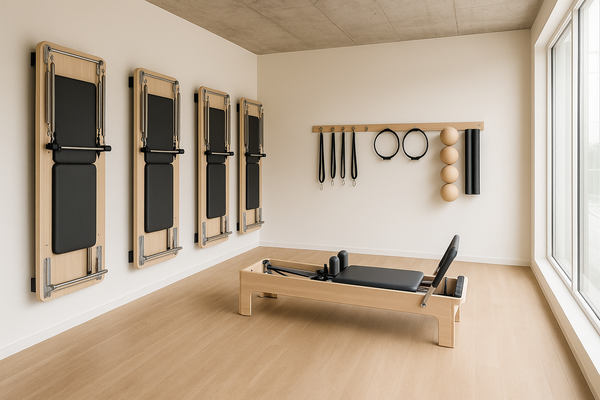
Equipment has become a visible authenticity signal in the Classical-Contemporary divide. True Classical studios invest in Gratz apparatus, crafted to Joseph Pilates' original specifications with precise dimensions, correct spring tensions, and original materials. Proponents argue this equipment delivers the intended resistance and movement quality Joseph Pilates designed.
Contemporary equipment emphasizes innovation and user-friendly features, but some instructors report it changes the work's fundamental feel. In online instructor discussions, teachers describe feeling the carriage constantly "sliding out" on contemporary reformers rather than experiencing the "dragging" sensation that engages the core, leading them to feel they were moving from their limbs rather than their center.
This equipment divide creates a tangible cost differential: Gratz apparatus commands premium pricing, which Classical studios must justify through higher class fees or membership rates, while Contemporary studios can scale more affordably with mass-produced equipment.
The Authenticity Debate and Certification Value
Lineage has become a credential differentiator. The worldwide directory of Classical Pilates instructors lists over 1,400 professionals who completed comprehensive training with distinguished first-, second-, and third-generation instructors whose training lineage traces directly to Joseph and Clara Pilates. For these instructors, documented lineage is a core part of their professional identity and market positioning.
Yet teaching skill and understanding of movement principles remain more important than strict lineage adherence in day-to-day instruction. Many instructors discover, as one UK instructor noted, that learning "the sequence" alone doesn't make someone a Classical teacher—there's deeper understanding required beyond surface-level replication.
Contemporary Pilates has faced pushback from Classical adherents who argue Contemporary methods aren't truly Pilates. In response, both Classical and Contemporary studios increasingly advocate for simple transparency: labeling classes as "Classical" or "Contemporary" so clients understand what they're booking.
Geographic and Market Segmentation Patterns
Classical Pilates maintains a particularly strong foothold in the United States, Italy, South Korea, Japan, and parts of South America—markets where the original method's lineage carries significant weight among clients willing to pay premium pricing for perceived authenticity.
Meanwhile, Contemporary franchises such as Club Pilates, SLT, and KX continue rapid scaling through mainstream fitness adoption, leveraging accessible pricing, convenient locations, and marketing that emphasizes results over lineage. As industry observers note in instructor forums, there will likely always be a market for both Classical Pilates and Contemporary Pilates that doesn't deviate too much from the original, alongside a larger market for "gym Pilates" and fast-paced fusion classes that follow broader fitness trends.
How Clients Experience the Divide
Initially, clients don't recognize the difference—to them, Pilates is Pilates. But once they've tried both, many do notice differences in pacing, cueing, and movement quality. Success comes down to knowing what Pilates is and teaching it properly with respect to the client, regardless of lineage.
Many clients gravitate toward mat- and reformer-based Contemporary classes with instructors who are well-versed in anatomy and physiology, can explain how cued movements relate to the muscles being targeted, provide hands-on adjustments when form is off, and offer modifications when clients need adaptations. This preference reflects the broader fitness market's emphasis on education and personalization.
Studios responding to this dynamic are increasingly transparent about their methodology in marketing and class descriptions, helping clients self-select based on their goals and preferences rather than discovering methodology differences mid-session.
The Emerging Middle Ground and Hybrid Training Models
Some training programs now position themselves as offering the best of both worlds: teaching all the foundational Classical exercise repertoire on all original apparatus while also offering Contemporary variations and adaptations for diverse client needs. Balanced training approaches give students a wider range of understanding that enables them to successfully work with varied clientele from the start.
Advocates for Classical-first training argue that starting with a Classical foundation provides a solid point of departure for any direction an instructor wants to take their teaching. With that deeper understanding of Joseph Pilates' system—why exercises are taught in a specific order, how the apparatus work interconnects—instructors gain tools to then adapt and modify exercises appropriately for individual clients.
This middle path may offer studio operators a strategic advantage: training or hiring instructors with Classical foundations who can flex Contemporary when clients need it, preserving quality while maintaining accessibility.
What This Means for Studio Operators
Editorial analysis—not reported fact:
Studio operators in 2026 face a decision that goes beyond programming: defining teaching identity as a core part of brand strategy. With instructor hiring and retention already challenging 62% of studios, clarity about whether you're a Classical, Contemporary, or hybrid studio directly affects your ability to attract, onboard, and keep the right teachers.
If you position as Classical, you'll likely need to invest in Gratz or equivalent authentic equipment, hire instructors with documented lineage training, and price accordingly to reflect the premium positioning. Your marketing must articulate why lineage matters to justify higher rates in a market where clients initially can't tell the difference. Your competitive moat becomes quality, authenticity, and the luxury experience.
If you position as Contemporary, your advantage is scalability, accessibility, and adaptability to diverse client needs. You can hire a broader pool of instructors, invest in cost-effective equipment, and grow faster. But you must still differentiate on instructor quality—anatomy knowledge, cueing skill, client rapport—because "Contemporary" alone isn't a value proposition when Club Pilates offers the same label at lower prices.
The hybrid approach—Classical foundations with Contemporary flexibility—may offer the best of both worlds for independent studios competing against both luxury Classical boutiques and budget Contemporary chains. It requires hiring or training instructors with strong foundational knowledge who can adapt intelligently, and it demands transparent communication with clients about what they're experiencing and why.
Most importantly, pick a lane and communicate it clearly. Labeling classes, training your front desk to explain methodology differences, and aligning your equipment, instructor hiring, and pricing with your stated identity will reduce client confusion, improve retention, and make hiring easier as instructors self-select studios that match their training and values.
Sources & Further Reading
- Philadelphia Magazine: Pilates Studios and Industry Tensions—covers the growing rift over workout authenticity and contemporary approaches
- Mindbody: Pilates Industry Trends—2026 data on studio hiring, retention, and growth challenges
- Reddit r/pilates: Classical vs Contemporary Discussion—instructor perspectives on methodology differences, equipment, and client experiences
- The Pilates Collective: Understanding Classical vs Contemporary Differences—comprehensive breakdown of training requirements and teaching approaches
- Gratz Pilates: Classical Pilates Equipment Standards—details on authentic apparatus specifications and Joseph Pilates' original designs
- Classical Pilates Education: Worldwide Instructor Directory—listing of 1,400+ lineage-trained instructors
- Balanced Pilates UK: Classical vs Contemporary—discussion of hybrid training models and instructor development
- Body Organics: Classical vs Contemporary Pilates—comparison of principles, sequencing, and contemporary adaptations
Editorial coverage of publicly reported industry developments. The Pilates Business has no commercial relationship with any companies named.