Classical vs. Contemporary Pilates: The Lineage Debate
The classical vs. contemporary divide reshapes US studio hiring, equipment choices, and instructor credibility in 2026 as the market segments by lineage philosophy.

Key Takeaways
- Classical vs. contemporary Pilates represents a methodological divide, not a cosmetic one: classical instructors view the method as a complete, interconnected system requiring no modification, while contemporary practitioners adapt original techniques with modern biomechanics and physical therapy principles.
- Classical certification requires verifiable lineage tracing back to Joseph Pilates, typically involving 600-hour programs with observation, self-practice, and apprenticeship hours, training instructors in the complete original repertoire across mat work and all major apparatus within a single cohesive framework.
- Equipment differences serve as identity markers: classical studios use authentic Gratz apparatus with four even-tension springs and aggressive resistance that forces constant core engagement, while contemporary studios often use modernized equipment with modifications that fundamentally change exercise mechanics.
- Contemporary certifications follow a modular system, allowing instructors to complete mat, reformer, and apparatus training separately across different providers, creating wide variation in training depth and ability within the contemporary category.
- The US market is segmenting into distinct client bases: one for classical and faithful contemporary Pilates, and a larger market for gym-based fusion classes that blend Pilates with aerobics, dance, and HIIT formats that critics argue deviate from core principles.
- Studio hiring decisions increasingly hinge on lineage philosophy, with many studios expressing clear preferences and requiring additional training when instructors cross between classical and contemporary approaches.
Why the Classical vs. Contemporary Debate Intensified in 2025-2026
The US Pilates industry is experiencing what Philadelphia Magazine characterized in December 2025 as "in-house fighting about the watering down of a workout once created to prevent and rehab injuries." This tension has escalated as Pilates studios proliferate across the country, with 45% of studios on major platforms now offering classes in 2026, up from just 17% in 2021.
The growth has forced a reckoning over identity. For instructors and studio operators, the choice between classical and contemporary approaches now directly shapes hiring standards, marketing positioning, and client expectations. The debate is methodological rather than superficial, reflecting what industry educators describe as "a genuine difference in how each tradition answers the same question: is Joseph Pilates' original method complete as he designed it, or is it a foundation to develop further?"
How Classical Lineage Defines Instructor Credibility
Classical Pilates instructors anchor their credibility in verifiable lineage. According to Power Pilates educational materials, a certified classical instructor "can trace their training back to the source, providing a verifiable standard of fidelity that programs lacking this lineage cannot replicate." This lineage passes through what the industry calls the "Pilates Elders," first-generation teachers who trained directly with Joseph Pilates, including Romana Kryzanowska, Jay Grimes, and Kathy Grant.
Classical certification typically requires 600-hour programs that train instructors in the complete original repertoire across mat work and all major apparatus within a single cohesive framework. The training model emphasizes observation, self-practice, and apprenticeship hours with real clients. Classical instructors view Pilates as "a complete, interconnected system where each exercise builds upon others," with no exercise taught in isolation or modified without violating the method's integrity.
Equipment as a Teaching Philosophy Statement
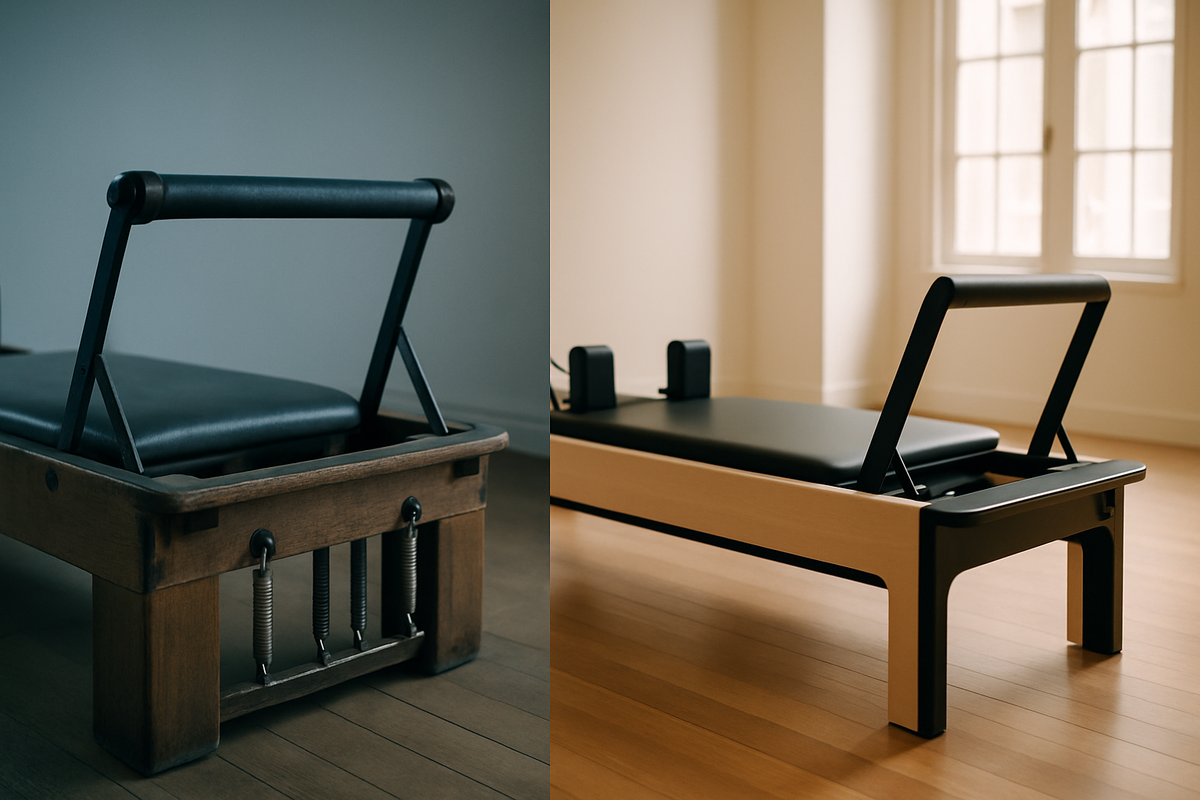
True classical studios use authentic Gratz apparatus, with each reformer meticulously crafted to Joseph Pilates' original specifications. These reformers feature four even-tension springs, leather straps, and wooden or aluminum frames. The spring resistance is what classical instructors describe as "aggressive and dense," forcing the powerhouse (core) to remain active constantly through initial resistance and strong tension during the return phase.
Contemporary studios, by contrast, often use modernized equipment with modifications that fundamentally change how exercises feel and function. The equipment choice becomes a visible signal to clients and instructors alike about a studio's philosophical allegiance.
Contemporary Pilates: Modular Training and Clinical Integration
Contemporary Pilates adapts the original techniques by blending them with modern fitness trends, physical therapy principles, and sometimes completely different workout styles. According to industry observers, contemporary programs are "built on a modular system where mat, reformer, and apparatus certifications are completed separately, sometimes across different providers."
This modular approach offers instructors flexibility in building qualifications, but it also means the depth and breadth of any individual's training varies significantly based on which modules they have completed. A contemporary instructor might have studied for years perfecting knowledge of the method, or completed only a weekend workshop at a gym. Under current definitions, both qualify as contemporary Pilates instructors, creating what critics identify as excessive variation in training and ability within the category.
Why Contemporary Dominates Rehabilitation Settings
Contemporary Pilates has established a strong presence in clinical and rehabilitation environments, in part because its integration of neutral spine positioning and modern biomechanics aligns with physical therapy practice. Many physiotherapists and occupational therapists train in contemporary programs such as STOTT (Merrithew), Balanced Body, and BASI for this reason. Contemporary instructors report that their approach is "more suitable for students recovering after operations because there are modifications to classical exercises and order, as well as new exercises borrowed from other fitness disciplines or invented by physical therapists."
The "Watering Down" Critique and Market Segmentation
Classical purists argue that some contemporary approaches steer so far outside true Pilates principles that they become "a series of circus tricks." Studios marketing booty-sculpting Pilates classes or cardio HIIT Pilates face accusations of practicing not the real Pilates method, but rather "a remix of aerobics, dance, yoga, and Pilates exercises," as noted in the December 2025 Philadelphia Magazine analysis.
Industry observers predict lasting market segmentation: "There will always be a market for both classical Pilates and the type of contemporary Pilates that doesn't deviate too much from the original. Then there will be another larger market for gym Pilates and fast-paced fusion classes that, like other trendy types of exercise, will come and go." This segmentation creates distinct client bases with different expectations for class format, equipment, and instructor training.
Real Instructor Experiences Across the Divide
Classical teachers report challenges working "in studios where I was the sole classical teacher," finding that most clients "are accustomed to higher repetitions, many props, and exercises that do not resemble what I teach." Contemporary instructors face different pushback. One contemporary teacher whose sessions are typically waitlisted notes that "people have said her teaching method is not Pilates," yet she believes she is "simply delivering it in a way my community relates to most." The same instructor acknowledges that "while traditionalist Pilates enthusiasts may look down on my modern approach to the method," client demand validates her methodology.
How Lineage Philosophy Shapes Studio Hiring Decisions
Studios hiring instructors in 2026 increasingly "know the difference and often have a preference based on their own methodology," according to Power Pilates guidance on the distinction. An instructor with classical certification wanting to work in a contemporary studio, or vice versa, may be welcomed depending on the studio's openness, but is often expected to complete additional training in the studio's specific approach.
This hiring dynamic creates career pathway implications for instructors. Those trained in one lineage may find their employment options limited to studios sharing their philosophical approach, or face the time and cost investment of additional certification to cross between camps. For studio operators, the lineage decision affects not only which instructors they can hire, but also how they position themselves in an increasingly segmented market.
What This Means for Studio Operators
Editorial analysis – not reported fact:
Studio operators in 2026 face a strategic choice that extends far beyond teaching preference. Your lineage positioning affects instructor recruitment, equipment investment, client messaging, and competitive differentiation. Classical positioning requires substantial upfront investment in Gratz apparatus and limits your hiring pool to instructors with verifiable 600-hour lineage training, but it also offers clear differentiation in markets saturated with contemporary and fusion offerings.
Contemporary positioning provides hiring flexibility and clinical credibility, particularly if you serve clients with rehabilitation needs or partner with physical therapists. However, you must actively manage quality standards given the wide variation in contemporary instructor training. If you employ instructors who completed only modular weekend certifications alongside those with years of study, your quality control and continuing education requirements become critical to maintaining consistent client experience.
The middle ground carries its own risks. Studios attempting to bridge both lineages often struggle with instructor conflicts and client confusion. If you hire across both camps, establish clear protocols for when each approach is appropriate, invest in cross-training, and communicate transparently with clients about which lineage they are experiencing in each class.
The market segmentation trend suggests that claiming a clear identity will likely serve you better than attempting to be all things to all clients. As one studio owner observed, "there may always be two separate camps within the Pilates community and they may never agree on what Pilates is or what Pilates is not." Your business decision is not which camp is right, but which camp aligns with your target market, your instructor talent pool, and your operational model.
Sources & Further Reading
- Philadelphia Magazine, December 2025: The contemporary vs. classical Pilates debate – Analysis of the intensifying "in-house fighting" over Pilates methodology and the watering-down critique
- Power Pilates: What is the Difference Between Classical and Contemporary Pilates – Educational overview of lineage, certification requirements, equipment standards, and the methodological divide between approaches
Editorial coverage of publicly reported industry developments. The Pilates Business has no commercial relationship with any companies named.