Classical vs. Contemporary Yoga: The US Teacher Identity Crisis
US yoga teachers face business pressure to avoid classical philosophy while students question authenticity. How post-lineage movements and hybrid training are reshaping the debate.

Key Takeaways
- Yoga lineage terminology is largely a modern invention: the distinct "styles" taught today did not exist 50 years ago, and many contemporary formats like Vinyasa Flow operate as freestyle variations without clear hierarchical lineage.
- Classical yoga philosophy treats posture (asana) as one of eight limbs and emphasizes spiritual practice, while postural yoga focuses primarily on physical fitness, creating an identity gap many US teachers struggle to navigate.
- Business pressure shapes teaching: some studio owners in the US have explicitly told instructors not to teach classical philosophy out of fear of losing students, forcing teachers to choose between authenticity and income.
- Post-lineage yoga is emerging as a non-hierarchical, non-authoritarian model that especially appeals to women teachers and younger practitioners seeking authentic experience without strict guru adherence.
- Hybrid training trends in 2025-2026 integrate yoga with strength and mobility work, while Yoga Certification Board (YCB) credentials are becoming the professional benchmark for safety and authenticity in many regions.
The Lineage Myth: Styles Are Newer Than You Think
The single biggest misconception about yoga styles is the belief that any one style represents authentic yoga. According to the Himalayan Yoga Institute, yoga styles as we know them are a modern invention that did not exist 50 years ago. Vinyasa Yoga, one of the most popular formats in US studios today, is not a system with a clear lineage, hierarchy, or leading guru. It emerged from the Ashtanga Vinyasa Yoga tradition but operates largely as a freestyle variation.
This matters for US instructors because many teach styles that claim ancient lineage but function as contemporary hybrids. The identity confusion is real: teachers trained to honor specific traditions find themselves navigating a landscape where "authenticity" is both a marketing asset and an ethical minefield.
What Classical Yoga Actually Emphasizes
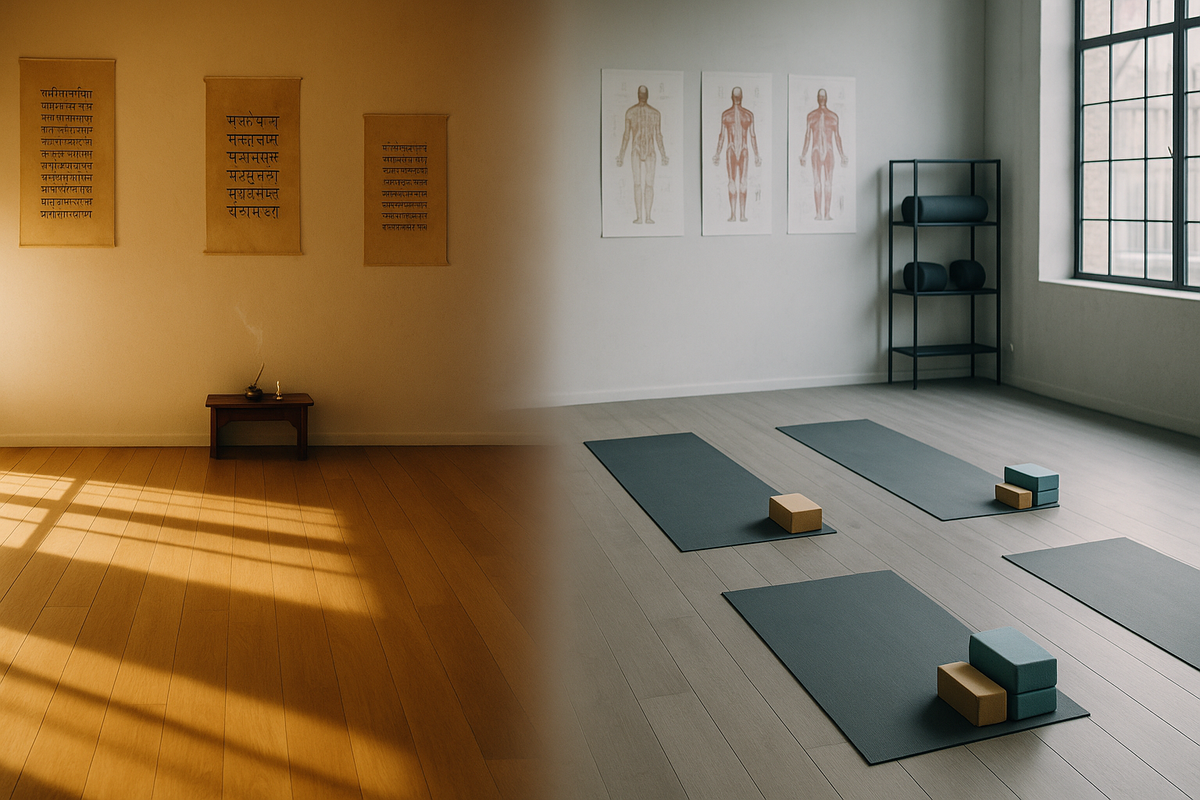
In classical Sanskrit, yoga refers to a variety of spiritual practices in which postures play a minor role, if any. The most famous yoga text, the Yoga Sutras of Patanjali, describes posture (asana) as one of eight limbs of yoga and specifies only that posture should be "firm and pleasant," according to traditional yoga scholarship. Yet in today's fast-paced world, yoga has transformed to emphasize physical postures and fitness, leading to a separation from yoga's spiritual core.
This gap between classical intent and contemporary practice creates tension for instructors who understand both traditions but must choose which to prioritize in a 60-minute class.
The Business Reality: Don't Teach Philosophy or Lose Your Job
The pressure to dilute classical teachings is not abstract. Some yoga teachers working at well-known studios around the United States have privately confided that studio owners directly told them not to teach classical philosophy, warning that if they did, they would no longer be allowed to teach there. Many asana teachers who understand and seek authentic yoga in their personal lives refrain from sharing this with students out of fear of losing students and class payments, according to industry reporting.
Opponents of postural yoga warn that the practice corrupts the core principles of classical yoga for popularity and profit. The Hindu American Foundation depicts body-centric yoga as a dishonest business deal promoted by profiteers who do not admit yoga's Hindu identity out of fear of religious backlash. This creates an urgent ethical dilemma for US instructors: are they gatekeeping tradition or diluting it for commercial survival?
The Post-Lineage Movement and Women Teachers
A generational shift is underway. Scholars and yoga teachers have noted that post-lineage yoga has evolved in reaction to the image of contemporary yoga as an idealized, fit, young, white female body. The practice is non-denominational, non-hierarchical, and non-authoritarian, matching the contemporary concern for authentic religious experience that works for the individual.
This movement has intensified in 2024-2025 as US yoga studios grapple with a fundamental identity crisis. With the deaths of pioneering gurus of modern yoga such as B.K.S. Iyengar and Pattabhi Jois, yoga teachers, especially women, have been reclaiming their practice through their communities, resisting both commercialization and strict lineage adherence.
Navigating the Divide in Real Time
Yoga teacher trainer Arundhati Baitmangalkar is actively addressing these tensions through her podcast "Let's Talk Yoga." The longtime teacher and studio owner helps fledgling and experienced teachers take on questions as varied as why we roll onto our right side after Savasana to how to interpret the Yoga Sutras for contemporary life. Her approach offers a model for holding both ancient roots and modern relevance without guilt or gatekeeping.
What's Actually Trending in 2025-2026
The landscape is shifting rapidly. Yoga is increasingly integrating strength and mobility work. The old divide between "yogis" and "lifters" has largely collapsed, replaced by hybrid practitioners and amateur athletes who train across disciplines and expect their yoga practice to support that reality.
In many regions, certifications aligned with the Yoga Certification Board (YCB) are becoming the professional benchmark for safety and authenticity. In 2025, yoga is more accessible, diverse, science-supported, and technologically enhanced than ever before. This creates a paradox: broader accessibility versus deeper questions of what yoga actually is.
What This Means for Studio Operators
Editorial analysis, not reported fact:
Studio operators face a strategic choice. Pressuring teachers to avoid philosophy may fill classes in the short term, but it risks alienating instructors who seek teaching integrity and students who discover the classical tradition through independent research. The post-lineage movement suggests there is a hungry market for yoga that honors roots without rigid hierarchy.
The hybrid fitness trend and YCB certification movement point to a third path: studios can position themselves as places where ancient wisdom and contemporary science coexist. This means hiring teachers who can articulate both, creating class descriptions that set clear expectations (asana-focused versus philosophy-inclusive), and building revenue models that do not depend on stripping yoga of its depth. Teachers trained in classical lineages are an asset, not a liability, if studios learn to market authenticity alongside accessibility.
Sources & Further Reading
- Yoga Journal: Yoga Teachers of the Year 2025, profiles of educators navigating contemporary teaching
- Wikipedia: Post-lineage yoga, overview of non-hierarchical yoga movements
- Himalayan Yoga Institute: The Biggest Misconception About Yoga Styles, history of modern yoga terminology
- Yoga Mimamsa: Evolution of Yoga, academic analysis of spiritual versus physical emphasis
- Yoga Renew: Yoga in 2025, trends in hybrid training and certifications
- Aura Wellness Center: Has Modern Yoga Strayed Too Far From Its Roots?, studio owner pressures on teachers
- Swami Jnaneshvara: Traditional Yoga, classical yoga philosophy overview
- Yoga Alliance International Registry: The Disconnect Between Tradition and Contemporary Practice, concerns over commercialization
Editorial coverage of publicly reported industry developments. The Pilates Business has no commercial relationship with any companies named.