Do Pilates Intro Offers Actually Convert? The Data
Paid intro offers ($39-$99) convert at 60-80% vs. 30-45% for free trials. But follow-up systems matter more than offer design—here's what works in 2026.

Key Takeaways
- Paid introductory offers ($39-$99 for 2-4 weeks) convert at 60-80%, significantly outperforming free trials that convert at only 30-45%, because payment creates commitment and filters out tire-kickers.
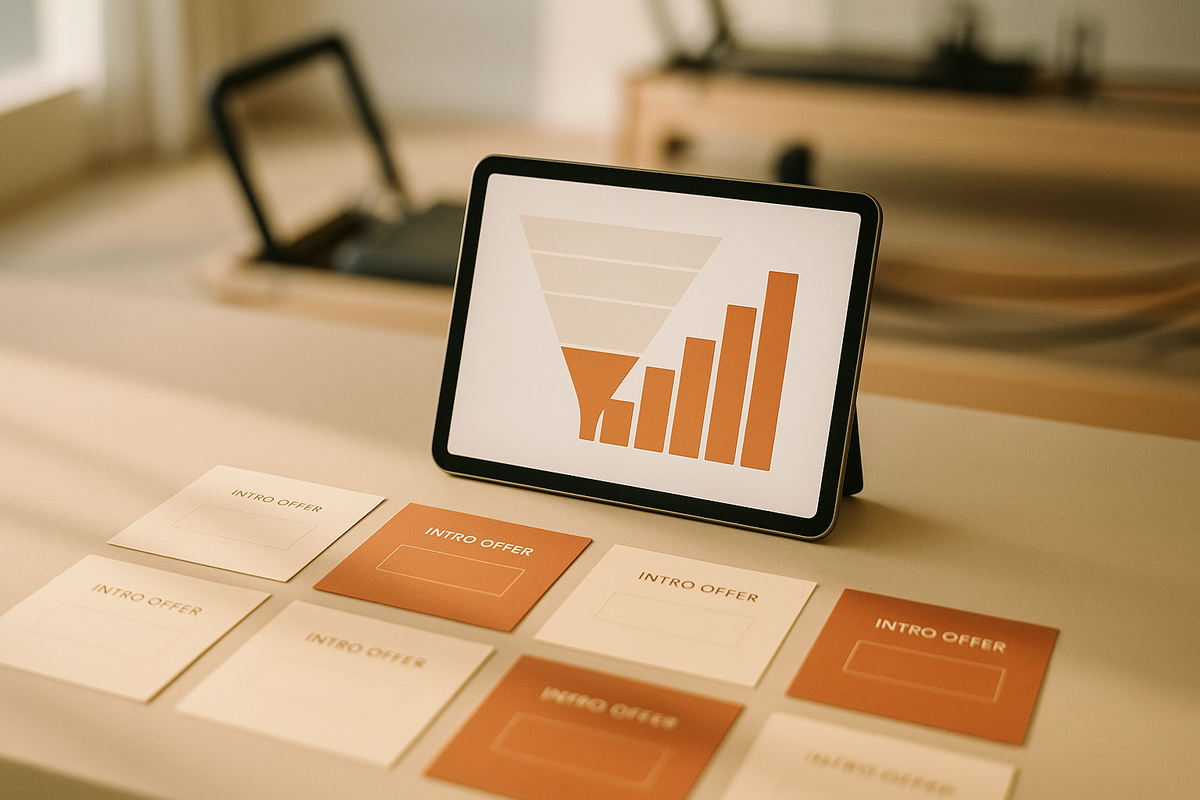
- Follow-up systems drive conversion more than offer design. Trial members receiving 5+ touchpoints convert at 58% versus 19% for those receiving 1-2 touches, and top studios using automation convert 40-55% compared to the industry average of 15-25%.
- Seven-day trials outperform three-day trials (35% versus 27% conversion) by allowing time to build routine habits, though premium Pilates studios often succeed with shorter trials paired with strong intake conversations.
- No-shows represent the largest acquisition leak in boutique fitness, with industry rates of 10-30%, making paid offers critical since prospects who invest financially are more likely to attend their first class.
- The first session ends at the highest-converting moment when emotional engagement peaks, requiring studio operators to plant the membership idea immediately and hold direct pricing conversations by the final trial day.
- Long intro periods (30-day unlimited trials) attract deal hunters who rarely convert to full-price memberships, delaying the conversion conversation and creating false acquisition signals.
Why Paid Intros Outperform Free Trials
The debate over free versus paid introductory offers has effectively been settled by boutique fitness performance data. Studios charging between $39 and $99 for two-week to one-month intro offers convert at 60-80%, compared to 30-45% for free trials, according to industry research on boutique gym operators with strong programming and sales processes.
The conversion gap stems from commitment psychology. A prospect who pays $49 demonstrates financial and psychological buy-in, making them significantly more likely to attend their scheduled classes. This matters critically for Pilates studios where reformer classes require orientation and benefit from consistent attendance to demonstrate value. Money creates commitment, and show-up rate is the leading indicator of conversion.
Real-world Pilates pricing reflects this strategy. The Good Pilates Studio offers 3 reformer classes for $75 for first-time customers, while New York Pilates positions introductory packages at $90 for three classes, showing market-dependent pricing in premium urban locations. The common format across independent studios ranges from 2-3 classes for $39-$59, followed by structured membership conversations.
The No-Show Problem That Kills Conversion
Trial-class no-shows represent the single largest acquisition leak in boutique fitness, with industry data showing no-show rates of 10-30% depending on class type, booking model, and payment requirements. For Pilates studios with limited reformer capacity, every no-show represents both lost revenue and a missed conversion opportunity.
Paid introductory offers directly address this leak. Paid intros filter out tire-kickers; prospects who pay want to try the studio, while those unwilling to pay often seek a free month of workouts. The filtering effect becomes especially valuable given that interest and conversion opportunities peak in the first 48-72 hours after trial signup, making early attendance critical.
Follow-Up Systems Matter More Than Offer Design
The structure of your introductory offer matters less than what happens after prospects walk through your door. The typical boutique fitness studio converts 15-25% of trial passes into monthly memberships, while top studios using automation convert 40-55%. The difference lies entirely in follow-up discipline.
Trial members who receive 5+ touchpoints during their trial period convert at 58% versus 19% for those receiving 1-2 touches, according to consumer fitness data from Mindbody. These touchpoints should include pre-class reminders, post-class check-ins, progress observations from instructors, and direct membership conversations timed to peak emotional engagement.
The highest-converting moment occurs at the end of the first session, when clients feel the physical effects and emotional connection to the experience. Effective operators plant the membership idea during this window, reinforce it on day three with personalized progress notes, and schedule direct pricing conversations before the final trial day.
Trial Length and Structure That Converts
Seven-day trials convert at approximately 35% versus 27% for three-day trials because the longer window allows prospects to build routine habits and early social connections with instructors and other clients. However, boutique Pilates studios with premium pricing often succeed with tighter three-day trials when paired with strong intake conversations and high-touch instructor engagement.
The critical error is extending trial periods too long. Operators report that 30-day unlimited trials or ultra-cheap intro months that auto-renew at full price create false acquisition signals and attract deal hunters who never intended to convert. Long intro periods delay the conversion conversation and can attract non-converting clients, undermining the entire purpose of the offer.
Optimal Trial Sequence Structure
High-performing studios structure their trial sequence around four key touchpoints: an intake conversation before the first class that establishes goals and builds rapport; a membership conversation immediately after the first session when emotional engagement peaks; a day-three reinforcement that acknowledges progress and addresses any concerns; and a day-seven direct pricing conversation held in person or via phone.
This sequencing requires automation support. Studios using marketing automation for email sequences, SMS reminders, and CRM-triggered tasks convert at rates 15-30 percentage points higher than those relying on manual follow-up, which consistently fails under operational pressure.
Current Market Context for Pilates Studios
Pilates class prices increased 6% year-over-year in 2026, from $20.10 to $21.32, while attendance has nearly returned to pre-pandemic levels and is expected to surpass 2019 numbers by year-end. Pilates leads boutique fitness, with 43% of studios on Xplor Mariana Tek listing it as their primary modality.
However, client behavior has shifted. The average client in North America visits a studio 5-6 times before committing to a membership, and clients increasingly sign up for multiple studios, trying different modalities while avoiding long-term commitments. This behavioral change makes introductory offer design and conversion systems more important than ever.
What This Means for Studio Operators
Editorial analysis, not reported fact:
Studio operators should view their introductory offer as a filtering and conversion system rather than a revenue generator. The goal is not to profit from the intro tier but to efficiently identify and convert high-intent prospects into full-price members. This requires charging enough to create commitment ($39-$59 for 2-3 classes is the proven range for most markets) while keeping the price accessible enough to reduce decision friction.
The conversion battle is won or lost in your follow-up system, not your offer structure. Operators running studios without automated touchpoints, CRM-triggered tasks, and scripted instructor conversations are leaving 20-30 percentage points of conversion on the table. Given that client acquisition costs in competitive urban markets now exceed $150-$200 per member, a 20-point improvement in trial conversion can transform studio economics.
For studios currently offering free trials or 30-day unlimited promotions, testing a paid 7-day trial (3 classes for $49-$59) with a structured five-touchpoint follow-up sequence represents a low-risk experiment with high upside. Track show-up rates, conversation completion rates, and 30-day membership retention separately from conversion rate alone, as these metrics reveal where your system actually breaks down.
Sources & Further Reading
- Free Trial vs. Intro Offer analysis, comparing conversion rates and commitment psychology for boutique fitness studios
- Gym trial conversion rate benchmarks, industry data on typical and top-performing studio conversion
- Marketing automation for boutique fitness, touchpoint frequency and conversion impact research
- Mariana Tek 2026 boutique fitness report, current Pilates pricing, attendance, and client behavior data
- Understanding gym no-show rates, industry benchmarks and factors affecting trial attendance
- Converting gym trial members, trial length and structure recommendations based on performance data
Editorial coverage of publicly reported industry developments. The Pilates Business has no commercial relationship with any companies named.