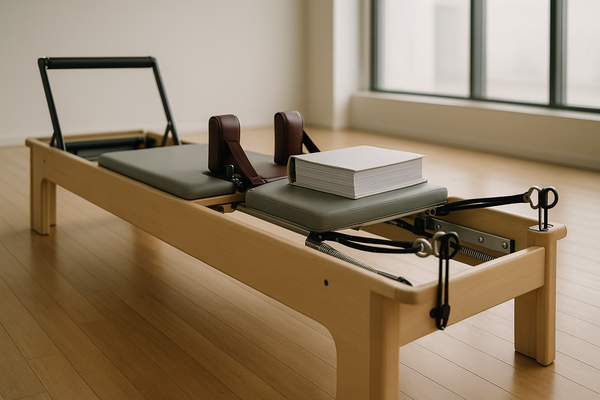
Franchise Consolidation Crisis Squeezing Pilates Studios
Club Pilates, JETSET, and other franchise brands signed 300+ new locations in Q1 2026 with institutional capital backing, creating competitive pressure independent studios cannot match.

Key Takeaways
- Franchise expansion is accelerating dramatically: Club Pilates signed a 127-studio agreement in late April 2026, JETSET Pilates awarded 92 territories in Q1 2026 alone, and Pilates Addiction sold over 200 territories since launching in June 2025.
- Capital backing creates an uneven playing field: Fortress Investment Group provided $72 million to Riser Fitness for Club Pilates expansion, while Eagle Merchant Partners backs Aligned Fitness, giving franchise operators access to growth capital independent studios cannot match.
- Franchise unit economics remain strong despite industry-wide margin pressure: Studio Pilates International reported an average unit volume of $888,774 for U.S. studios entering 2026, with 12-reformer studios achieving 91% ROI on equipment in year one.
- Independent studios face a profitability squeeze: Payroll comprises approximately 44% of studio revenue, and many studios cannot fully pass rent, wage, and inflation increases to consumers through higher class prices.
- Franchises are investing in infrastructure independents cannot afford: JETSET is building regional headquarters and proprietary instructor academies, while Club Pilates implemented market-tier pricing adjustments allowing 12% premium rates in high-demand zip codes for franchisees meeting service thresholds.
- Client churn remains a hidden cost crisis: Approximately 50% of studios report annual turnover above 30%, with 19% experiencing churn rates exceeding 50%, draining acquisition investments and destabilizing revenue forecasts.
The 2026 Franchise Expansion Wave Reshaping Studio Competition
In late April 2026, Xponential Fitness announced a major agreement with franchisee Riser Fitness to open 127 Club Pilates locations over the next five years, backed by $72 million from Fortress Investment Group. This deal represents just one data point in an unprecedented consolidation trend reshaping the competitive landscape for independent and mid-size Pilates studios across the United States.
The first quarter of 2026 saw explosive franchise growth across multiple brands. JETSET Pilates surpassed 350 territories awarded and 60 studios open systemwide after opening 25 new studios and awarding 92 additional territories in Q1 alone. Meanwhile, Pilates Addiction has sold over 200 territories despite only launching its franchise program in June 2025, with plans to have more than 100 studios open by the end of this year.
Club Pilates now operates more than 1,400 units nationwide, and BODYBAR Pilates has grown to over 18,000 members across 81 studios nationwide, with another 60 openings planned for 2026.
Why Franchise Unit Economics Outperform Independent Studio Margins
The franchise expansion wave is fueled by compelling unit-level economics that many independent operators struggle to replicate. Studio Pilates International entered 2026 with a newly updated Average Unit Volume (AUV) of $888,774 for its U.S. studios, demonstrating strong revenue performance across franchise locations.
According to detailed unit economics analysis for a 12-reformer studio, gross revenue of $158,400 minus operating costs of $99,000 yields gross profit of $59,400. After equipment depreciation of $5,844 per year, net profit reaches approximately $53,600, representing 91% ROI on equipment investment in year one, with equipment paying for itself by month 12.
However, independent studios face significantly different financial realities. Per IBISWorld industry analysis, even though industry revenue grew in recent years, many studios saw their profit dip because higher rents, wages, and inflation could not be fully passed on to consumers through higher class prices. Staff wages comprise approximately 44% of studio revenue, with payroll as the largest expense, meaning a 5-10% underpricing error can erase profitability entirely when wages approach half of revenue.
The Capital and Infrastructure Advantages Independent Studios Cannot Match
Beyond raw unit economics, franchise brands are making strategic investments in infrastructure and support systems that create competitive moats independent operators cannot afford to build. JETSET is investing in instructor training through JETSET Academy and opening a regional headquarters in Dallas to support studio ramp performance, deepen member engagement, and ensure strong unit economics.
According to JETSET franchising chief strategy officer Natalie Straub, quoted in the company's Q1 2026 announcement, the brand is "staying disciplined: opening strong studios in great markets, deepening support for our owners and doubling down on a best-in-class member experience" as it scales.
Franchise brands are also leveraging pricing power unavailable to independents. In 2026, Club Pilates introduced a Market Tier Adjustment policy allowing franchisees in high-demand zip codes to raise base rates up to 12% above national benchmarks if they meet minimum service thresholds, such as 95% reformer uptime and certified instructor-to-student ratio of 1:6. This brand-backed premium positioning remains difficult for independent studios to justify without comparable infrastructure and marketing reach.
Instructor Compensation Standardization and the Talent War
The franchise expansion wave is also reshaping instructor compensation and career expectations. As of January 2026, the average annual pay for a Pilates instructor in the United States is $70,426 per year, or approximately $33.86 per hour. Club Pilates offers instructors average salaries ranging from $40,000 to $70,000 per year, with opportunities for higher earnings based on experience, location, and class volume.
This compensation standardization creates pressure on independent studios to match franchise pay scales while operating with thinner margins and less pricing power. Many independent operators report difficulty retaining experienced instructors who are recruited by franchise locations offering guaranteed hours, benefits packages, and standardized advancement paths.
The Hidden Cost Crisis: Client Churn Draining Studio Profitability
Beyond wage pressure and capital disadvantages, independent studios face a retention crisis that disproportionately impacts smaller operators. Churn is one of the highest hidden costs for Pilates studios, with approximately 50% of studios reporting 30% or higher annual turnover and approximately 19% reporting turnover above 50%.
High churn rates force studios into continuous client acquisition mode, increasing marketing costs and preventing the profitability that comes from mature, retained membership bases. Franchise brands address this through sophisticated CRM systems, member engagement platforms, and standardized retention protocols that independent operators typically cannot afford to implement comprehensively.
Industry Perspectives on Market Saturation and Differentiation
Not all industry observers view the current expansion pace as sustainable. According to most franchise executives quoted in recent Athletech News coverage, there is no reason to be worried about oversaturation just yet, although some brands are taking strides to differentiate themselves for the future. However, the same report notes that other entrepreneurs believe similar modalities such as barre could actually be better long-term business bets since they require less equipment capital investment.
Franchise brands are also expanding internationally to maintain growth trajectories, with FS8 and Vaura Pilates expanding domestically and internationally, with FS8 set to open studios in ten cities across Europe, adding to its presence in South Korea.
What This Means for Studio Operators
Editorial analysis, not reported fact:
Independent and mid-size studio operators face a strategic inflection point in 2026. The capital, infrastructure, and pricing advantages now available to franchise operators create a fundamentally different competitive environment than existed even 18 months ago. Studio owners must critically assess whether their current business model can sustain profitability against competitors backed by institutional capital and proprietary support systems.
Three strategic paths merit consideration. First, owners with strong local brand equity and differentiated programming may be able to defend market position by doubling down on what franchises cannot easily replicate: personalized service, clinical specialization, or tight community integration. However, this requires ruthless financial discipline, particularly around pricing strategy and wage-to-revenue ratios that cannot exceed sustainable thresholds.
Second, converting to a franchise model may provide access to capital, systems, and brand recognition that independent operators cannot build alone. This path surrenders brand independence but may offer better long-term financial returns and competitive positioning, particularly in markets where multiple franchise brands are entering simultaneously.
Third, some operators may conclude that the current market dynamics no longer support profitable independent studio operation in their specific geography and should explore exit strategies before franchise saturation further erodes enterprise value. The 19% of studios experiencing 50%+ annual churn are unlikely to become more profitable as competition intensifies.
For instructors, the consolidation wave creates both opportunity and risk. Franchise expansion increases employment options and is driving compensation standardization upward, but it may also reduce the diversity of teaching environments and philosophies available. Instructors should assess whether franchise teaching models align with their professional development goals and teaching preferences before assuming franchise growth universally benefits the instructor community.
Sources & Further Reading
- Franchise Times coverage of the Club Pilates 127-studio expansion agreement with Riser Fitness, including details on Fortress Investment Group's $72 million financing (April 2026)
- JETSET Pilates Q1 2026 growth announcement, reporting 92 territories awarded and 25 new studios opened in the first quarter
- Athletech News analysis of Pilates franchise expansion sustainability, including franchise executive perspectives on market saturation and brand differentiation strategies
- BODYBAR Pilates growth update, detailing 81 current studios and 60 additional openings planned for 2026
- Detailed unit economics breakdown for 12-reformer Pilates studios, including equipment ROI calculations and profitability timelines
- IBISWorld Pilates and yoga studio industry analysis, covering revenue trends and margin pressure from rent, wage, and inflation increases
- Comprehensive Pilates industry statistics, including payroll cost benchmarks and client churn data across studio types
- ZipRecruiter Pilates instructor salary data, current as of January 2026
- Club Pilates 2026 pricing guide, including Market Tier Adjustment policy details and instructor compensation ranges
Editorial coverage of publicly reported industry developments. The Pilates Business has no commercial relationship with any companies named.