Inside Top Pilates Studios: Design, Models & Franchise Momentum
From $888,774 franchise AUVs to luxury townhouse studios, see how design pivots, hybrid revenue models, and Hot Mat Pilates are reshaping the U.S. market in 2026.

Key Takeaways
- Luxury hospitality design is replacing traditional studio aesthetics, exemplified by Reforming Pilates' three-floor NYC townhouse and New York Pilates' minimalist, design-forward spaces that position Pilates as a premium wellness experience.
- Startup costs for independent boutique studios range from $150,000 to $450,000 in 2026, with reformer equipment accounting for 30-40% of total investment and typical break-even achieved at month 9-12 when reformer utilization exceeds 65%.
- Franchise consolidation is accelerating: Studio Pilates International reports an $888,774 average unit volume with plans to add 20 U.S. studios in 2026 and 300 over six years, while JETSET Pilates surpassed 350 territories awarded by Q1 2026 after opening 24 locations in 2025.
- Multi-modal and hybrid formats are gaining traction, with CorePlus offering 11 class styles including heated sessions and STRONG deploying proprietary Rowformer and Bikeformer equipment across 112 studios globally with 200 new locations confirmed.
- Hot Mat Pilates is the most-attended class format among Gen Z students as of 2026, creating an accessible, lower-cost entry point that complements traditional reformer offerings.
- Net profit margins of 15-30% are achievable through diversified revenue streams combining reformer classes, private sessions, digital memberships, and strategic premium location selection, according to current industry benchmarks.
Luxury Hospitality Design Redefines Studio Positioning
The U.S. Pilates landscape is undergoing a design revolution as operators abandon utilitarian gym aesthetics in favor of spaces that mirror high-end hospitality. Reforming Pilates is opening a multimillion-dollar NYC townhouse spanning three floors with reformer studios, heated mat classes, and private training spaces designed to feel like a luxury wellness retreat rather than a traditional workout facility. The co-owners emphasize keeping class sizes intimate to preserve the personalized experience clients expect from a premium brand.
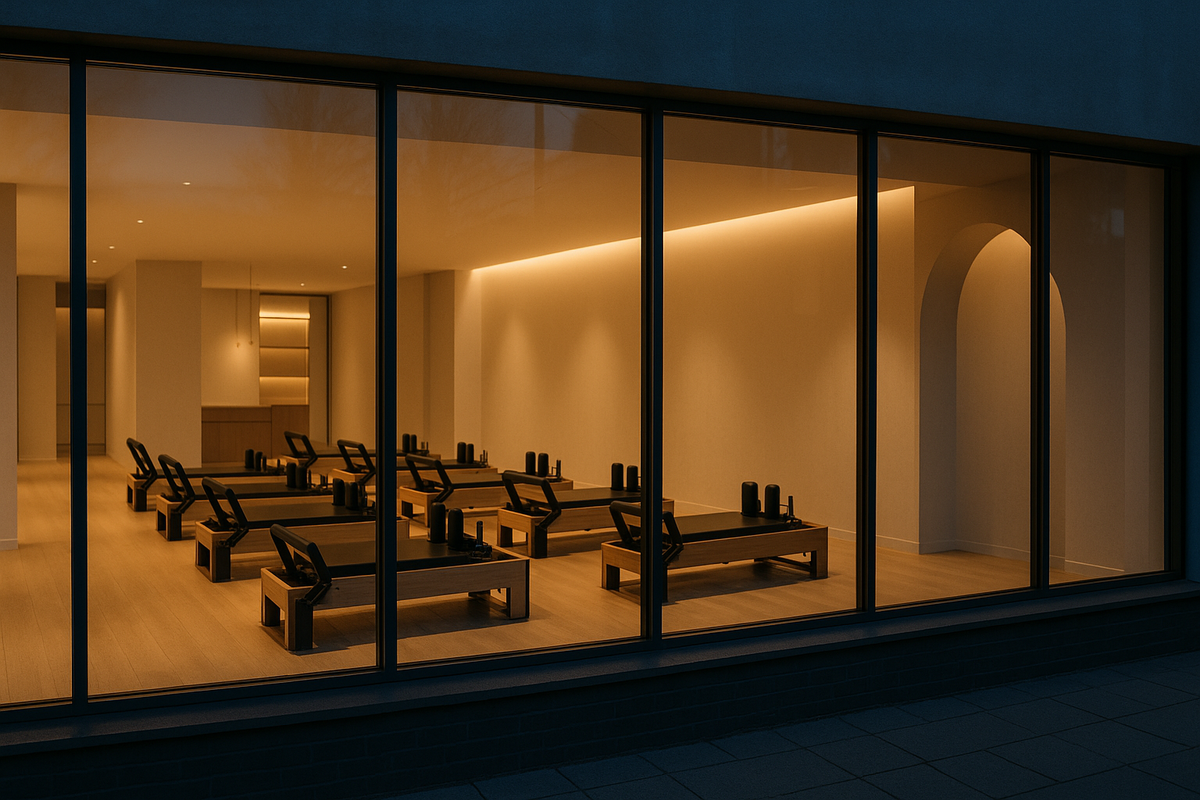
New York Pilates, founded in 2013, has expanded from a single West Village reformer studio to multiple NYC locations including SoHo and the Hamptons, each reflecting a clean, minimalist, and elevated brand identity. Industry observers note that studios like Santé Studio now position themselves as luxury wellness experiences where the physical environment communicates quality before the first class begins. As one industry analysis noted, lighting has emerged as the most underrated design tool in Pilates, setting rhythm and emotion before movement starts.
Startup Economics: $150,000 to $450,000 to Launch, 9-12 Months to Break Even
Independent boutique Pilates studios face significant upfront capital requirements in 2026. Total startup costs typically range from $150,000 to $450,000, with reformer equipment representing 30-40% of the total investment. New commercial reformers run $3,000 to $7,500 each, making equipment the single largest line item for most operators. A budget owner-instructor model can launch from as low as $80,000, though this typically requires the founder to teach the majority of classes during the ramp-up phase.
Renovation and build-out expenses add $5,000 to $20,000 or more depending on the condition of the leased space and design ambitions. Industry data shows typical boutique studios reach operating break-even at month 9 to 12 when reformer utilization exceeds 65%. Flooring decisions have become a critical cost-benefit calculation, with rubber and cork emerging as the most recommended options for their cushioning, non-slip stability, noise absorption, and ease of cleaning.
Franchise Players Accelerate Market Share Gains Through Multi-Unit Strategy
Studio Pilates International entered 2026 with an $888,774 average unit volume across its U.S. studios, representing record-breaking performance for the Australia-based franchisor. The company currently operates 24 studios in the U.S. with more than 125 open worldwide and 70+ in development. Management plans to roll out 20 additional U.S. studios during 2026, with a long-term goal of 300 more over the next six years. Recent expansion has concentrated in Texas with locations in North Plano, McKinney, Missouri City, and West Plano, alongside new openings in South Carolina and Hudson Square, New York in early 2026.
Multi-unit operators are consolidating market share rapidly. Spartan Fitness Holdings operates 114 Club Pilates units as the largest franchisee in that system, while Riser Fitness operates approximately 85 locations and secured a $72 million growth capital commitment from Fortress Investment Group. JETSET Pilates opened 24 studios in 2025 across Texas, Florida, Georgia, North Carolina, New Jersey, Massachusetts, Colorado, and Washington, D.C., targeting premium neighborhoods, and surpassed 350 territories awarded by Q1 2026.
Hybrid Revenue Models and Multi-Modal Formats Diversify Income Streams
The most profitable studios in 2026 combine strategic location selection, diversified pricing structures, and multiple revenue streams to achieve net profit margins of 15-30%, according to current industry benchmarks. Epic Pilates exemplifies this hybrid approach, building its business model primarily around private and semi-private sessions with just one or two group classes daily. The studio creates an inviting atmosphere with natural light from a wall of windows and a high open ceiling, reinforcing its premium positioning.
Multi-modal concepts are blurring traditional category boundaries. CorePlus combines reformer Pilates, mat Pilates, yoga, and heated classes under one roof, offering 11 unique class styles across 30+ global locations including its first U.S. studio in Arizona. STRONG operates 112 studios across 14 countries with 200 new locations confirmed (155 in the U.S.), incorporating strength and cardio training via proprietary Rowformer and Bikeformer machines. Pilates Addiction honors classical roots with its Aurum apparatus, a hybrid machine combining reformer, Wunda chair, jump board, and barre into one seamless unit.
Digital revenue is becoming table stakes for independent operators. Marvelous was built around on-demand video delivery, memberships, and class packs, positioning itself as the strongest option for studios building Pilates content libraries. Industry growth now rests on three engines: premiumization of reformer classes, hybrid memberships combining in-studio and digital access, and broader adoption by men and 55+ clients seeking low-impact, rehabilitative exercise.
Hot Mat Pilates Emerges as Gen Z Gateway Format
Hot Mat Pilates has become the most-attended class format among Gen Z students as of 2026, creating an accessible entry point that requires minimal equipment investment. New studios are experimenting with temperature-controlled mat classes as a lower-cost alternative to reformer offerings, both for operators (eliminating expensive equipment) and clients (typically priced 20-40% below reformer classes). The format's popularity reflects broader demographic shifts as the industry targets younger audiences and moves beyond its historically female-dominated base.
Market Context: Growth in Studio Count Stalls While Pilates Adoption Surges
The percentage of fitness studios offering Pilates has grown from 17% in 2021 to 45% in 2025, signaling explosive mainstream adoption. Yet U.S. studio count grew just 0.2% while industry revenue declined 0.8% in 2026, indicating overcapacity in certain markets. This paradox creates a winner-take-most dynamic where studio-level execution around design excellence, distinctive business models, and brand positioning separates thriving operators from those struggling to fill class rosters.
What This Means for Studio Operators
Editorial analysis — not reported fact:
The 2026 landscape rewards specialization and capital efficiency. Independent operators face a strategic fork: either invest in design-led differentiation that commands 20-40% price premiums (the New York Pilates and Reforming Pilates playbook), or compete on convenience and format variety through multi-modal offerings. The middle ground—generic reformer studios with modest design and narrow class menus—is becoming unsustainable as franchise systems achieve $888,774 average unit volumes through economies of scale in marketing, instructor training, and member acquisition.
For operators evaluating expansion, the data suggests three viable paths. First, the franchise route offers proven unit economics and brand recognition but requires $150,000-$350,000 in upfront capital plus ongoing royalties. Second, design-forward independents can create local moats through hospitality-grade environments, but must achieve 65%+ reformer utilization within 9-12 months to reach break-even on higher build-out costs. Third, hybrid models combining private sessions, group classes, and digital content can smooth revenue volatility, though they demand broader instructor skill sets and more complex scheduling.
The Hot Mat Pilates trend presents a tactical opportunity: adding temperature-controlled mat classes requires minimal capital (heating system, ventilation upgrades) while attracting Gen Z clients who may graduate to higher-margin reformer memberships. Studios in oversaturated urban markets should consider this format as a customer acquisition tool rather than a standalone profit center. Finally, the 0.2% growth in studio count amid 45% adoption among fitness facilities signals that Pilates is being absorbed into existing multi-modal gyms rather than driving net-new studio openings—making differentiation through design, instructor quality, and member experience more critical than ever.
Sources & Further Reading
- Studio Pilates International U.S. expansion and average unit volume data — franchise performance metrics and growth plans through 2032
- IBISWorld Pilates and Yoga Studios industry report — U.S. studio count and revenue trends for 2026
- JETSET Pilates franchise development — 2025 openings and Q1 2026 territory awards
- Club Pilates franchisee data — Spartan Fitness Holdings and Riser Fitness multi-unit operations
- Reforming Pilates NYC townhouse studio — luxury hospitality design model
- New York Pilates brand and studio locations — design-forward independent expansion
- CorePlus multi-modal concept — 11 class styles and international footprint
- STRONG Pilates Rowformer and Bikeformer — proprietary equipment and global studio count
- Mindbody studio benchmarking data — break-even timelines and utilization rates
Editorial coverage of publicly reported industry developments. The Pilates Business has no commercial relationship with any companies named.