No-Shows Cost Pilates Studios $500–$1K Weekly Per Reformer
Studios run at 70-80% capacity despite full waitlists. The fix isn't stricter policies—it's prepayment, shorter booking windows, and easier cancellation.

Key Takeaways
- No-shows are a system failure, not a behavior problem. Studios running at 70-80% capacity despite full waitlists lose $500–$1,000 per reformer class weekly because cancellations go unfilled and unpaid reservations feel low-commitment.
- Equipment constraints amplify Pilates revenue loss. Unlike yoga studios that can add floor space, ten reformers create a hard capacity ceiling where every empty machine during a scheduled class represents irrecoverable income.
- Prepayment at booking is the strongest attendance lever. Clients who pay upfront attend at significantly higher rates because payment creates psychological ownership of the reserved spot.
- Shorter booking windows reduce aspirational reservations. Restricting class booking to 7–10 days instead of 30 days ensures members reserve spots they'll realistically attend, not sessions they hope to attend three weeks out.
- Easier cancellation decreases no-shows. When members must phone or email to cancel, they often ghost instead; one-tap mobile cancellation frees spots the moment plans change and keeps the waitlist moving.
- Automated reminders and 12-hour policies work only with payment systems. Industry-standard cancellation windows fail without prepayment requirements and frictionless self-service cancellation tools.
Why Pilates Studios Bleed Revenue Despite Full Waitlists
Pilates studio attendance in 2026 tells a paradoxical story. ABC Fitness industry data shows new member joins dropped 8.8% in 2025, yet check-ins climbed 4.3% and cancellations fell 6.1%. The Pilates market is maturing, with existing members attending more consistently. But studio operators report a persistent crisis: classes routinely run at 70-80% capacity even when waitlists are full, leaving expensive reformer equipment idle and revenue unrecovered.
The culprit is not weak demand. It is operational design. Studios managing reservations through phone calls, paper sign-up sheets, or informal text threads cannot fill last-minute cancellations or prevent no-shows from members who booked without financial commitment. At typical pricing of $30–$50 per reformer class, a single weekly class running at 75% capacity instead of full represents approximately $500–$1,000 in lost annual revenue per reformer, according to Vibe Fam's 2026 no-show reduction analysis.
Equipment Capacity Makes Pilates Uniquely Vulnerable
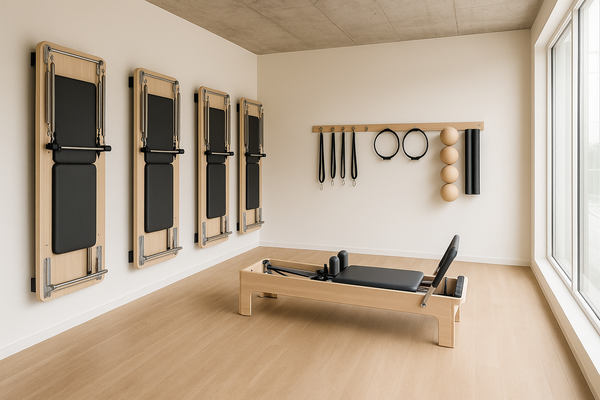
The fixed-capacity reality of reformer studios distinguishes Pilates from mat-based fitness. A yoga instructor can accommodate one extra participant by squeezing in another mat. A Pilates studio with ten reformers has exactly ten revenue-generating spots per class. Period. When a client books the 6:00 AM slot three weeks in advance but no-shows on the day, that reformer sits empty. Unlike membership models where utilization variance smooths out, equipment-based class revenue depends on precise attendance matching precise inventory.
Industry scheduling providers note that this hard capacity ceiling makes Pilates studios more sensitive to booking system design than almost any other fitness vertical. Every no-show is not just a missed class but a lost machine hour that could have served a waitlisted client willing to pay.
Why Standard Cancellation Policies Fail Without Prepayment
Most Pilates studios in 2026 use a 12-hour cancellation window, with premium reformer studios extending to 24 hours, per Time2Book's studio policy research. Yet operators report these windows alone do not solve no-shows. The missing piece is payment timing.
When members can reserve a spot without paying, the booking feels provisional. "I'll try to make it" replaces "I committed $45 to this slot." Multiple studio management sources confirm that prepaid bookings drive significantly higher attendance because payment creates psychological ownership. A client who has already paid $40 for Tuesday's 7:00 PM class treats that reservation as a purchased asset, not a tentative calendar hold.
The most effective operational strategy combines three elements: payment required at the time of booking, a clearly communicated 12-hour cancellation policy, and automated reminders sent 24 hours and 2 hours before class start. This triad addresses commitment (prepayment), fairness (cancellation window), and memory (reminders).
The Booking Window Trap: 30 Days of Aspirational Scheduling
Many studios allow members to book classes 30 days in advance, treating longer booking windows as a customer service feature. This creates what industry operations advisors call "aspirational booking." A member reserves three 6:00 AM sessions over the next month because they believe their future self will be motivated to wake up early. When those mornings arrive, reality intrudes.
Restricting booking windows to 7–10 days forces members to reserve spots based on their actual near-term schedule, not their idealized future calendar. A member booking Friday's class on the preceding Monday has a realistic sense of Friday's commitments. A member booking three Fridays out is guessing. Shorter windows reduce no-shows by aligning reservation behavior with genuine intent.
Why Easier Cancellation Reduces No-Shows
This recommendation appears counterintuitive but is well-supported by studio operations data. Studios that require members to call, email, or log into a cumbersome desktop portal to cancel often see higher no-show rates than studios offering one-tap mobile cancellation. The reason is friction.
According to Vibe Fam's analysis, when cancellation is difficult, members who realize they cannot attend simply do not bother to cancel. They ghost. The spot remains filled in the system, the waitlist does not move, and the studio runs the class with an empty reformer. When cancellation is effortless—a single mobile app tap or text reply—members cancel the moment plans change, freeing the spot for a waitlisted client who will pay and attend.
The goal is not to make cancellation difficult to punish members. The goal is to empower members to release spots instantly, keeping inventory fluid and maximizing the chance that every reformer is occupied by a paying, present client.
What This Means for Studio Operators
Editorial analysis — not reported fact:
The studios winning the no-show battle in 2026 are treating booking systems as revenue infrastructure, not administrative overhead. If your operation still relies on phone reservations, text-thread waitlists, or honor-system bookings without prepayment, you are likely running 20-30% below revenue potential even if your classes appear "mostly full."
Three tactical shifts deliver measurable improvement within weeks. First, require payment at booking for all class reservations—not at check-in, not on account. Second, compress your booking window from 30 days to 7-10 days to eliminate aspirational scheduling. Third, implement one-tap cancellation via mobile app or SMS so members can free spots the instant plans change, allowing your waitlist to convert.
The revenue math is straightforward. A ten-reformer studio running five classes per week at 75% attendance instead of 95% attendance leaves approximately 10 paid spots per week unfilled. At $40 per class, that is $400 weekly or $20,800 annually in accessible revenue that requires no new marketing, no additional instructors, and no expanded floor space. It requires only operational redesign.
For studios hesitant to enforce prepayment, consider piloting the policy on your highest-demand time slots first—early mornings and evenings when waitlists are longest. Member pushback is typically minimal when the rationale is transparent: prepayment ensures the spot goes to someone who will use it, and easy cancellation protects flexibility. Members care less about policy strictness than they do about fairness and availability.
Sources & Further Reading
- ABC Fitness industry data for gym operators in 2026 — membership trends showing 8.8% drop in new joins but 4.3% increase in check-ins
- Vibe Fam's 2026 guide to reducing no-shows in Pilates and yoga studios — operational strategies including prepayment and cancellation friction analysis
- Time2Book on reducing no-shows at Pilates studios — booking window psychology and policy best practices
- Scheduling Kit's Pilates studio booking page design — capacity constraints unique to equipment-based fitness
Editorial coverage of publicly reported industry developments. The Pilates Business has no commercial relationship with any companies named.