Smart Reformers and Studio Economics: Equipment Buying in 2026
iFIT's Reform RX acquisition signals a shift to connected reformers. How smart tech, sustainability, and durability debates reshape studio equipment decisions.

Key Takeaways
- iFIT's acquisition of Reform RX in 2026 signals a tipping point: Pilates reformers are adopting the same smart resistance, motion tracking, and adaptive feedback technologies that transformed treadmills and bikes.
- The global Pilates equipment market is projected to reach $11.07 billion by 2035, growing at 6.83% CAGR, with North America accounting for 35% of market share and 56.5% of studio revenue in 2025.
- Multi-unit reformer packages (sets of 4-8) offer per-unit savings that can recover tens of thousands of dollars on a full studio fit-out, with commercial reformers typically ranging from $3,000 to $6,000 and full boutique studio builds costing $40,000 to $80,000.
- Merrithew SPX Max reformers carry CE Medical Device certification required for insurance-billed physical therapy and regularly deliver 10-15 years of service in studios running 25+ sessions per reformer weekly.
- Emerging brands like Flexia, Elina Pilates, and PersonalHour are challenging legacy manufacturers with modular designs, recyclable materials, and improved quality control, particularly targeting studios prioritizing space efficiency and sustainability.
- Commercial reformers undergo 5-10 times more wear than home models, requiring industrial-grade bearing systems, reinforced springs, and heavier-gauge steel frames that separate $3,000+ studio equipment from consumer products.
Why Smart, Connected Reformers Are Reshaping Studio Investment Decisions
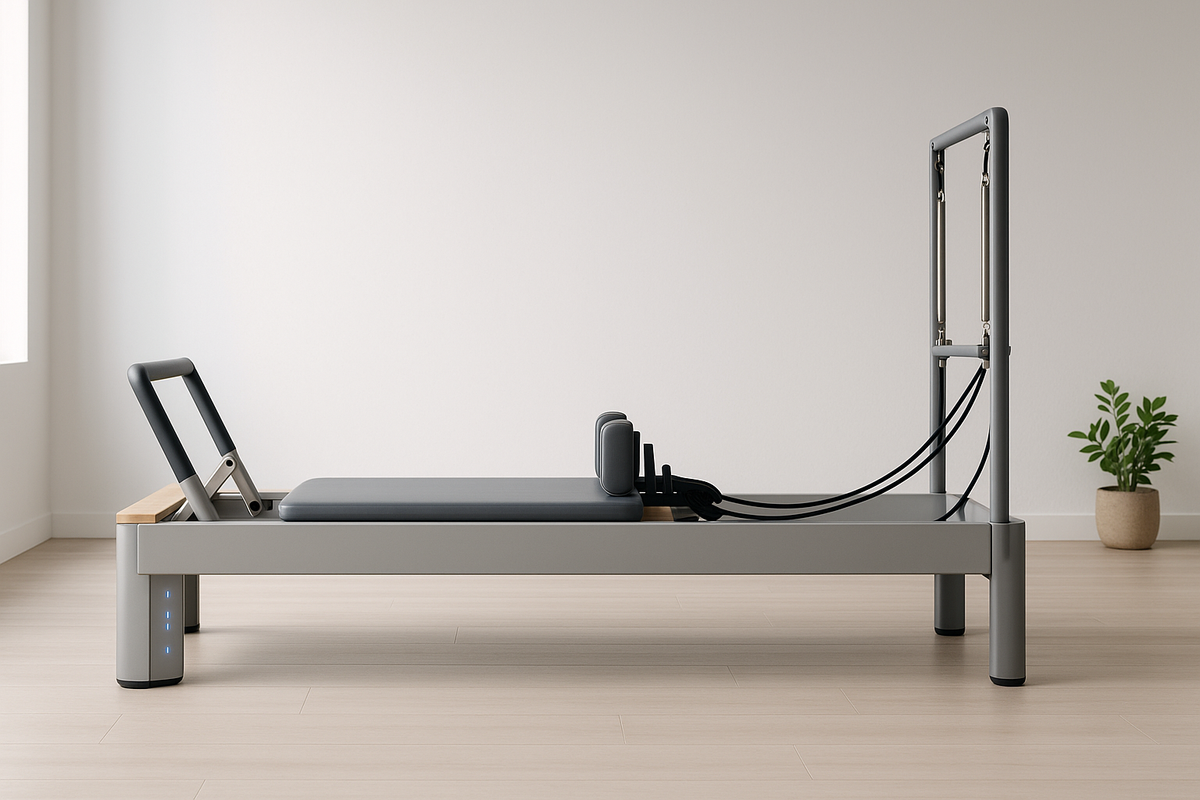
The Pilates equipment market reached a turning point in 2026 when iFIT acquired Reform RX, a connected reformer company, signaling that the reformer is following the same path as cardio equipment. The modern reformer now shares the same DNA as a treadmill or bike: smart resistance, adaptive feedback, and personalized programming, according to reporting by Athletech News.
Pilates earned its spot as the most-booked workout for the third year in a row on ClassPass, with reservations increasing 66% between 2024 and 2025. Yet this demand surge coincides with a broader industry shift that prioritizes intelligent, integrated, and thoughtfully engineered equipment over traditional heavy steel, per iFIT's 2026 market analysis.
In June 2025, a prominent digital wellness brand introduced an interactive Pilates app that integrated motion tracking with compatible reformer models, enhancing user engagement and driving additional interest in connected equipment, according to Technavio's Pilates equipment market report. Modern smart reformers build on classical heritage by layering in motion sensors, AI-driven form correction, and resistance profiles that adapt in real time.
Market Size and Growth Trajectory Through 2035
The global Pilates equipment market was valued at $5.353 billion in 2024 and is projected to reach $11.07 billion by 2035, with a compound annual growth rate of 6.83%. However, the real story isn't volume growth; it's the transformation in what studios are buying and why.
Technavio projects the market will increase by $218.52 million from 2025 to 2030, at a CAGR of 14.2%. North America is anticipated to dominate the market, holding approximately 35% of market share and accounting for 56.5% of Pilates and yoga studio revenue in 2025.
During the 2025-2030 forecast period, North America accounted for 37.7% of market growth, positioning the region as both the largest current market and the primary driver of equipment innovation.
How Much Studio Operators Actually Spend on Commercial Equipment
Multi-unit packages, typically offered in sets of four, six, or eight reformers with accompanying accessories, offer meaningful per-unit savings that can translate to tens of thousands of dollars in recovered capital on a full studio fit-out, according to Pilatology's commercial equipment buying guide.
Many commercial units land around $3,000 to $6,000, with premium tech models higher depending on features and accessories. Mid-range studio reformers from Peak Pilates and BASI Systems run $3,695 to $6,000, while clinical-grade systems from Merrithew and full BASI studio setups reach $6,000 to $10,000 or more.
A fully outfitted boutique studio with six commercial reformers, one Cadillac, and a complete accessory set typically requires a capital investment between $40,000 and $80,000 depending on brand and configuration, per Pilatology's cost breakdown. This wide range reflects choices around durability, warranty coverage, and whether operators prioritize traditional engineering or connected technology.
Legacy Brands vs. Emerging Challengers: Who's Competing for Your Budget
Balanced Body is the world's leading Pilates apparatus manufacturer and considered the industry standard. The company's Allegro Nextgen Reformer adds features including the Infinity Footbar to meet progressive Pilates exercise demands, with expanded range of motion enabling work from either end of the reformer, an option increasingly in demand in group classes.
The Merrithew SPX Max is the most durable commercial Pilates reformer consistently available, with CE Medical Device certification making it the required choice for facilities billing insurance-covered physical therapy. Studios running 25+ sessions per reformer per week regularly report 10-15 years of service without major structural issues.
BASI Systems offers a 10-year frame warranty and a strong instructor certification network, making it the choice for studios where BASI methodology is central to brand identity. Best for classical Pilates studios, BASI-certified instructors, and boutique studios with athletic or tall client bases.
The Align Pilates A8-Pro delivers commercial-grade performance at a price point that makes it the most practical choice for studios scaling from 4 to 10+ reformers. The 113 cm carriage travel matches the top of the commercial range, and the 8-wheel polyurethane glide system produces the smooth, quiet ride required for full-day teaching schedules. The Align Pilates service kit ecosystem offers springs, wheels, ropes, and upholstery panels as affordable replacement parts.
New Brands Entering the Commercial Studio Market
Flexia Pilates, founded in 2020 and based in Sacramento, focuses on innovating technology and modern design. The company's creator, Kaleen Canevari, was an engineer for Balanced Body focusing on equipment design and noticed a gap in the market.
Elina Pilates originated in Spain under PIKT Pelotas, a sports equipment manufacturer with over 15 years of experience. This European brand is rapidly gaining popularity in North America for its high-quality Pilates equipment designed by and for Pilates professionals, aiming to provide the best price-to-quality ratio in the industry.
PersonalHour has focused on improving quality control specifically for home users, representing a new category of reformers that deliver reliable quality, practical pricing, and long-term usability.
Sustainability and Space Efficiency Shape 2026 Design Priorities
iFIT predicts that 2026 will feature a rise of modular, space-efficient, and sustainable systems, a trend directly influenced by Pilates' minimalist ethos, according to the company's Reform RX acquisition announcement. iFIT reports that manufacturers are investing in recyclable materials, quieter mechanical systems, and sleeker footprints that allow operators to deliver more value per square meter.
This shift matters for urban studios where rent per square foot dictates profitability. Modular systems that fold, stack, or reconfigure enable operators to run diverse class formats in the same footprint, reducing the need for dedicated spaces and improving utilization rates across peak and off-peak hours.
Why Commercial Durability Standards Matter More Than Ever
Commercial reformers undergo 5-10 times more wear than home models. Steel frames are heavier gauge, springs are reinforced, and carriages use industrial-grade bearing systems, per Pilatology's durability analysis.
Three core issues show up again and again in consumer-grade reformers: poor glide, weak structure, and lack of guidance. Studios that attempt to save upfront capital by purchasing home or light-commercial equipment typically face carriage replacement, spring fatigue, and frame flex issues within 18-24 months at commercial usage rates.
The gap between $1,500 home reformers and $3,500 commercial models isn't markup; it's engineering. Studios running 20-30 client sessions per reformer per week require weight tolerances, glide precision, and component availability that consumer products simply cannot deliver at scale.
What This Means for Studio Operators
Editorial analysis — not reported fact:
The 2026 equipment landscape presents studio operators with a strategic fork: invest in proven durability and service ecosystems from legacy manufacturers, or adopt connected, modular systems that align with where the broader fitness industry is heading. Neither choice is wrong, but each carries distinct implications for capital efficiency, maintenance burden, and brand positioning.
For studios prioritizing insurance billing, physical therapy integration, or clients with clinical needs, Merrithew's CE Medical Device certification and documented 10-15 year lifespan at high utilization rates justify the $6,000+ per-reformer premium. For studios scaling from four to ten reformers and operating on constrained capital, Align Pilates or emerging brands like Flexia and Elina offer commercial-grade performance with accessible service parts and lower entry costs.
The smart reformer trend merits caution. Connected features add value only if your client demographic expects app integration, form feedback, and subscription-based programming. Studios whose value proposition centers on hands-on instructor cuing and classical methodology may find that smart features create tech support burdens without improving retention or pricing power.
Most critically, calculate total cost of ownership, not just purchase price. A $3,200 reformer with $180 spring replacement kits and proprietary parts available only from overseas distributors can cost more over five years than a $4,800 reformer with $65 service kits and next-day domestic parts availability.
Sources & Further Reading
- Athletech News: iFIT Acquires Reform RX — Coverage of the 2026 acquisition signaling connected reformer market consolidation
- SkyQuest Technology: Pilates Equipment Market to Reach $11.07 Billion by 2035 — Market size projections and growth forecasts through 2035
- Technavio: Pilates Equipment Market Industry Analysis — Regional growth data and technology trend analysis for 2025-2030
- Pilatology: Guide to Buying Commercial Pilates Equipment — Detailed brand comparisons, pricing ranges, and durability specifications
- ClassPass Annual Data Report 2025 — Booking trend data showing Pilates as most-booked workout for third consecutive year
- IBISWorld: Pilates & Yoga Studios Industry Report — US market revenue data and studio industry analysis
Editorial coverage of publicly reported industry developments. The Pilates Business has no commercial relationship with any companies named.