Pilates Equipment Consolidation: M&A, Tech, Studio Buying 2026
iFIT's Reform RX acquisition and Merrithew's Align-Pilates deal reshape equipment supply chains. What studio operators need to know about connected reformers, pricing, and sustainability trends.

Key Takeaways
- Major M&A activity is reshaping equipment supply chains: iFIT acquired connected reformer brand Reform RX in 2026, following Merrithew's November 2024 purchase of UK-based Align-Pilates, signaling industry consolidation around tech-enabled and global distribution networks.
- Professional reformers now cost $3,000–$10,000+ per unit: Fully outfitting a six-reformer boutique studio requires $40,000–$80,000 in capital investment, with bundle purchases reducing per-unit cost by 15–30% compared to individual buys.
- Connected reformers integrate HD touchscreens and motion tracking: Reform RX's flagship model features a 21.5-inch screen, laser sensors tracking movement to the thousandth of a second, and 150+ preloaded on-demand workouts taught by certified instructors.
- Sustainability and modularity are 2026 design priorities: Manufacturers are investing in recyclable materials like bamboo and recycled aluminum, quieter mechanical systems, and space-efficient footprints to deliver more value per square meter.
- The global Pilates equipment market will grow from $5.35 billion in 2024 to $11.07 billion by 2035: North America holds approximately 35% market share and accounts for 56.5% of Pilates and yoga studio revenue in 2025.
Acquisition Wave Consolidates Equipment Brands Around Tech and Distribution
The Pilates equipment sector is experiencing its most significant consolidation in years. iFIT, the connected fitness platform behind NordicTrack and ProForm, acquired Reform RX in 2026, a high-end connected reformer brand that secured $5.1 million in funding led by Clarendon Fund Managers in September 2025. The move positions iFIT to compete directly with Peloton and other connected fitness platforms by adding Pilates-based programming led by certified instructors.
This follows Merrithew Corporation's November 2024 acquisition of Align-Pilates and its parent company T.L. Elliott & Co Ltd., expanding the Canadian equipment manufacturer's footprint in Europe and the UK. Together, these deals reflect a strategic shift: equipment companies are no longer selling standalone apparatus but unified ecosystems that blend traditional Pilates with streaming content, motion tracking, and adaptive resistance.
The consolidation matters because it narrows the field of independent equipment manufacturers while raising the bar for technology integration. Studio operators accustomed to buying durable, mechanical reformers now face decisions about whether connected features justify higher price points and ongoing subscription costs.
What Professional-Grade Reformers Cost in 2026
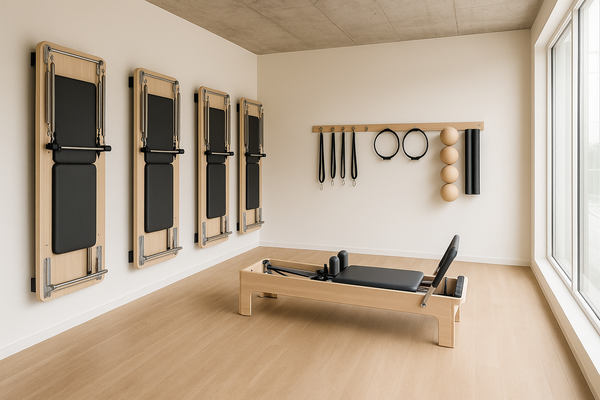
New professional-grade reformers typically range from $3,000 to $8,000, with premium models from brands like Balanced Body or Stott Pilates reaching $10,000 or more. A fully outfitted boutique studio with six commercial reformers, one Cadillac, and a complete accessory set requires a capital investment between $40,000 and $80,000 depending on brand and configuration.
Purchasing equipment in sets of four to six units typically reduces per-unit cost by 15–30% compared to buying individually, making bundles the preferred strategy for scaling studios. Many commercial units land around $3,000–$6,000, with premium tech-enabled models climbing higher depending on touchscreen integration, motion sensors, and proprietary accessories.
The top commercial brands include Merrithew Corporation, Balanced Body, STRONG Pilates, BASI Systems, Elina Pilates, Stamina Products Inc., Private Pilates Equipment, Flexia Pilates, CASA Pilates Equipment, and Peak Pilates. Balanced Body and Gratz Industries together hold about 35% of the commercial reformer market.
Durability and Warranty Benchmarks for Commercial Use
The Merrithew SPX Max is marketed as the most durable commercial reformer on the market and the benchmark for clinical Pilates, featuring CE Medical Device certification, a C-channel aluminum frame that prevents carriage racking, and a lifetime warranty on structural components. The Align Pilates A8-Pro delivers commercial-grade performance with 113 cm carriage travel, an 8-wheel polyurethane glide system, and a Rapid Change spring bar that speeds class transitions in group settings.
Operators should prioritize equipment with service kit ecosystems that offer affordable replacement parts rather than expensive proprietary repairs. The A8-Pro's modular design, for example, allows studios to swap out worn components without replacing entire assemblies, reducing long-term maintenance costs.
How Connected Reformers Integrate Motion Tracking and On-Demand Content
Reform RX's flagship connected reformer is outfitted with a 21.5-inch HD touchscreen and comes preloaded with more than 150 on-demand workouts. The apparatus features a smart spine equipped with laser sensors tracking movement to the thousandth of a second and a built-in Pilates chair that slides out for expanded functionality. The integration allows instructors to see real-time form feedback and resistance profiles that adapt based on user performance.
As we approach 2026, modern reformers are incorporating motion sensors, AI-driven form correction, and resistance profiles that adjust in real time. The technology builds on classical Pilates heritage while adding personalized programming that scales from beginner to advanced users without manual spring adjustments.
For studio operators, the trade-off is clear: connected reformers command higher upfront costs and may require ongoing subscription fees for content access, but they enable hybrid business models where clients can book in-studio sessions or follow guided workouts at home on the same equipment platform.
Sustainability and Modular Design Shape 2026 Equipment Trends
There is a surge in demand for reformers made from sustainable materials such as bamboo and recycled aluminum, as eco-consciousness rises among both studio operators and clients. Brands incorporating sustainability in their manufacturing processes are gaining a competitive edge, particularly among boutique studios that market environmental responsibility as part of their brand identity.
iFIT predicts that 2026 will feature a rise of modular, space-efficient, and sustainable systems. Manufacturers are investing in recyclable materials, quieter mechanical systems, and sleeker footprints that allow operators to deliver more value per square meter. This matters in urban markets where real estate costs drive business viability.
Modular systems also reduce shipping and installation complexity. Equipment that disassembles into smaller components lowers freight costs and simplifies studio relocations, a practical consideration for franchise operators opening multiple locations or testing new markets.
Market Growth and Geographic Concentration in North America
The Pilates equipment market was valued at $5.353 billion in 2024 and is projected to reach $11.07 billion by 2035, with a CAGR of 6.83% from 2025 to 2035. Separate forecasts estimate the market will increase by $218.52 million at a CAGR of 14.2% from 2025 to 2030, while the Pilates Reformer Market is estimated to reach $9.3 billion by 2031, growing at a CAGR of 6.6%.
North America is anticipated to dominate the Pilates equipment market, holding approximately 35% of the market share and accounting for 56.5% of revenue in the Pilates and yoga studios market in 2025. The geographic concentration reflects both the density of boutique fitness studios in major US metropolitan areas and the higher per-capita spending on wellness services.
Clinical Pilates Drives 20% Increase in Rehabilitation Equipment Inquiries
There is a rising adoption of clinical Pilates and rehabilitation equipment, with a 20% increase in inquiries for musculoskeletal health aids. In April 2025, a leading physiotherapy chain introduced a specialized clinical Pilates therapy program across multiple centers, incorporating advanced reformers and supportive accessories designed specifically for rehabilitative use.
This trend expands the addressable market beyond boutique fitness into physical therapy clinics, hospital wellness programs, and senior care facilities. Equipment manufacturers are responding with CE Medical Device certifications and clinical-grade warranties that meet healthcare procurement standards.
Franchise Growth and Equipment Procurement Challenges
Pilates Addiction, part of Anthony Geisler's Sequel Brands, has sold over 200 territories despite only launching its franchise program in June 2025. Known for its proprietary WundaFormer machines, the brand plans to have over 100 studios open by the end of 2026. The rapid expansion highlights both the franchise model's appeal and the logistical challenges of sourcing equipment at scale.
In contrast, Xponential Fitness expects 2026 revenue to decline by 16% year-over-year at the midpoint, with global net new studio openings projected to drop by about 20% at the midpoint compared to 2025. The divergence suggests that equipment supply chain constraints, financing challenges, and market saturation are affecting different operators unevenly.
For independent studio operators, this environment creates both risk and opportunity: equipment lead times may compress as franchise demand slows, but financing terms may tighten if lenders view the Pilates sector as overextended.
What This Means for Studio Operators
Editorial analysis — not reported fact:
If you are outfitting a new studio in 2026, the M&A wave means fewer independent equipment brands but more integrated technology options. Connected reformers from iFIT and Reform RX offer hybrid business model potential, allowing you to serve both in-studio and at-home clients on the same platform. However, the subscription model introduces ongoing costs that must be factored into unit economics alongside the higher upfront equipment price.
Operators should negotiate bundle pricing aggressively. A 15–30% discount on six-unit orders translates to $2,700–$14,400 in savings at the $3,000–$8,000 per-unit range, enough to fund a year of liability insurance or instructor continuing education. Prioritize brands offering modular service kits and non-proprietary replacement parts to reduce long-term maintenance expense.
Sustainability is no longer a niche concern. Clients increasingly ask about eco-friendly practices, and bamboo or recycled aluminum reformers offer a tangible talking point that differentiates your studio from competitors using older equipment. If you operate in a high-rent urban market, space-efficient modular designs that maximize studio density without sacrificing safety or client experience can materially improve profitability per square foot.
Finally, watch the clinical Pilates opportunity. Physical therapy partnerships and rehabilitative programming open revenue streams beyond the boutique fitness model, but require equipment with medical-grade certifications and warranties. The Merrithew SPX Max's CE Medical Device certification and lifetime structural warranty position it for this crossover market, while Reform RX's motion tracking could support objective progress documentation that insurers and referring physicians value.
Sources & Further Reading
- Athletech News coverage of the iFIT acquisition of Reform RX — details on the connected reformer integration and September 2025 funding round
- Merrithew Corporation — manufacturer of the SPX Max and acquirer of Align-Pilates in November 2024
- Pilates equipment market size and forecast data — projected growth from $5.35 billion in 2024 to $11.07 billion by 2035
- Balanced Body — leading commercial reformer brand holding approximately 35% market share with Gratz Industries
- Elina Pilates — European brand gaining North American market share with competitive price-to-quality ratio
- Xponential Fitness investor relations — 2026 revenue and studio opening projections
Editorial coverage of publicly reported industry developments. The Pilates Business has no commercial relationship with any companies named.