Pilates-Strength Hybrids Reshape Studio Programming in 2026
Major chains restructure offerings around fusion formats as reformer Pilates hits #2 in fitness trends. Equipment, instructor upskilling, and progressive overload redefine competitive positioning.


Key Takeaways
- Market restructuring underway: Major chains including Pure Barre, STRONG Pilates, and BODYROK are rebuilding programming around Pilates-strength hybrids as reformer Pilates jumped from #10 in 2024 to #2 in 2025 fitness trend rankings.
- Equipment investment pays off: The strength training equipment market is projected to grow from $8.04 billion in 2026 to $12.67 billion by 2034, with smart reformers now integrating motion sensors, AI-driven form correction, and up to 200 lbs of resistance capacity.
- Progressive overload is the differentiator: Studios like STRONG Pilates are implementing true periodization with six-category class structures and 12-week rotation sequences, yet nearly half of participants remain unaware their workouts follow progressive overload principles.
- Instructor upskilling is non-negotiable: Fusion formats require new certifications bridging Pilates precision with strength-and-conditioning principles, prompting brands to launch internal academies and four-week development series.
- Consumer demand is identity-driven: Clients seeking measurable strength gains and longevity outcomes now choose studios based on whether programming aligns with body-composition goals, not just "a class" experience.
Why Pilates-Strength Fusion Is Reshaping Studio Programming in 2026
Pilates fusion has established itself as one of the leading wellness disciplines in 2026, driven by a fundamental shift in consumer priorities. Reformer Pilates rose from #10 in 2024 to #2 in fitness trend rankings for 2025, reflecting the dynamic, resistance-based nature that draws participants seeking efficient full-body workouts. At the same time, strength training is replacing cardio as a top workout choice, linked to a 23% reduction in all-cause mortality.
This convergence is prompting major chains to restructure their offerings. In May 2026, Pure Barre reintroduced Pure Barre Reform, a premium 50-minute format blending Pilates-inspired movement with the brand's signature low-impact technique to build strength, improve stability, and encourage intentional movement. The format fuses resistance, control, and coordination, signaling that even established barre brands recognize the need to integrate strength principles.
How Studios Are Operationalizing Hybrid Formats
Several US-based studios demonstrate diverse approaches to fusion programming. BODYROK, a Florida-based chain, takes traditional reformer workouts and adds strength training exercises with high-energy music, greater variety, longer segments, and quicker transitions for a more intense, sweat-fueled experience. STRONG Pilates, expanding globally with US locations, is known for blending Pilates with cardio and strength training. Their "STRONG Loaded" class uses heavy springs, dumbbells, and controlled tempo to maximize time-under-tension and lean muscle.
In early 2026, STRONG introduced over 100 new exercises and a six-category class structure following a 12-week rotation sequence designed to maximize progressive overload. Montreal-based Studio Resistance pairs Pilates-inspired precision with high-intensity work on custom-engineered resistance platforms, using Slow Resistance Training (SRT) to target slow-twitch muscles through methodically paced, controlled movements. Bay Area's Move With Studio offers Reformer Sculpt, incorporating jumpboards, hand weights, sliders, and bands, while The Reformery in New York uses heavier springs and 10-20 lb weights for strength sets mixed with Pilates flows.
Equipment Innovation Enabling Strength Integration
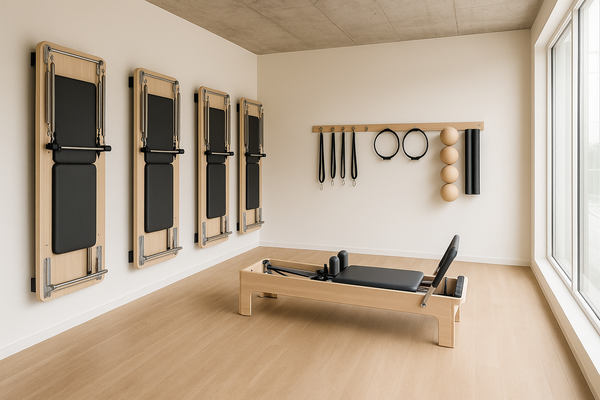
McORE launched the first exercise machine to integrate a Pilates reformer, digital-weight functional trainer, and massage module, with up to 200 lbs of weight capacity. The unit combines an interactive display with a versatile fusion platform, reflecting broader equipment trends. Modern smart reformers now layer in motion sensors, AI-driven form correction, and resistance profiles that adapt in real time, sharing the same DNA as connected treadmills or bikes.
The strength training equipment market is projected to grow from $8.04 billion in 2026 to $12.67 billion by 2034, at a CAGR of 5.86%. Tower-capable reformers expand vertical exercise options and enable hybrid formats, while smart-connected units provide telemetry, rep tracking, and program delivery to standardize coaching and document progress at scale.
Progressive Overload and Periodization Enter Pilates Studios
Traditional Pilates programming emphasized endurance, control, and precision, but fusion formats are importing strength-and-conditioning principles. Nearly half of STRONG Pilates survey respondents were unaware that workouts were deliberately structured around progressive overload, a key differentiator rarely seen in traditional Pilates routines. This knowledge gap represents both an education opportunity and a marketing challenge for studios adopting periodized programming.
Studio Pilates International's Pilates Games centers on a 100-minute reformer workout prioritizing endurance, control, and precision over speed or output, with participants evaluated on execution and awarded points based on technique, range of motion, and control under fatigue. Meanwhile, studios are also offering recovery-driven sessions that blend breathwork, myofascial release, and gentle resistance training as awareness grows around injury prevention and overtraining.
Instructor Certification Gaps and Upskilling Initiatives
Fusion programming demands new competencies. STRONG Pilates restructured its internal programming team and invested in a four-week STRONG Academy development series to upskill instructors, consulting with experts across Pilates and strength-and-conditioning. Bodhi Suspension System teacher training brings Pilates precision to suspension training, making instructors more marketable and complementing client training in studios, gyms, or clinics.
IM=X is a cross-conditioning system incorporating strength-training and cardiovascular elements not inherent in traditional Pilates. Peak Pilates' FitCore Reformer certification is designed for fitness professionals seeking to expand their repertoire with a dynamic, fusion-based program that integrates traditional Pilates equipment with contemporary fitness exercises. These certifications address the skill gap as studios pivot toward strength-focused offerings.
Consumer Identity and Market Positioning Shifts
Client expectations have evolved beyond "taking a class." Consumers know they need strength training, understand muscle mass decline and longevity more, and aren't just looking for a class but something that fits their goals and identity. This shift drives studios to clarify whether programming targets body composition, athletic performance, functional movement, or holistic wellness.
Health clubs and studios report consistent growth in Pilates programming, often pairing it with complementary modalities like yoga or strength training. Independent studio operators have freedom to offer various class types, such as Dynamic Reformer, hybrid Pilates-HIIT, or Pilates-Barre fusion, enabling nimble responses to local demand.
What This Means for Studio Operators
Editorial analysis — not reported fact:
The restructuring of major-chain programming around Pilates-strength hybrids creates a clear strategic choice for independent operators. Studios can either lean into fusion by investing in equipment upgrades, instructor certifications, and periodized programming—or they can carve out a counter-positioning as purist Pilates havens emphasizing classical method and rehabilitative work. Both paths are viable, but the middle ground—offering reformer classes without clarity on strength progression or recovery focus—will increasingly struggle to compete.
For operators considering fusion, the priorities are instructor upskilling (budget four weeks of training or external certification), equipment assessment (tower attachments, dumbbell sets, or smart-connected reformers), and programming architecture (12-week cycles, progression tracking, client communication on periodization). For those emphasizing classical Pilates, the opportunity lies in marketing clinical outcomes, small-group precision, and differentiation from high-intensity hybrid formats.
Liability and scope-of-practice questions also emerge. Instructors trained in classical Pilates may lack the biomechanics background to safely coach loaded barbell patterns or plyometric jumpboard sequences. Studios should verify that certifications and insurance policies align with the intensity and modalities offered. Finally, the data gap around progressive overload awareness—nearly half of participants unaware their workouts followed strength principles—suggests that client education is as important as program design. Studios that transparently communicate periodization, track measurable strength gains, and contextualize longevity research will build deeper retention than those relying on "feel" alone.
Sources & Further Reading
- Club Industry: Pilates Fusion as a Leading Wellness Discipline in 2026 — Industry analysis of Pilates fusion market positioning.
- ACSM Annual Fitness Trends Survey — Reformer Pilates ranking from #10 in 2024 to #2 in 2025.
- Health.com: Strength Training and Mortality Risk — Research linking strength training to 23% reduction in all-cause mortality.
- PR Newswire: McORE All-in-One Reformer Launch — Equipment innovation integrating Pilates, digital weights, and massage.
- Strength Training Equipment Market Forecast — Market projections from $8.04B in 2026 to $12.67B by 2034.
- Pure Barre: Pure Barre Reform Reintroduction (May 2026) — Premium Pilates-barre hybrid format launch.
- STRONG Pilates: 100+ New Exercises and Six-Category Class Structure — Progressive overload programming and 12-week rotation sequence.
- STRONG Pilates: Member Survey on Progressive Overload Awareness — Data showing nearly half of participants unaware of periodization principles.
- STRONG Pilates: Four-Week STRONG Academy Development Series — Internal instructor upskilling initiative.
- BODYROK: High-Intensity Reformer Fusion — Florida-based chain blending reformer Pilates with strength training and music.
- Studio Resistance: Slow Resistance Training (SRT) Method — Montreal-based Pilates-strength hybrid using custom platforms.
- Move With Studio: Reformer Sculpt — Bay Area hybrid class with jumpboards, weights, and sliders.
- The Reformery: Strength-Focused Reformer Classes — New York studio using heavier springs and 10-20 lb weights.
- Studio Pilates International: Pilates Games 100-Minute Workout — Endurance-focused competitive format with technique scoring.
- Bodhi Suspension System Teacher Training — Pilates-to-suspension-training certification.
- IM=X Pilates: Cross-Conditioning System — Pilates with integrated strength and cardio elements.
- Peak Pilates FitCore Reformer Certification — Fusion-based instructor credential blending traditional and contemporary fitness.
- Well+Good: Consumer Trends in Pilates and Strength Training — Analysis of identity-driven studio selection and longevity goals.
Editorial coverage of publicly reported industry developments. The Pilates Business has no commercial relationship with any companies named.