Pilates + Strength Training: The Instructor Skills Gap
Pilates teacher training doesn't cover progressive overload or proximity to failure. As fusion formats go mainstream in 2026, the competency gap is forcing curriculum rewrites.

Key Takeaways
- Progressive overload gap: Traditional Pilates teacher training doesn't cover resistance science principles like proximity to failure, periodization, or programming for strength versus endurance outcomes, leaving instructors underprepared when clients ask if Pilates counts as strength training.
- Fusion formats are mainstream in 2026: Strength Training Pilates Fusion integrates weight work and resistance training with classical core exercises, commanding membership costs 48% higher than other modalities and setting premium expectations for measurable strength outcomes.
- Instructor revenue opportunity: Studios report that instructors with advanced or multiple certifications earn up to 27% more per year, and apparatus certification enabling multi-modality teaching is now a revenue imperative.
- Honest limitation drives programming shift: Most reformer classes emphasize muscular endurance rather than true strength training; industry leaders now advocate teaching clients to self-regulate training intensity and understand what proximity to failure feels like rather than waiting to be told which spring to use.
- Spring-based progressive overload works: Unlike free weights relying on gravity, springs provide multi-directional resistance through every movement phase, allowing progressive overload protocols identical to weight room programming when applied intentionally.
Why Doctors' Orders Are Forcing the Instructor Competency Conversation
Pilates instructors across the United States are fielding a recurring question in 2026: does this class count as the strength training my doctor told me I need? The honest answer, according to emerging industry consensus, is nuanced. Traditional reformer Pilates doesn't consistently meet the three criteria for true strength training, and that acknowledgment is catalyzing the most significant pedagogical shift in the industry in decades.
The gap matters commercially. Pilates membership costs are 48% higher than other modalities on average, with classes costing 25% more than non-Pilates formats. That premium pricing creates client expectations for measurable strength outcomes that classical programming alone may not deliver. When clients tell studios they're plateauing in the gym and signing up for Pilates alongside weight lifting translates to faster gains and easier daily movement, studios face a choice: evolve curriculum or watch clients supplement elsewhere.
The Training Gap: What Traditional Certification Doesn't Teach
The core challenge is straightforward. Teacher training teaches instructors to teach Pilates but doesn't cover resistance training principles including progressive overload, proximity to failure, or how to program for specific outcomes like strength versus endurance versus hypertrophy. An instructor certified in classical mat and reformer work may excel at cueing breath, precision, and control but lack the exercise science foundation to answer whether a client working at 60% of one-rep max for 15 reps is building strength or endurance.
This isn't a criticism of the method. It's an honest assessment of scope, and honesty is where effective hybrid programming begins. One powerful shift in strength-based Pilates teaching, according to industry practitioners, is moving clients away from waiting to be told what spring to use and toward understanding their own training intensity. Teaching clients what proximity to failure feels like and empowering them to go heavier when the last rep feels easy transforms passive participants into informed athletes.
Fusion Formats Go Mainstream: What's Being Taught in 2026
In 2026, Pilates fusion has established itself as one of the leading wellness disciplines, maintaining focus on breathing, precision, and control while adding more dynamic sequences inspired by muscle strengthening and yoga. Popular Pilates fusion class variations now include Strength Training Pilates Fusion, which integrates resistance training and weight work with core exercises; Cardio Pilates Fusion; Yoga Pilates Fusion; Barre Pilates Fusion; and Rehabilitation Pilates Fusion.
Classes blend Pilates, Barre Sculpt movements, and strength training designed to build long, lean muscles using light weights, props, and small, controlled repetitions. Exercise is performed on a mat, sometimes with a ball, ring, bands, or small dumbbells. In the studio, machines such as the reformer can be added, but listening to the body remains the priority. Balanced Body now offers Bodhi Suspension System training (bringing Pilates precision to suspension training) and Barre training (working with light weights to develop strength, flexibility, and endurance), both complementary specialties that make instructors more marketable.
Springs Versus Gravity: How Progressive Overload Works on Apparatus
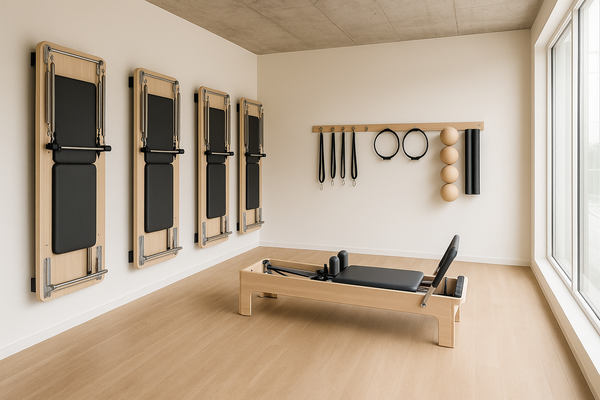
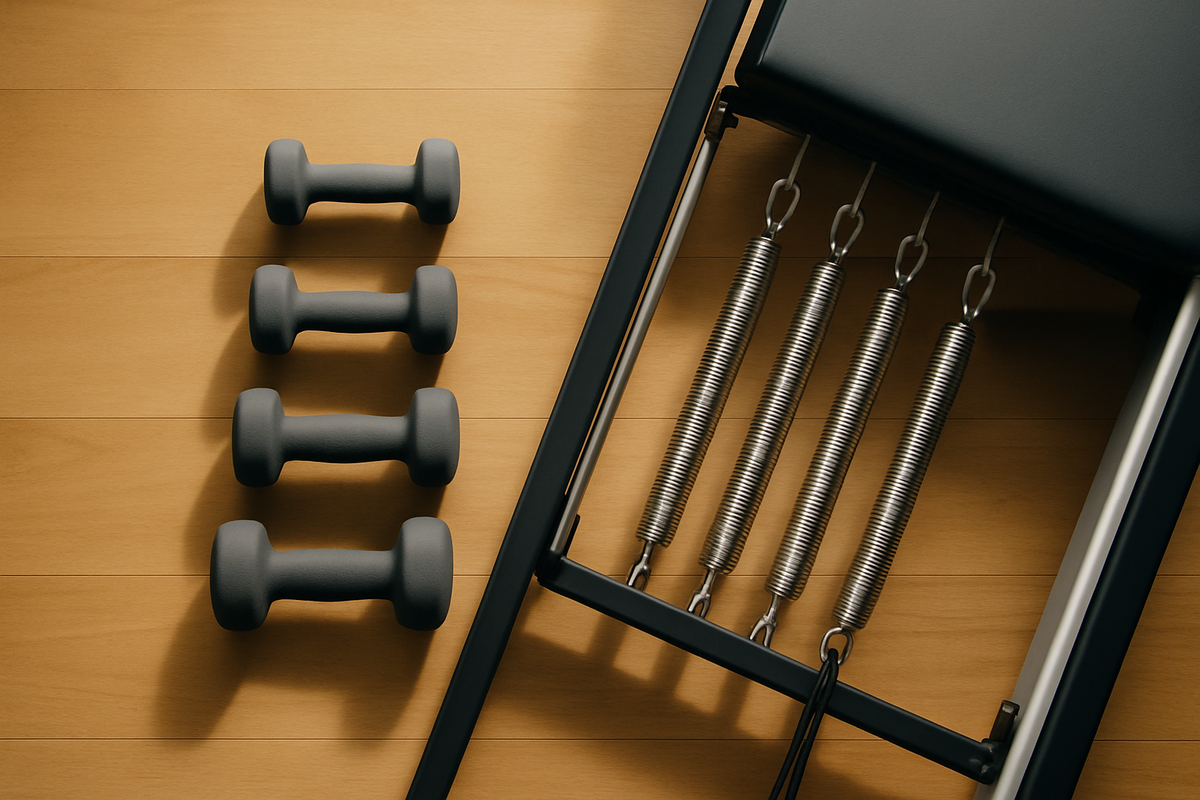
Unlike free weights which rely on gravity, springs provide multi-directional resistance, challenging muscles through every part of the movement. With adjustable settings, progressive overload can be applied just like in the weight room. Hybrid designs like reformer plus tower systems allow instructors to teach both traditional reformer exercises and tower-based spring work on a single piece of equipment.
The limitation remains clear: Pilates helps boost muscle strength, but weight training is still needed because Pilates is more about improving muscle tone than increasing muscle size. If the goal is maximum hypertrophy, the best bet is to combine Pilates with weightlifting. Weight training without active mobility could cause stiffness, poor posture, or back pain; reformer Pilates without resistance training would limit muscle growth, metabolism, and fat burning. The resolution isn't to choose Pilates versus strength training but to combine them to produce a body that is strong, lean, and resilient.
Revenue Signal: Why Studios Want Multi-Certified Instructors
At the studio operator level, the market signal is unambiguous. Instructors who pursue advanced or multiple certifications can earn up to 27% more per year. Instructors want to get certified on apparatus to teach multiple modalities and increase revenue, and studios need staff who can deliver on the premium pricing promise.
Pilates is poised for massive growth driven by its unique ability to retain clients longer than almost any other modality. Industry thought leaders emphasize that clients should walk out stronger, making Pilates feel powerful and ensuring movements translate to real-world strength. Pilates is shifting toward intelligent programming that supports real-life movement, with growing emphasis on biomechanics, joint health, and long-term functional strength. Teachers who can assess alignment, understand load, and craft classes that support sustainable strength are in especially high demand.
What Strength-Based Programming Actually Looks Like
A good strength-based Pilates program should include repertoire that will improve core strength, and by programming safe increases in load and volume, individuals should develop longer, leaner muscle mass and reduce body fat together with increased power and endurance. Advanced Pilates specialty certifications now teach how to apply Pilates principles to mat exercises using equipment such as Pilates rings and bands, and explore reformer exercises brought to the mat with incorporation of small equipment like balls, bands, and weights.
Combining Pilates and strength training provides a well-rounded workout routine that not only builds strength but also improves mobility, reduces stress, and increases mindfulness. The pedagogy shift is from classical method as standalone system to Pilates as intelligent movement foundation integrated with resistance science.
What This Means for Studio Operators
Editorial analysis — not reported fact:
If your instructors can't articulate the difference between muscular endurance and hypertrophy, or don't know how to coach proximity to failure, your premium pricing is vulnerable. Clients paying 48% more than they would for other fitness formats expect outcomes that justify the investment, and "longer, leaner muscles" language won't satisfy the client whose physician prescribed resistance training for bone density.
The opportunity is in honest positioning and intentional upskilling. Invest in continuing education that covers resistance science, not just apparatus choreography. Certifications in suspension, barre, or strength-Pilates fusion give your team the vocabulary and programming tools to design classes that deliver measurable strength outcomes alongside traditional benefits. Instructors who can teach clients to self-regulate intensity and choose springs based on training goals rather than instructor defaults create more confident, autonomous clients who stay longer and refer more.
The fusion trend isn't diluting Pilates. It's professionalizing it. Studios that treat strength science as a complement rather than a threat will capture the clients who want both the precision of classical work and the progressive overload their doctors ordered.
Sources & Further Reading
- IBISWorld Pilates & Yoga Studios Market Size Data — industry market statistics including pricing premiums for Pilates memberships and classes
- Balanced Body: Pilates and Strength Training Explained — covers spring-based resistance, progressive overload protocols, and the three criteria for true strength training
- Mindbody: Pilates Fusion Explained — overview of fusion formats including Strength Training Pilates Fusion and market positioning in 2026
- Pilates.com Instructor Salary Guide — earnings data for instructors with advanced and multiple certifications
- Verywell Fit: Does Pilates Build Muscle? — evidence-based analysis of muscle tone versus muscle size outcomes and need for complementary weight training
- Balanced Body Instructor Training Programs — Bodhi Suspension System, Barre, and advanced mat specialty certifications
Editorial coverage of publicly reported industry developments. The Pilates Business has no commercial relationship with any companies named.