Proprietary Reformers & Smart Tech Reshape Equipment Buying
Franchise brands deploy exclusive reformers as brand moats while smart-connected equipment and tariff pressures force studio operators to rethink 2026 capital decisions.

Key Takeaways
- Proprietary reformers are brand moats: Franchises like Pilates Addiction use exclusive equipment (the Aurum™ Reformer) to differentiate, signaling that equipment choice is now a strategic asset, not just a utility purchase.
- Market acceleration continues through 2033: The Pilates Equipment and Gears Market, valued at $1.2 billion in 2024, is projected to grow at 8.9% CAGR to $2.5 billion by 2033.
- Reformers dominate studio budgets: Reformers account for over 60% of all studio equipment purchases, with commercial-grade units ranging $3,000–$10,000+ depending on features and brand.
- Smart tech integration is reshaping ROI: Modern reformers with motion sensors, AI-driven form correction, and app-based telemetry enable studios to capture progression data and refine programming by performance metrics.
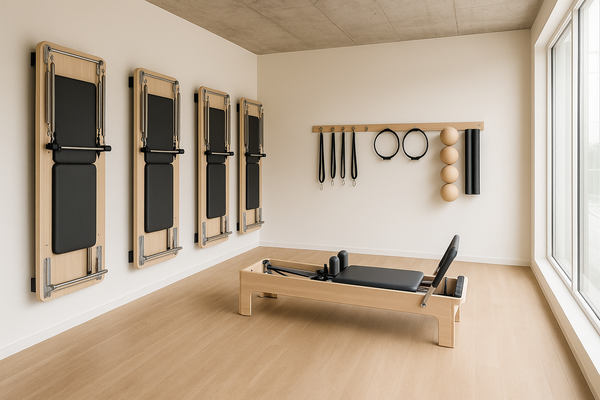
- Material choices segment by use case: Maple wood reformers remain the benchmark for boutique studios, while aluminum offers lightweight durability for high-usage commercial environments.
- Bulk buying cuts per-unit cost 15–30%: Purchasing reformers in sets of four to six units significantly reduces cost compared to individual buys, critical for studios scaling beyond initial launch.
Why Equipment Decisions Matter More in 2026 Than Ever Before
Consumer demand for high-quality Pilates equipment continues to accelerate as new demographics enter the discipline and group Reformer formats gain mainstream traction. Pilates was the most-booked workout on ClassPass for the second year in a row, with bookings increasing by 84% since last year, shifting the industry from niche to necessity.
Fast-growing franchise brands like Pilates Addiction, which has sold over 200 territories, and JetSet Pilates, which has eclipsed 200 franchise agreements, are forcing independent studio owners to reconsider what role equipment plays in competitive positioning. This is a moment of differentiation through equipment choice, not commoditization.
Commercial-Grade Reformers: Price Bands and What They Buy You
According to industry equipment guides published in 2026, new professional-grade reformers typically range from $3,000–$8,000, with premium models from brands like Balanced Body or Stott Pilates reaching $10,000 or more. The Reformer accounts for over 60% of all Pilates studio equipment purchases, making it the single largest capital decision in studio buildout.
The price spread reflects meaningful differences in durability, warranty coverage, and accessory ecosystems. Commercial reformers carry warranties valid for multiple daily users, typically 20–30+ hours per week, a critical threshold for studios running six to eight class slots daily. Mid-tier alternatives like the Align Pilates A8-Pro deliver commercial-grade performance at a price point that makes it the most practical choice for studios scaling from 4 to 10+ reformers.
Established Brands Versus Proprietary Franchise Equipment
Balanced Body leads in studio quality, widely regarded as the gold standard for professional Pilates reformers, offering exceptional build quality and a vast accessory ecosystem. Merrithew excels in education and consistency, and the Merrithew SPX Max is the most durable commercial reformer on the market and the benchmark for clinical Pilates, with CE Medical Device certification making it the required choice for facilities billing insurance-covered physical therapy.
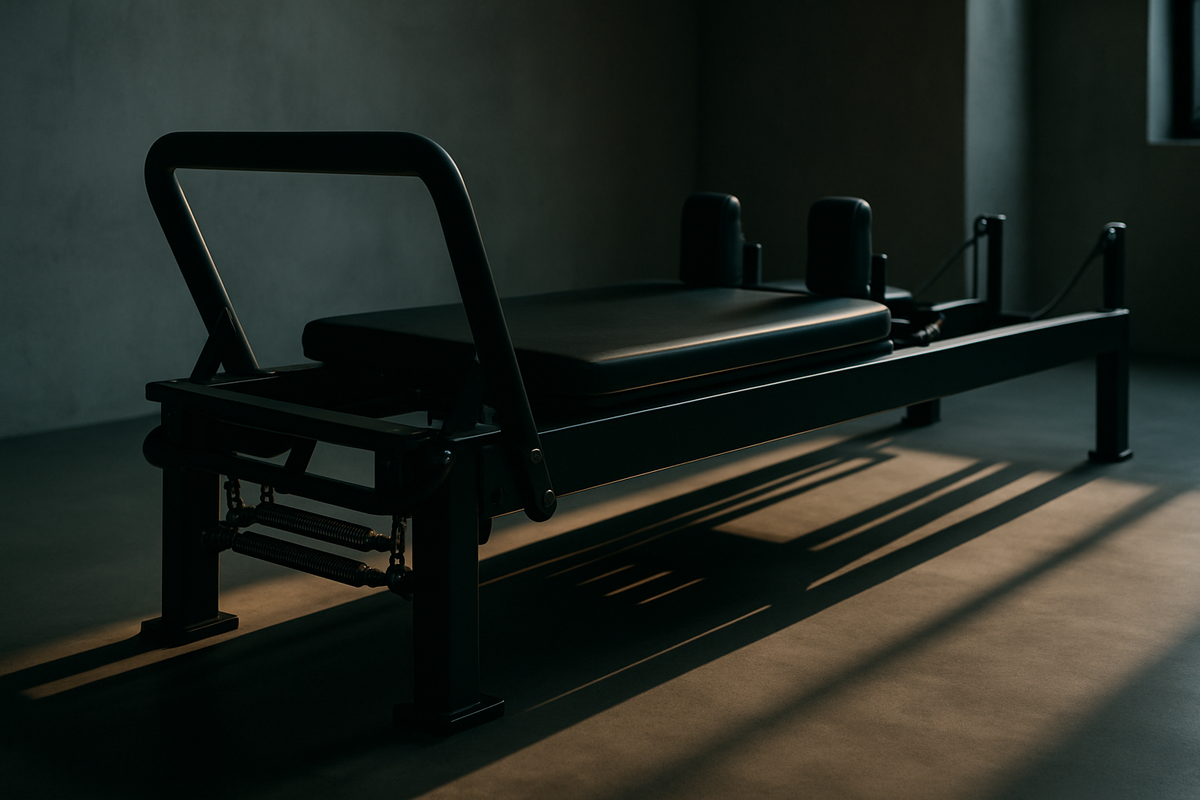
Meanwhile, franchise brands are deploying proprietary equipment as a competitive moat. Per reporting by Athletech News, Pilates Addiction is known for its flashy black-and-gold color scheme and proprietary Aurum™ Reformer (formerly called the WundaFormer), exclusive to Pilates Addiction franchisees. The same report notes that franchise owners continue to choose Pilates Addiction for its proprietary Aurum™ Reformer, proven leadership, and a model built to win in today's boutique fitness market. This signals a shift: equipment choice is now a brand asset, not just a utility purchase.
Material Trends: Maple Wood, Aluminum, and Eco-Conscious Manufacturing
According to commercial equipment reviews published in 2026, the trend is diversified materials and refined use-case segmentation. Wood offers a premium look and stable feel, ideal for boutique studios, while aluminum provides lightweight durability and low maintenance for high-usage commercial environments.
Maple wood Pilates Reformers are widely considered the benchmark for professional studios due to maple's density, excellent load-bearing capacity, and ability to minimize flex under dynamic movement while absorbing vibration. For operators prioritizing sustainability, eco-conscious studios are embracing equipment made from responsibly harvested wood, recycled metals, and non-toxic upholstery, with equipment makers offering carbon-neutral production and designs made for eventual recycling.
Smart Reformers and the Rise of Connected Equipment
Modern smart reformers layer in motion sensors, AI-driven form correction, and resistance profiles that adapt in real time, per an Athletech News industry forecast published earlier this year. Smart Pilates equipment contains sensors, Bluetooth connectivity, and app-based systems to offer real-time data, performance monitoring, and customized feedback.
The same analysis notes that connected reformers deliver telemetry, standardized programming, and technique feedback to elevate outcomes and retention, allowing studios to capture progression data and refine programs by performance metrics. For subscription-based studios competing on member retention, this capability represents a meaningful edge.
Bulk Buying, Supply Chain Pressures, and Tariff Uncertainty
Purchasing equipment in sets of four to six units typically reduces per-unit cost by 15–30% compared to buying individually, making bundles ideal for scaling studios. Most boutique studios start with 4–8 reformers for group classes, with the standard formula being one reformer per 14–20 square feet of studio floor space.
However, forthcoming U.S. tariffs scheduled for 2025 are prompting significant shifts throughout the Pilates equipment supply chain, with organizations intensifying focus on regional and nearshore manufacturing to address trade policy uncertainties, and logistics partners adjusting fulfillment strategies. Studio operators planning buildouts in Q3 and Q4 2026 should confirm lead times and lock pricing early.
What This Means for Studio Operators
Editorial analysis — not reported fact:
If you are opening a studio in the next 12 months, your equipment decision is no longer purely functional. It is a positioning statement. Proprietary reformers signal franchise affiliation and brand consistency. Established brands like Balanced Body and Merrithew communicate quality and instructor familiarity. Smart-connected equipment appeals to data-driven members and creates retention leverage through progression tracking.
For independent operators, the 15–30% bulk discount on four to six units is material enough to justify delaying a phased buildout in favor of a single consolidated purchase. If your studio model targets clinical or insurance-eligible populations, the Merrithew SPX Max's CE Medical Device certification may be non-negotiable. If you are scaling to 10+ reformers, the Align Pilates A8-Pro offers a price-to-durability ratio that preserves capital for marketing and payroll.
Finally, if you are evaluating smart reformers, ask vendors for telemetry export options and API access. Capturing member progression data only creates competitive advantage if you can act on it through programming, not just display it on a dashboard.
Sources & Further Reading
- Athletech News: Can Pilates Franchising Boom Continue? — franchise growth, ClassPass booking trends, and proprietary equipment strategies
- Athletech News: Pilates and the 2026 Equipment Forecast — smart reformers, AI integration, supply chain shifts, and tariff impacts
- Verified Market Reports: Pilates Equipment and Gears Market — market size, CAGR projections through 2033
- Recovathlete: Best Commercial Pilates Reformers 2026 — brand comparisons, material trends, pricing bands, and durability benchmarks
- Recovathlete: Commercial Pilates Reformers for Studios 2026 B2B Setup Guide — bulk buying discounts, warranty coverage, studio layout formulas
- Peak Primal Wellness: Top Pilates Equipment Brands Compared — Balanced Body, Merrithew, clinical certification details
- Glofox: Pilates Studio Equipment — studio layout and space planning guidance
Editorial coverage of publicly reported industry developments. The Pilates Business has no commercial relationship with any companies named.