Raw Space vs. Built-Out Studio: Real Cost & Timeline Guide
Build-out runs $80-$150/sq ft and 8-16 weeks minimum, while turnkey studios start at $140K. Which path matches your capital and timeline in 2026?

Key Takeaways
- Raw space build-out costs for a Pilates studio run $80 to $150 per square foot, with total upfront investment of $100,000 to $220,000 for a typical 1,500-square-foot space before lease deposits and first month rent.
- Construction timelines commonly span 8 to 16 weeks, but permitting, landlord approvals, and long-lead equipment can push total time from lease signing to opening beyond six months.
- Tenant improvement allowances of $30 to $80 per square foot rarely cover full Pilates-specific build-out costs, leaving owners to fund the gap out of pocket or negotiate free rent periods of 3 to 12 months.
- Fully built-out studios available for purchase in 2026 range from $140,000 for a 2,000-square-foot West Hollywood studio to under $100,000 for established franchised locations with over $75,000 in equipment already installed.
- Second-generation fitness spaces purpose-built for high-performance use offer a middle path, reducing build-out costs while avoiding the lease and client acquisition risks of a full studio takeover.
The Hidden Complexity of Building From Raw Space
The majority of first-time Pilates studio owners underestimate the gap between a landlord's tenant improvement allowance and the actual cost to open. Tenant improvement allowances typically range from $30 to $80 per square foot, but Pilates-specific build-out frequently exceeds $58 per square foot once you factor in reinforced flooring for reformer weight, sound isolation between class space and lobby, upgraded HVAC for ventilation during high-occupancy sessions, and code-compliant plumbing for showers.
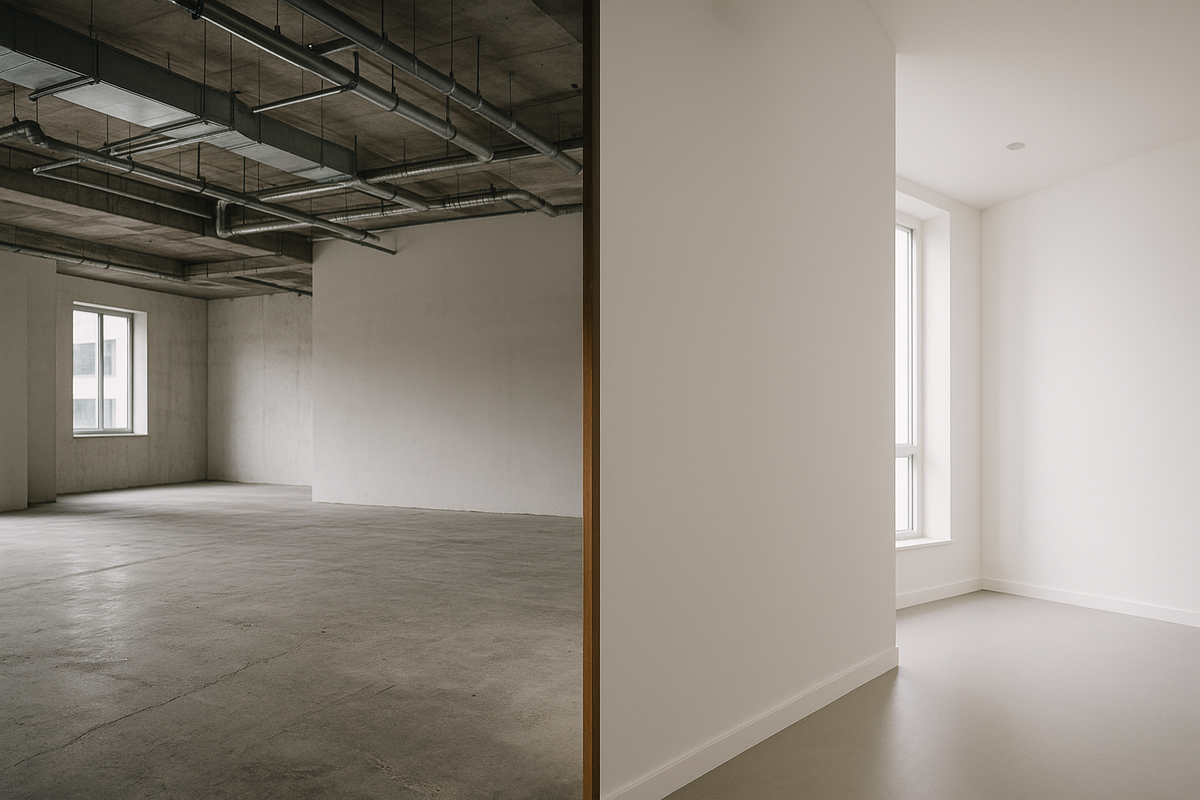
Total real estate and build-out costs for a 1,500-square-foot mid-tier studio run $100,000 to $220,000 before you pay your first instructor or run your first Instagram ad. The wide range reflects space condition: a raw shell with concrete floors and open ceilings demands significantly more investment than a previously finished retail space. Most owners close the TI gap by negotiating free rent periods of 3 to 12 months, but this extends your cash burn window.
Timeline risk compounds financial risk. Construction commonly ranges 8 to 16 weeks, but permitting delays, landlord approval bottlenecks, and long-lead equipment orders can push total time from lease signing to first client beyond six months. During this period, you are paying rent, carrying equipment deposits, and funding pre-opening marketing with zero revenue.
The Built-Out Studio Advantage and Its Lease Risk
The surge in Pilates studio exits driven by both owner retirements and private equity consolidation has created a robust supply of turnkey opportunities. Commercial listings in September 2026 show pricing that reflects this reality: a fully built-out 2,000-square-foot luxury studio in West Hollywood asking $140,000 move-in ready, and a North San Antonio IM=X Pilates franchise location with more than $75,000 in equipment including a $60,000 ceiling-mounted spring system available at a fraction of raw-space startup cost.
The financial advantage is immediate: you skip six months of negative cash flow, avoid construction cost overruns, and inherit equipment that would otherwise consume $40,000 to $80,000 of working capital. The operational advantage is speed to revenue. A built-out studio can reopen within 30 to 60 days if the lease transfers cleanly and the seller's client list remains intact.
The critical risk is the lease. Remaining term, rent relative to realistic revenue projections, renewal options, escalation clauses, and landlord consent to assignment determine whether a turnkey studio is a bargain or a trap. Major metro rents now run $60 to $120 per square foot, and annual increases tied to percentage rather than CPI caps can turn a profitable studio into a break-even operation within 24 months. A short remaining lease term with no renewal option forces you to negotiate against the landlord's knowledge that relocating a reformer studio is prohibitively expensive.
Hidden Lease Terms That Erode Value
Common area maintenance charges, capital improvement contributions, and personal guarantee clauses can add thousands monthly to base rent and put personal assets at risk if the studio cannot meet lease obligations. Before closing on any built-out studio, engage a commercial lease attorney to review assignment conditions, landlord default remedies, and whether the seller has deferred any CAM obligations that will transfer to you.
The Second-Generation Fitness Space Middle Path
A hybrid option gaining traction in 2026 is acquiring space previously occupied by another boutique fitness brand. When Fierce45 opened its newest location in a 3,200-square-foot space formerly home to Orangetheory Fitness, the existing build-out included reinforced flooring, upgraded HVAC, code-compliant changing rooms, and soundproofing already in place. This allowed the studio to open with minimal additional investment while avoiding the client acquisition and lease assignment complexity of a full studio takeover.
Second-generation fitness spaces typically require only cosmetic updates, new flooring appropriate for Pilates movement, and equipment installation. Build-out costs drop to $30 to $60 per square foot compared to $80 to $150 for raw space, and construction timelines compress to 4 to 8 weeks. The lease is direct with the landlord rather than assigned from a seller, giving you full control over term, renewal, and escalation negotiation.
Decision Framework for Capital and Timeline Readiness
The raw space versus built-out decision hinges on three variables: available capital, timeline tolerance, and exit optionality. If you have $150,000 to $200,000 in liquid capital and can sustain six to nine months of negative cash flow while maintaining personal living expenses, raw space becomes viable. Mid-range commercial studios typically require $75,000 to $150,000 for 6 to 10 reformers, professional fit-out, software, insurance, and launch marketing when owners minimize build-out scope and consider used equipment.
If your capital is constrained or your timeline demands revenue within 90 days, a built-out studio or second-generation fitness space is the only realistic path. The trade-off is reduced control over location, lease terms, and spatial layout. You inherit the previous owner's real estate decisions, and those decisions may not align with your growth model or client demographic.
Exit optionality matters more than most first-time owners anticipate. Institutional capital has decided Pilates is worth owning, and PE-backed multi-unit operators actively acquire profitable single-location studios in desirable markets. A studio built from raw space with a 10-year lease, favorable rent escalation, and renewal options holds significantly more exit value than a studio with 3 years remaining on an assigned lease with above-market rent.
What This Means for Studio Operators
Editorial analysis, not reported fact:
The question is not whether raw space or built-out studios are objectively better. The question is which path matches your capital position, risk tolerance, and operational readiness in September 2026. If you can afford the time cost of permitting delays and construction overruns, raw space gives you full control over location, layout, and lease terms that protect long-term value. If you need to generate revenue within 60 to 90 days to validate your business model or satisfy investor timelines, a built-out studio or second-generation fitness space is the only financially rational choice despite its lease constraints.
The operators who regret their choice typically underestimated one specific risk: raw space builders underestimate timeline and hidden costs like sound isolation and CAM charges, while built-out studio buyers underestimate lease risk and overestimate the transferability of the seller's client base. Whichever path you choose, stress-test your financial model against a six-month revenue delay for raw space or a 40 percent client attrition rate for built-out studios, and if your model survives both scenarios, you have sufficient capital cushion to execute.
Sources & Further Reading
- Vibe Fam: How Much Does It Cost to Open a Pilates Studio in 2026, detailed breakdown of build-out and equipment costs by studio tier
- Boutique Fitness Broker: How Much Does It Cost to Open a Pilates Studio, analysis of tenant improvement allowances and lease negotiation strategies
- The Pilates Business: What to Look for in a Pilates Studio Lease Before You Sign, guidance on CAM charges, escalation clauses, and personal guarantees
- Fitli: Private Equity and Pilates Studio Consolidation, market context on institutional capital and multi-unit acquisition activity
- Mariana Tek: How to Open a Pilates Studio, construction timelines and permitting considerations
- BizQuest: Fully Built-Out Luxury Pilates Studio in West Hollywood, example of turnkey studio pricing
Editorial coverage of publicly reported industry developments. The Pilates Business has no commercial relationship with any companies named.