Smart Reformers & AI Form Correction in 2026 Pilates Equipment
How AI-driven form correction, connected ecosystems, and franchise expansion are reshaping commercial Pilates equipment buying decisions in 2026.

Key Takeaways
- Smart reformer technology integrates AI-driven form correction, motion sensors, and app connectivity that improve user engagement by over 20%, according to recent market analysis, marking Pilates equipment's shift from standalone apparatus to connected ecosystems.
- Commercial reformer pricing ranges from $2,999 to $4,000 per studio-grade bed, with fully outfitted six-reformer boutique studios requiring $40,000 to $80,000 in capital investment depending on brand and configuration.
- The Pilates equipment market is projected to grow from $5.353 billion in 2024 to $11.07 billion by 2035 (6.83% CAGR), while the reformer-specific segment reaches $8.29 billion in 2026 and climbs toward $16.81 billion by 2035 at 8.2% annual growth.
- Bulk purchasing economics reduce per-unit reformer costs by 15–30% when buying sets of four to six units, while the used-versus-new decision can swing studio startup budgets by $30,000 to $50,000 for an eight-reformer fleet.
- North America dominates with approximately 35% of global Pilates equipment market share and 56.5% of Pilates and yoga studio revenue in 2025, making US buying decisions a bellwether for worldwide equipment trends.
- Franchise expansion pressures are driving proprietary equipment differentiation, with Pilates Addiction's 300+ territories sold and 125 studios projected to open in 2026 signaling that integrated equipment plus studio design is now a competitive moat.
How AI-Driven Form Correction and Connected Ecosystems Are Redefining Pilates Equipment in 2026
The commercial Pilates equipment landscape is undergoing its most significant transformation since the reformer itself, as manufacturers layer motion sensors, real-time resistance adaptation, and AI-driven biomechanical feedback onto classical apparatus design. This shift matters now because US studio operators face a critical investment window: franchise models like Pilates Addiction are scaling at unprecedented speed, major commercial gym chains are adding reformer studios, and the decision to buy traditional premium equipment versus emerging smart-connected platforms will shape competitive positioning for the next five to seven years.
The stakes are quantifiable. The global Pilates equipment market was valued at $5.353 billion in 2024 and is projected to reach $11.07 billion by 2035, growing at 6.83% annually. The reformer segment alone stands at $8.29 billion in 2026, climbing toward $16.81 billion by 2035 at an 8.2% compound annual growth rate. North America accounts for roughly 35% of global equipment sales and 56.5% of studio revenue as of 2025, making US purchasing patterns a leading indicator for worldwide trends.
The Established Brand Hierarchy: Balanced Body, Merrithew, Gratz, and the Premium Tier
For commercial studios prioritizing durability and instructor trust, three brands dominate the conversation. Balanced Body remains the gold standard for professional reformers, recognized for precision engineering and comprehensive warranty support. Merrithew, the manufacturer behind STOTT PILATES certification programs, is favored by instructors who prioritize biomechanically precise, research-backed design. Gratz serves the classical methodology purist, handcrafting apparatus to Joseph Pilates' original specifications.
Studio-grade reformers from these manufacturers typically cost $2,999 to $4,000 per bed. A fully outfitted boutique studio with six commercial reformers, one Cadillac, and a complete accessory set requires capital investment between $40,000 and $80,000 depending on brand and configuration. Purchasing equipment in sets of four to six units reduces per-unit cost by 15 to 30 percent compared to individual orders, making bundle economics essential for scaling operators.
Total cost of ownership extends beyond sticker price. In commercial settings with daily multi-class schedules, springs require replacement every 12 to 18 months to maintain consistent resistance curves. Operators should budget for ongoing consumable costs when modeling five-year equipment expenses.
Mid-Range Alternatives and the New-Versus-Used Calculus
Cost-conscious buyers increasingly evaluate mid-range brands like Align-Pilates and OEM manufacturers such as Bilinkpilates, which offer commercial-grade construction at lower price points without sacrificing core performance. For studios launching with eight reformers, the difference between buying new mid-tier equipment and purchasing used premium apparatus can swing upfront capital by $30,000 to $50,000.
The used Pilates equipment market has seen a 15% increase in activity as of mid-2026, driven partly by studio closures and fleet upgrades. However, hidden costs erode the used-equipment discount. At certain price points, the 24-month total cost of ownership for a new alternative reformer can fall below that of a used Balanced Body or Merrithew unit after factoring in refurbishment labor, replacement parts, and warranty gaps. New mid-range reformers increasingly include five-year frame warranties and corrosion-proof aluminum bed tracks that reduce long-term maintenance overhead.
Smart Reformers and the Connected Equipment Revolution
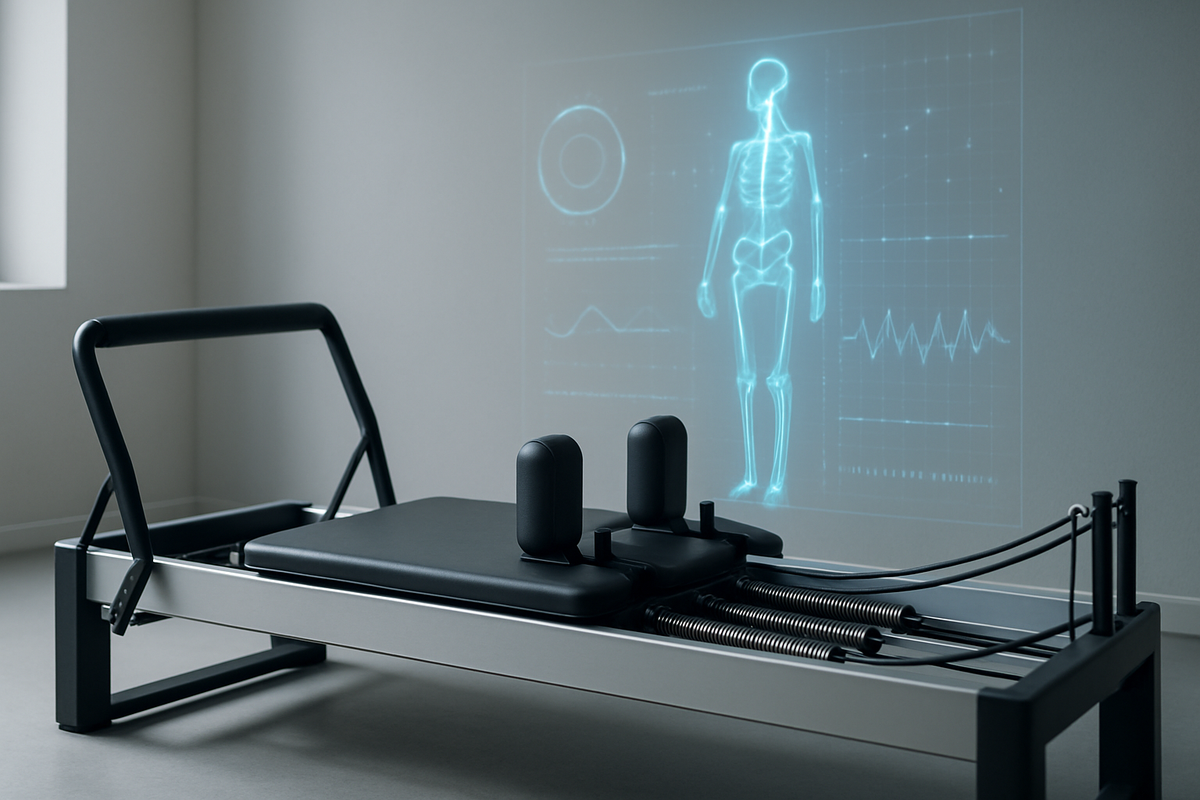
The most consequential shift in 2026 is the integration of intelligence into apparatus that has remained mechanically static for decades. Modern smart reformers layer motion sensors, app connectivity, and AI-driven form correction onto classical frames. Market research indicates that technological integration improves user engagement by over 20%, and companies integrating digital feedback systems report user retention increases exceeding 15% compared to non-connected models.
Two acquisitions signal boardroom-level validation of the connected-equipment thesis. When iFIT acquired Reform RX, a connected reformer company bridging traditional Pilates with modern technology, it signaled an ambition to unite Pilates with other training modalities through a connected ecosystem. Meanwhile, Your Reformer is building a fully integrated platform combining premium equipment with digital content and operational tools, including the ReformerPro suite with KioskPro, ClassPro, and InstructorPro for on-demand sessions, digitally streamed classes, and simplified instructor programming.
These systems move beyond passive video streaming. Resistance profiles adapt in real time based on detected movement patterns, sensors flag alignment deviations mid-exercise, and backend dashboards track client progression across sessions. For operators, the value proposition extends beyond member engagement to instructor efficiency: less verbal cueing per correction, faster onboarding of novice clients, and data to support outcome-based retention conversations.
Design Innovation: Modularity, Sustainability, and Space Efficiency
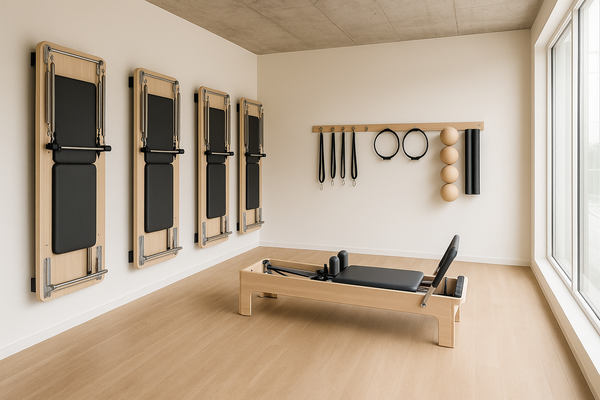
Parallel to smart integration, manufacturers are rethinking physical footprint and material sourcing. Folding reformers that collapse vertically or slide under platforms are no longer niche home products; commercial studios in high-rent urban markets are piloting modular systems that reconfigure between group reformer, mat-based, and ancillary programming throughout the day.
Sustainability is moving from marketing language to engineering specification. Manufacturers are investing in recyclable materials, quieter mechanical systems with sealed bearing cartridges, and sleeker profiles that allow operators to deliver more value per square meter. Studios serving diverse populations benefit from reformers with extended carriage travel length and multi-position foot bar height adjustability, ensuring genuine accommodation of body types without alignment compromise. In group class environments, a carriage riding silently on an eight-wheel polyurethane system and rapid-change spring bars that save 15 seconds between exercises compound into meaningful operational advantages over a 12-class day.
Franchise Expansion and Proprietary Equipment as Competitive Moat
Pilates Addiction sold more than 300 franchise territories in its first year, with 125 studios projected to open in 2026. The brand's presale success is attributed in part to proprietary equipment, consistent studio design, and go-to-market strategies that differentiate the member experience before the first reformer session. This franchise velocity suggests that proprietary, differentiated equipment combined with standardized design is becoming a defensible competitive advantage rather than a cost center.
Meanwhile, Merrithew and STOTT PILATES are focusing on elevated education, reliable equipment, and digital solutions that help independent studios scale sustainably. The emerging divide is between franchise systems that lock in proprietary apparatus and independent operators who prioritize instructor-led differentiation supported by best-in-class but interchangeable equipment.
Operator Challenges: Upfront Capital, Trainer Shortage, and Equipment Lifespan
Two structural headwinds constrain equipment investment decisions. First, the initial capital requirement for commercial-grade apparatus remains substantial: outfitting even a modest six-reformer studio requires $40,000 to $80,000 before build-out, marketing, or working capital. Second, the shortage of certified trainers limits effective use of advanced apparatus. Studios that invest in Cadillacs, chairs, and barrels without instructor expertise to program them see utilization rates below 30%, turning premium equipment into expensive studio decoration.
Operators must model equipment ROI against realistic instructor capacity and class schedule density. A $4,000 reformer in a studio running 25 classes per week with an average of four clients per reformer generates fundamentally different unit economics than the same reformer in a 12-class-per-week schedule.
What This Means for Studio Operators
Editorial analysis — not reported fact:
If you are evaluating reformer purchases in the second half of 2026, your decision framework should separate equipment that will remain relevant through 2031 from apparatus that will feel dated within 18 months. Smart-connected systems are no longer experimental; they are crossing into early majority adoption, and member expectations will shift accordingly as franchise competitors and commercial gym chains deploy them at scale.
For independent studios, the strategic question is whether to invest in premium traditional equipment that preserves instructor-led differentiation, or to adopt connected platforms that shift differentiation toward data, personalization, and digital progression tracking. Both paths are viable, but they imply different instructor hiring profiles, different marketing narratives, and different five-year competitive moats.
Franchise buyers and multi-location operators should model bundle economics aggressively. The 15 to 30 percent per-unit discount on four-to-six-reformer sets compounds rapidly across 10 or 20 locations, and the operational advantage of standardized equipment and rapid spring-bar changes becomes a meaningful labor cost lever when you are running 150 weekly classes across a portfolio.
If your market includes significant demographic diversity in age, height, or mobility, prioritize reformers with extended carriage travel, multiple foot-bar positions, and accessible entry/exit geometry. Equipment that accommodates genuine range without makeshift bolster stacks or verbal disclaimers is worth the premium in both member retention and risk management.
Finally, factor consumables and warranty into total cost of ownership. A reformer with a five-year frame warranty and corrosion-proof bed track may cost $600 more upfront but save $1,200 in replacement parts and refurbishment labor over 36 months in a high-humidity coastal market or a studio running 30-plus weekly classes.
Sources & Further Reading
- Precedence Research: Pilates Equipment Market Analysis — Global market valuation, growth projections through 2035, and regional share data.
- Market Research Future: Pilates Reformer Market Report — Reformer-specific segment size, CAGR, and technology integration trends.
- Franchising.com: Pilates Addiction Franchise Expansion — Territory sales, studio opening projections, and franchise growth drivers.
- iFIT: Reform RX Acquisition Announcement — Strategic rationale for connected reformer integration into broader fitness ecosystem.
- Balanced Body — Commercial reformer specifications, warranty details, and professional equipment catalog.
- Merrithew / STOTT PILATES — Equipment design philosophy, education integration, and digital studio solutions.
- Gratz Industries — Classical apparatus manufacturing and historical design specifications.
- Your Reformer — Connected equipment platform, ReformerPro suite, and operational tool integration.
Editorial coverage of publicly reported industry developments. The Pilates Business has no commercial relationship with any companies named.