Smart Reformers & Sustainable Gear: What Studios Buy in 2026
Connected reformers with AI form correction and eco-friendly materials are reshaping studio equipment ROI. What the $5.3B-to-$11B market shift means for your 2026 purchasing decisions.

Key Takeaways
- Smart reformers with motion sensors and AI-driven form correction are defining 2026 equipment purchases, building on classical design while adding real-time resistance adaptation and data connectivity that attract wellness-focused members.
- Sustainability is now a commercial differentiator: Balanced Body's Bravo Reformer incorporates over 256 recycled plastic bottles per frame, reflecting rising studio demand for eco-friendly materials that align with buyer preferences and regulatory trends.
- Commercial studio equipment investment typically requires $40,000 to $80,000 for a six-reformer boutique setup with Cadillac and accessories, with reformers representing 30 to 40 percent of total startup costs.
- Equipment has become proprietary brand experience: Franchise concepts like Pilates Addiction and SLT now position apparatus as part of competitive differentiation, not commodity infrastructure, preselling memberships based on proprietary equipment design.
- The Pilates equipment market will grow from $5.353 billion in 2024 to $11.07 billion by 2035, with North America holding 35% market share and studios navigating tariff-driven supply chain shifts toward nearshore manufacturing.
- Used commercial reformers remain viable for budget launches: Commercial-grade frames hold up for decades with maintenance, allowing founders to outfit studios for $20,000 to $45,000 versus $40,000 to $80,000 new.
The Smart Reformer Arrives: Connected Equipment Reshapes Studio ROI
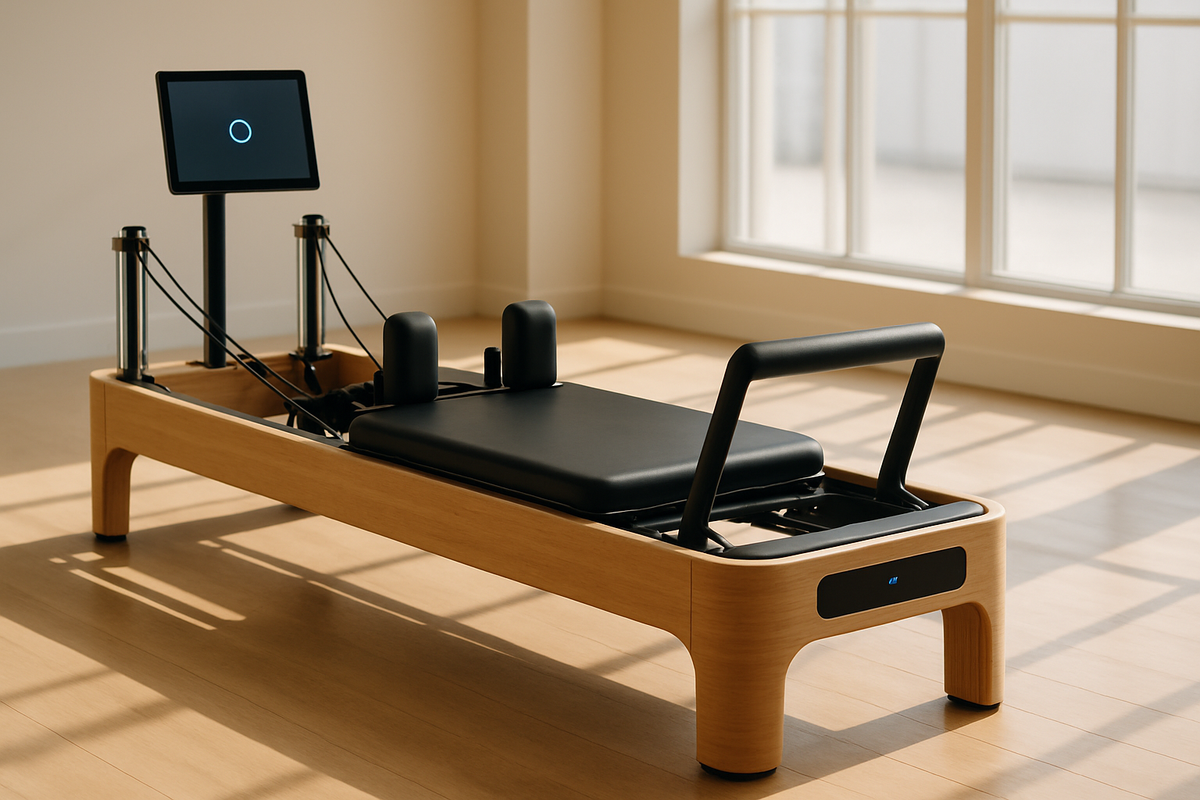
In 2026, iFIT's acquisition of Reform RX, a connected reformer company, signaled that Pilates is entering what industry observers call its "intelligent era." Modern smart reformers layer motion sensors, AI-driven form correction, and resistance profiles that adapt in real time onto classical apparatus design, transforming equipment from static infrastructure into data-connected tools that broaden studio demographics.
According to iFIT's 2026 trend forecast, real-time form correction via motion-sensing cameras is predicted to dominate both at-home and studio sessions this year. In June 2025, a prominent digital wellness brand introduced an interactive Pilates app integrating motion tracking with compatible reformer models, enhancing user engagement and driving studio interest in connected equipment. The global Pilates equipment market was valued at $5.353 billion in 2024 and is projected to reach $11.07 billion by 2035, with another forecast estimating growth of $218.52 million at a compound annual growth rate of 14.2% from 2025 to 2030.
Reformers now function as profitable, data-connected assets rather than passive apparatus. Studios calculate equipment ROI not just on durability and warranty coverage, but on member engagement metrics, retention lift from personalized programming, and the ability to serve clients remotely through hybrid models.
Sustainability Becomes a Purchasing Criterion, Not a Marketing Add-On
Balanced Body's Bravo Reformer exemplifies the 2026 sustainability shift: its frame incorporates over 256 recycled plastic bottles per unit, paired with extruded aluminum legs and premium upholstery. This isn't niche eco-branding. Rising demand for equipment made from sustainable and recycled materials reflects both regulatory trends and evolving buyer preferences, particularly among wellness-focused demographics that studios compete to attract.
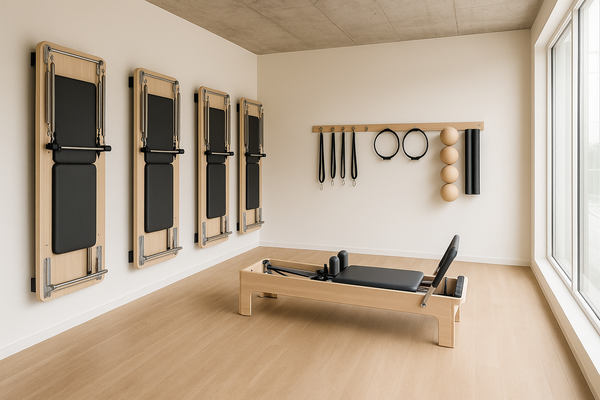
Per iFIT's forecast, 2026 features modular, space-efficient, and sustainable systems influenced directly by Pilates' minimalist design ethos. Studios opening in urban markets with high per-square-foot lease costs now prioritize foldable premium reformers and lightweight frames that serve both in-studio and rental/home-use revenue streams. Innovation in foldable reformer technology is crucial for capturing the expanding home segment, which has become one of the fastest-growing categories within the fitness equipment market.
Material transparency, recyclability, and end-of-life take-back programs are appearing in RFPs from institutional buyers and franchise operators. Equipment suppliers that cannot document sustainable sourcing risk exclusion from purchasing shortlists.
Brand Hierarchy and the $40,000 to $80,000 Studio Fit-Out
A fully outfitted boutique studio with six commercial reformers, one Cadillac, and a complete accessory set typically requires capital investment between $40,000 and $80,000 depending on brand and configuration, with reformer equipment representing 30 to 40 percent of total startup costs. An eight-reformer studio with towers, Cadillac, two Wunda chairs, and a mat zone lands at $40,000 to $80,000 new, or $20,000 to $45,000 if the founder purchases used equipment.
Balanced Body is widely regarded as the gold standard for professional reformers, offering exceptional build quality and a vast accessory ecosystem. The Allegro 2 and BASI Systems sit at the premium commercial tier ($5,500 to $7,500 new). Merrithew excels in education and consistency, trusted by certified instructors worldwide for biomechanically precise, research-backed design; its STOTT V2 Max Plus runs $4,500 to $7,000. Align-Pilates and Elina occupy the mid-tier ($3,000 to $4,500). Gratz hand-builds classical reformers to Joseph Pilates' original specifications ($5,000 to $8,000), serving practitioners committed to classical methodology.
Commercial-grade frames from major brands hold up for decades with maintenance, making used reformers a legitimate option for budget-conscious openings. Studios budget $150 to $250 per reformer annually for maintenance, as equipment downtime translates directly to lost revenue.
Equipment as Competitive Differentiation: Franchise and Chain Strategies
Pilates Addiction presells dozens of memberships before studio openings, driven by proprietary equipment, studio design, and sales strategies. SLT (Strengthen Lengthen Tone) announced its intention to acquire reformer-based Pilates studios across the United States following a recent multimillion-dollar investment, positioning apparatus as central to brand identity rather than commodity infrastructure.
This shift reflects broader 2026 industry dynamics: equipment is no longer interchangeable. Franchise brands view apparatus as part of proprietary experience design. Spring systems on commercial units are color-coded, interchangeable, and calibrated to precise tension ratings, enabling instructors to consistently prescribe resistance. Balanced Body, Gratz, Stott Pilates, and Merrithew have established themselves as benchmarks. Studios serving diverse populations need reformers that accommodate a genuine range of body types without compromising alignment, and carriages that ride silently on sealed wheels because in group environments, noise accumulates and undermines focused atmosphere.
Tariffs, Supply Chains, and Nearshore Manufacturing in 2025–2026
Forthcoming U.S. tariffs scheduled for 2025 have prompted significant shifts throughout the Pilates equipment supply chain. Organizations are intensifying focus on regional and nearshore manufacturing to address trade policy uncertainties. Logistics partners are adjusting fulfillment strategies by refining delivery schedules and inventory planning.
For studio operators, this translates to longer lead times on imported equipment, price volatility, and increased emphasis on domestic or North American manufacturing. Studios opening in Q3 and Q4 2026 should lock equipment pricing early and verify country-of-origin certifications to avoid tariff surprises at delivery.
What This Means for Studio Operators
Editorial analysis, not reported fact:
If you're planning a 2026 studio opening or equipment refresh, your decision tree has fundamentally changed. Smart reformers are no longer experimental; they're table stakes for studios targeting corporate wellness contracts, hybrid memberships, or demographics under 40. Budget an additional 15 to 25 percent over traditional apparatus if you're integrating connected equipment, and confirm your instructor team has training on data interpretation and app integration.
Sustainability credentials now influence member acquisition and retention, particularly in urban markets where eco-conscious consumers actively research equipment sourcing. Ask suppliers for lifecycle documentation, recycled-material percentages, and take-back or refurbishment programs. If you can't answer a member's question about how your reformers are made, you're behind the differentiation curve.
For budget-conscious launches, used commercial reformers from Balanced Body, Merrithew, or Gratz remain a smart play, provided you budget $150 to $250 per unit annually for maintenance and verify frame condition before purchase. Negotiate warranty transfers where possible. Equipment downtime is lost revenue; one reformer out of commission for a week in an eight-reformer studio costs roughly $800 to $1,200 in class capacity at typical utilization rates.
Finally, tariff uncertainty means you should lock equipment orders and pricing 90 to 120 days ahead of your planned delivery date. Verify country-of-origin and confirm that your supplier has absorbed or passed through tariff costs in the quoted price. Supply chain delays in Q2 2026 have stretched lead times on popular models to 12 to 16 weeks.
Sources & Further Reading
- iFIT 2026 Pilates trend forecast and Reform RX acquisition, covering smart reformer integration and modular equipment trends.
- Global Pilates equipment market valuation and growth projections, detailing the $5.353 billion 2024 baseline and $11.07 billion 2035 forecast.
- Balanced Body Bravo Reformer sustainability specifications, including recycled polywood frame and material sourcing.
- Commercial studio equipment investment benchmarks, covering typical $40,000 to $80,000 fit-out costs and reformer percentage of startup capital.
- Merrithew STOTT Pilates equipment and instructor education programs, emphasizing biomechanically precise design and certification integration.
- Gratz classical reformer specifications, hand-built to Joseph Pilates' original blueprints.
- Pilates Addiction franchise equipment and presale strategies, illustrating proprietary apparatus as competitive differentiation.
- SLT expansion and acquisition announcement, positioning equipment as central to brand experience.
- 2025–2026 tariff impacts on fitness equipment supply chains, covering nearshore manufacturing and logistics adjustments.
Editorial coverage of publicly reported industry developments. The Pilates Business has no commercial relationship with any companies named.