Strength-Forward Pilates Formats Reshape Studio Economics
Hybrid Pilates programming combining strength training, smart equipment, and muscle-building results is driving 40% participation growth and big-box gym entry in 2026.

Key Takeaways
- Strength-forward Pilates formats are driving the fastest growth in the studio sector, with participation growing from 9.2 million to 12.9 million people since 2019, a nearly 40 percent increase fueled by clients seeking muscle-building results without injury risk.
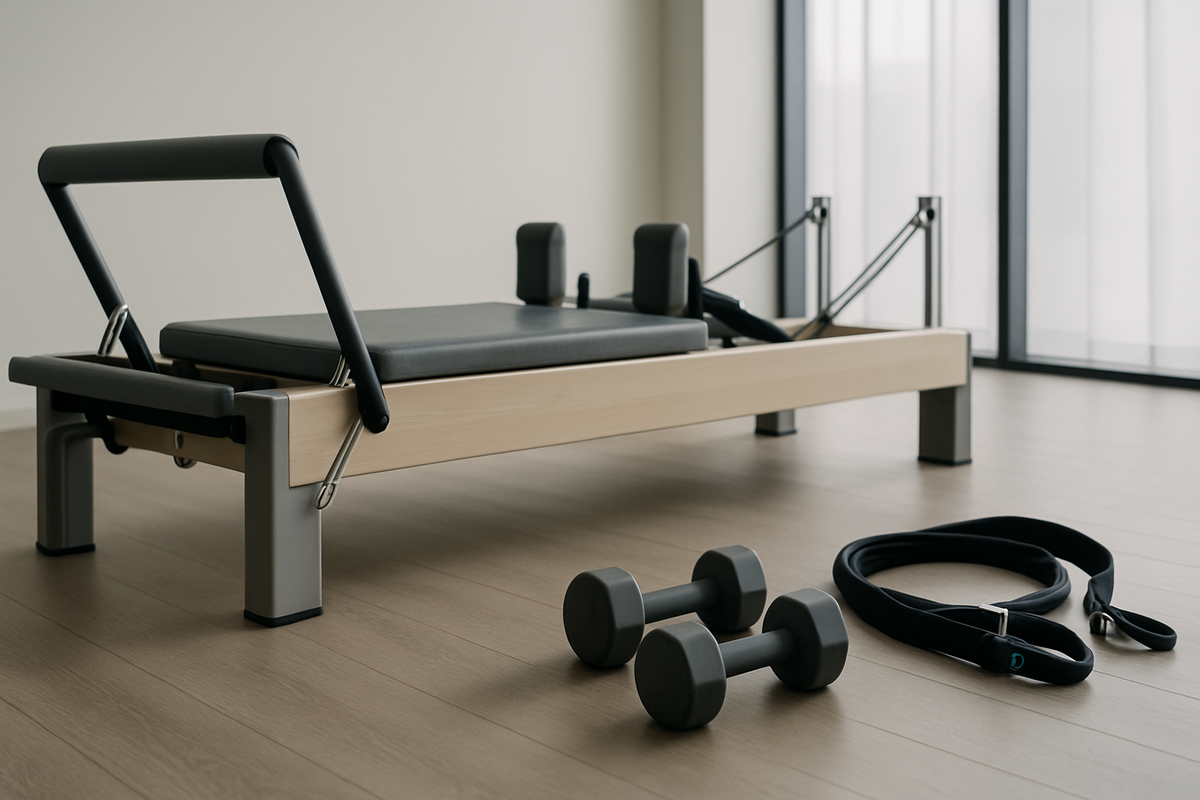
- Hybrid equipment concepts are redefining the reformer category in 2026, including STRONG Pilates' patented Rowformer (combining rower, reformer, and bike with dumbbells up to 70 pounds) and smart reformers with AI-driven form correction and adaptive resistance profiles.
- Big-box gyms are entering reformer Pilates with dedicated concepts: Amped Fitness launched Aura Pilates focused on strength and core control, 24 Hour Fitness piloted Reformer24, and VASA Fitness debuts STUDIO Pilates in fall 2026, marking the first reformer concept for the chain.
- Male participation reaches 25–30% at select STRONG Pilates locations, a significant demographic shift from the historically female-focused modality, driven by strength-centric positioning and heavy resistance options.
- Pilates membership pricing commands a 48% premium over other modalities on average, with classes priced 25% higher than non-Pilates offerings, per Mariana Tek's 2026 Pilates Trends Report.
- No formal scope-of-practice guidance exists yet for instructors teaching hybrid strength and Pilates formats in the United States, creating a training and certification gap as hybrid programming accelerates.
Why Strength-Forward Pilates Is Reshaping Studio Strategy in 2026
Pilates is no longer positioned as a gentle, flexibility-focused discipline. The fastest growth in the sector is coming from strength-forward hybrid formats that emphasize muscular endurance, control, and full-body efficiency. According to Mariana Tek's 2026 Pilates Trends Report released in January 2026, participation in Pilates has grown from 9.2 million to 12.9 million people since 2019, a nearly 40 percent increase. At the same time, the percentage of U.S. studios offering Pilates has grown every year since 2021, jumping from 17% in 2021 to 45% in 2025.
The Pilates studio segment is projected to grow at approximately 10–14% CAGR through 2030–2035, driven not just by volume but by engagement quality. While Pilates saw a 6% drop in new joins year-over-year, it experienced a 4.3% increase in check-ins and a 9% decrease in cancellations, with participants staying longer. This retention advantage reflects a shift in client expectations: workouts that feel challenging and deliver measurable strength gains without the burnout or injury risk of higher-impact training.
As Pilates Addiction's CEO stated in The Pilates Journal's May 2026 industry predictions, "Pilates will dominate the fitness industry the way HIIT did a decade ago. In 2026, people will shift toward efficient, intelligent training that actually builds longevity. The era of break down workouts is over; Pilates is how people will build themselves up."
Hybrid Equipment Concepts: Rowformers, Smart Springs, and Strength Integration
The equipment category is evolving to match programming demands. Hybrid formats require machines that can deliver both traditional Pilates resistance and serious strength-building load. STRONG Pilates, which describes itself as the first true hybrid Pilates concept, uses a patented piece of equipment called a Rowformer: effectively a rower attached to a reformer and a bike, with heavy dumbbells available up to 70 pounds. The brand reports that some of its studios achieve 25–30% male participation, a significant demographic shift from the historically female-focused modality.
According to Athletech News' December 2025 equipment forecast, modern smart reformers now layer in motion sensors, AI-driven form correction, and resistance profiles that adapt in real time. Next-generation reformers like the NordicTrack Ultra 1 Reform RX feature enclosed spring systems, push-button resistance changes, and Smart Spine technology designed to make reformer Pilates more approachable without sacrificing performance. Meanwhile, machines like the LIT Strength Machine reimagine the reformer as an all-in-one rower, reformer, and strength trainer, combining the caloric burn of rowing with the benefits of spring-based resistance.
These equipment innovations support a class format shift. Popular variations include Strength Training Pilates Fusion, which integrates resistance training and weight work with Pilates core exercises. Classes combine Pilates, Barre Sculpt movements, and strength training using light weights, props, and small, controlled repetitions with a focus on mindful movement, alignment, and targeted muscle strength. Exercise is performed on a mat with balls, rings, bands, or small dumbbells, and in studios, machines such as the reformer can be added, though listening to the body remains the priority.
Big-Box Gyms Enter Dedicated Reformer Pilates: Aura, Reformer24, and STUDIO Pilates
The strength-forward Pilates wave is no longer confined to boutique studios. In 2026, major high-volume, low-price (HVLP) gym operators are launching dedicated reformer concepts, a significant validation of Pilates' mainstream appeal and economic viability.
Amped Fitness is introducing reformer Pilates in a way never done in the HVLP space under the title Aura Pilates, focused on strength, mobility, and core control. 24 Hour Fitness unveiled its Reformer24 pilot program, introducing a hybrid in-studio and virtual Pilates option for members in Southern California clubs. VASA Fitness is launching STUDIO Pilates, a new reformer-based training concept debuting in fall 2026, marking the company's first dedicated reformer Pilates concept.
This big-box entry has strategic implications. HVLP operators typically operate on razor-thin per-visit economics, yet they are investing in reformer equipment and dedicated studio space. The move signals confidence in Pilates' ability to drive member retention and premium upsell revenue, even within a low-cost membership model.
Programming Philosophy: From Flexibility to Force Production
The philosophical positioning of Pilates is shifting from flexibility and rehabilitation toward legitimate strength development. While both Pilates and lifting weights can improve overall strength, each modality is better suited for addressing specific aspects of fitness. Lifting weights is an excellent way to load your skeleton in gravity, particularly through standing exercises and barbell squats, which is beneficial as a protective measure against osteoporosis. Pilates, by contrast, can be an excellent way to improve mobility and stability through large ranges of motion with feedback from springs, and closed-chain feedback can make it feel more accessible.
The rise of hybrid formats reflects an acknowledgment that clients want both: the functional strength and bone density benefits of loaded movement, and the control, stability, and injury-prevention benefits of spring-based resistance. Hybrid workouts that attract beyond traditional Pilates audiences (strength + cardio + Pilates crossover) are turning heads, with CorePlus strategically expanding from Australia into the U.S. wellness market in 2025 and 2026.
However, this convergence creates ambiguity. No explicit scope-of-practice guidance for hybrid strength and Pilates instruction exists yet in U.S. certification standards. Instructors trained in classical Pilates may lack programming knowledge for periodized strength progression, while personal trainers certified in resistance training may not understand spring-based cueing or reformer biomechanics.
Retention Economics: The First Two Visits and the 48% Premium
Pilates commands significant pricing power. According to Mariana Tek's 2026 Pilates Trends Report, Pilates membership costs are 48% higher than other modalities on average, and Pilates classes cost 25% more than non-Pilates classes. But pricing is only half the story. Retention is where Pilates delivers outsized value.
Pilates clients who continue beyond their first two visits have incredibly strong retention. The key challenge is getting first-timers back a second time. This dynamic favors hybrid formats that deliver immediate, tangible feedback: visible muscle fatigue, cardiovascular exertion, and measurable strength progression. Strength-forward programming lowers the intimidation barrier for new clients who may associate Pilates with advanced flexibility or niche rehabilitation, while delivering the dopamine hit of a "hard workout" that drives re-booking.
Gen Z engagement, in particular, is driven by social proof, short video content, and entry-level class packs. Strength-forward hybrid formats are inherently more "filmable" and shareable than traditional mat Pilates, creating organic marketing leverage.
What This Means for Studio Operators
Editorial analysis — not reported fact:
If you operate a Pilates studio in mid-2026, the question is no longer whether to add strength-forward programming, but how to do it without diluting brand identity or overextending instructor skill sets. The data suggests three concrete strategic paths.
First, equipment decisions matter more than ever. If you're investing in new reformers, prioritize machines that support heavier resistance loads, quick adjustments, and user feedback (smart tech, if budget allows). If you already own traditional reformers, consider hybrid class formats that layer in dumbbells, resistance bands, and bodyweight strength progressions without requiring new capital expenditure.
Second, instructor training is your competitive moat. Big-box gyms are entering the space with scale advantages, but they face the same instructor capability gap you do. If you can upskill your team to confidently program strength progressions, cue loaded movement patterns, and marry Pilates precision with force production, you create a defensible service quality advantage. Consider partnering with continuing education providers who offer hybrid strength and Pilates certifications, or bring in guest workshops from instructors with dual credentials in Pilates and strength coaching.
Third, positioning and marketing language must evolve. "Strength" and "muscle" should appear prominently in class descriptions, social content, and intro offers. If male participation at your studio is below 10%, that's a revenue opportunity. The 25–30% male participation at select STRONG Pilates locations proves the demographic ceiling is movable with the right programming and messaging.
Finally, watch the retention funnel obsessively. The first two visits are your make-or-break window. Hybrid formats that deliver immediate strength feedback and visible effort can hook first-timers who might otherwise dismiss Pilates as "not hard enough." Once they return a second time, your retention advantage kicks in.
Sources & Further Reading
- Mariana Tek 2026 Pilates Trends Report (January 2026) — Industry data on participation growth, retention metrics, check-in trends, and pricing premiums across modalities.
- The Pilates Journal: Pilates Industry Predictions 2026 (May 2026) — CEO perspectives on hybrid formats, programming philosophy shifts, and the rise of strength-forward Pilates positioning.
- Athletech News: Pilates and the 2026 Equipment Forecast (December 2025) — Coverage of connected reformers, smart resistance technology, and equipment innovation trends including AI-driven form correction.
Editorial coverage of publicly reported industry developments. The Pilates Business has no commercial relationship with any companies named.