The Hidden Costs of Pilates Certification in 2026
Published tuition lists at $3,700–$6,000, but mandatory mentoring, equipment, insurance, and bridge programs push true certification costs to $4,800–$15,000.

Key Takeaways
- Published tuition underrepresents true cost: While comprehensive Pilates certification lists at $3,700–$6,000, mandatory private lessons, equipment access, insurance, and materials push realistic all-in costs to $4,800–$15,000 over 9–18 months.
- Mentoring requirements add $2,500–$4,500: Programs like Real Pilates and Fletcher Pilates require 30–60 private or semi-private sessions at standard rates ($75–$150/hour), often disclosed only after enrollment begins.
- Equipment access is rarely included: Online and hybrid programs assume trainees own or rent a reformer ($2,399–$4,600 purchase, or $250/month rental), plus liability insurance ($500–$1,000 annually) to teach in certification studios.
- Bridge programs compound costs for mat-certified instructors: Transitioning from mat-only to comprehensive certification costs an additional $499–$5,565, extending the total investment timeline by 6–9 months.
- Financial barriers shape instructor demographics: High upfront costs disproportionately exclude candidates from lower-income and BIPOC communities, contributing to ongoing instructor shortages studios struggle to fill.
The Mentoring Mandate Most Programs Don't Advertise
The single largest hidden expense in Pilates certification is mandatory private instruction. Real Pilates requires 60 hours of weekly private and semi-private sessions during its 30-week comprehensive program, arguing that better students become better teachers. That requirement adds $4,500 to the program's $4,500 base tuition, bringing the total to $9,000.
Fletcher Pilates mandates 30 private lessons so trainees can internalize movement concepts kinesthetically before teaching them. At typical studio rates of $75–$150 per session, this adds $2,250–$4,500 to published tuition. Many programs require weekly mentoring at standard rates (around $100/session) for the full training duration but disclose this requirement only after enrollment.
Editorial analysis, not reported fact: Programs have sound pedagogical reasons for requiring observation and supervised teaching. But when these components are compulsory for graduation, their cost belongs in the advertised price, not buried in program handbooks.
Equipment, Insurance, and Materials Add Up Quickly
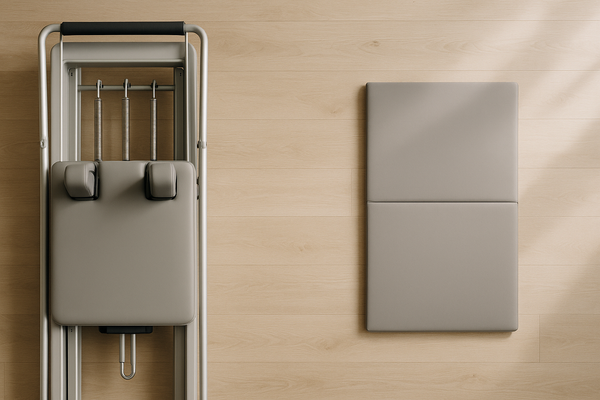
Online and hybrid certification pathways have grown since 2024, but they assume access to apparatus. Balanced Body explicitly requires Reformer trainees to have equipment access throughout the program. A Merrithew SPX Max Reformer costs $3,649, with bundles including vertical stands and tall boxes exceeding $4,600. Rental options run approximately $250 per month over 10 months.
Before hands-on student teaching begins, certification studios require proof of liability insurance. Professional liability policies for Pilates instructors cost $500–$1,000 annually, a non-negotiable expense for supervised teaching hours. Books and manuals add another $300–$400, and PMA exam fees contribute $200–$300.
The Bridge Program Trap for Mat-Only Grads
Many aspiring instructors start with mat-only certification to minimize upfront investment, then pursue apparatus training once they're teaching. But bridge programs designed to transition mat instructors to comprehensive credentials carry steep costs. Real Pilates offers a bridge program for $4,500, while The Pilates Center charges $5,565 plus lessons, teaching clinics, and textbooks over nine months. Peak Pilates' Level I Bridge runs $1,295.
The credential-stacking approach often costs more than going comprehensive from the start. A mat certification ($1,500–$2,500) plus a bridge program ($1,300–$5,600) can exceed the cost of an initial comprehensive pathway, while adding 12–18 months to the timeline before an instructor can teach private reformer clients at premium rates.
Continuing Education Is Mandatory, Not Optional
The initial certification is a "license to learn," with advanced workshops, mentorship, and conferences expected for career progression. Continuing education courses start around $150 and reach $500 per class. Studios hiring instructors increasingly expect specialization in pre/postnatal, scoliosis, or athletic populations, each requiring additional training investment.
For instructors maintaining PMA certification or studio employment contracts tied to skill development, continuing education becomes an annual line item, not a one-time cost. This ongoing expense rarely appears in "how much does certification cost" calculators aimed at prospective trainees.
Why Programs Structure Costs This Way
Running accredited education programs is expensive, with compliance, administration, assessment, staffing, and facilities all requiring funding. Training directors embed 30–50% profit margins to cover overhead, pay master teachers, and reinvest in curriculum development.
Separating mentoring fees from base tuition allows programs to list competitive headline prices while ensuring trainees commit to the supervised practice hours that distinguish comprehensive certification from weekend workshops. However, if observation and supervised teaching are compulsory for qualification, their cost arguably belongs in the advertised tuition, not discovered after enrollment.
The Affordability Crisis Shaping Instructor Demographics
Comprehensive certification costs of $3,000–$10,000+ create financial barriers that disproportionately exclude people from low-income backgrounds and BIPOC communities. The 9–18 month timeline assumes trainees can maintain other income while paying for training, private lessons, and self-practice classes simultaneously.
Scholarship programs are beginning to address access gaps. Balanced Body's Community Expansion Scholarship Program has trained more than 200 BIPOC wellness leaders across nine countries, covering full tuition, materials, and monthly mentorship. But these programs serve a fraction of aspiring instructors priced out of the profession.
For studios struggling with the 2026 instructor shortage, the high cost of entry directly impacts the candidate pipeline. When certification requires $10,000–$15,000 and 12–18 months before an instructor can work full-time, fewer career-changers can make the leap.
What This Means for Studio Operators
Editorial analysis, not reported fact: Studios evaluating in-house training programs or partnerships with certification bodies should consider total trainee cost when projecting instructor pipeline. If your market's comprehensive certification realistically costs $8,000–$12,000 all-in, that sum shapes who can afford to enter your hiring pool.
Operators can support aspiring teachers by offering equipment access during training, discounted or comp self-practice classes, and transparent mentoring fee structures disclosed before enrollment. Some studios structure apprenticeship programs that allow trainees to trade front-desk hours or cleaning shifts for reduced mentoring fees, lowering the cash barrier without compromising training quality.
For hiring managers, understanding true certification costs also informs compensation strategy. An instructor who invested $12,000 and 18 months to reach the reformer private teaching floor has different ROI expectations than someone who completed a $2,000 mat weekend. Transparent conversations about cost recovery timelines and income progression help retain newly certified teachers who might otherwise leave the profession in year two when debt and low early earnings collide.
Sources & Further Reading
- The Real Cost of Pilates Certification: $3,700–$6,000+, comprehensive breakdown of tuition and ancillary expenses
- The Hidden Cost of Teacher Training, analysis of mentoring fee disclosure practices
- Exposing the True Cost of Pilates Instructor Certification, insurance and equipment requirements
- The Scholarships Rewriting Who Gets to Teach Pilates, equity and access barriers in certification
- Strategic Pricing and Curriculum Design, studio economics of accredited training programs
- The 2026 Pilates Instructor Shortage Is About Sustainability, workforce pipeline challenges
Editorial coverage of publicly reported industry developments. The Pilates Business has no commercial relationship with any companies named.