Teaching Identity Crisis Reshapes Pilates Philosophy
How the debate over pedagogy, lineage, and large-group scaling is redefining what it means to teach Pilates with integrity in 2026 and beyond.

Key Takeaways
- Teaching philosophy gaps: Many Pilates teacher trainings prepare instructors to execute exercises but not to teach people, creating a critical competence gap that requires ongoing education in learning theory, progression, and scaffolding skills.
- Classical versus contemporary debate evolves: The industry is moving beyond rigid lineage allegiances toward teaching philosophies that prioritize accessibility, personalization, and meeting clients where they are rather than enforcing one-size-fits-all standards.
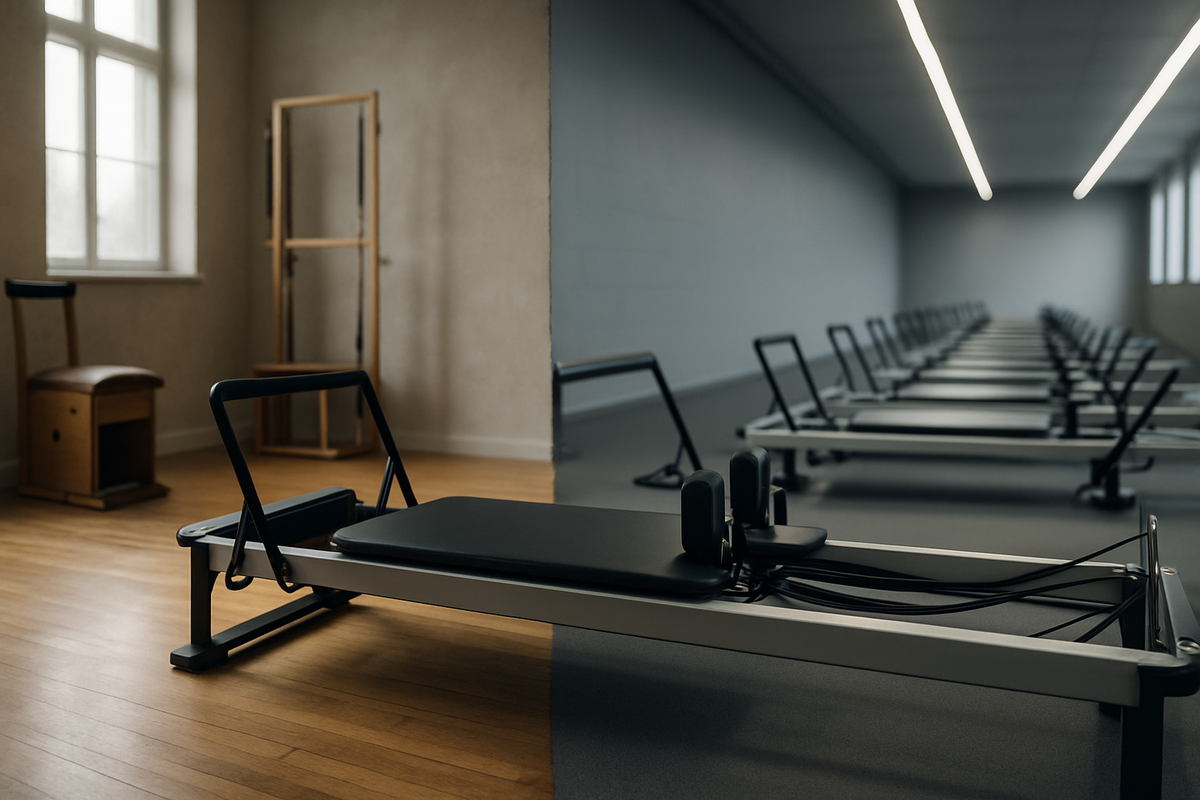
- Large-group scaling challenges integrity: The rapid expansion of group reformer classes has created urgent questions about whether scaled formats can honor Pilates principles and what good teaching looks like when individualized attention is limited.
- Instructor education as infrastructure: As the Pilates and yoga studios market grows at 14.5% annually, education quality has become the quiet determinant of whether studios and concepts scale without losing integrity.
- Hybrid offerings raise philosophical questions: Studios increasingly offer blended Pilates-yoga formats to meet market demand, raising questions about whether this waters down methods or simply meets clients where they are.
The Pedagogy Gap: Knowing Versus Teaching
A critical divide exists between knowing Pilates and knowing how to teach Pilates. According to educator Carrie Page, many teacher trainings stop short of preparing instructors to teach people, not just exercises. Understanding learning theory, progression, modification, and scaffolding transforms that gap into a bridge.
This issue directly challenges the assumption that 450-plus certified hours automatically produce competent teachers. The instructor sustainability crisis reveals that many instructors burn out within one to two years, often because they were trained to demonstrate but not to problem-solve in real time with diverse bodies and learning styles.
For yoga instructors considering cross-certification, this matters. The same communication pedagogy gap exists in yoga teacher training programs, which emphasize physical cuing but provide little guidance on client communication or teaching adults with different movement backgrounds.
Classical Versus Contemporary: Beyond the Binary
The classical versus contemporary divide has long defined Pilates identity. Classical purists argue that contemporary approaches dilute the method. Modern practitioners argue that evolution is the point. But the industry is shifting away from these binaries toward teaching philosophies that prioritize function over fidelity to lineage.
The distinction matters in practice. Classical teaching uses the cue "scoop the powerhouse," which produces an engaged abdominal flatten functionally close to what is now called an imprint. This is the default pelvic position in classical work. Contemporary teaching, particularly in the Merrithew and STOTT traditions, uses neutral spine as the default, with imprint used selectively when both feet leave the floor.
This mirrors debates in other movement disciplines. The philosophical positioning debate in martial arts between traditional self-defense and sport competition shows how transparency about teaching philosophy before contracts builds trust. Similarly, Pilates instructors increasingly define their teaching identity not by method allegiance but by how they serve individual client goals.
Teaching Philosophy in the Transitions
Emerging thought leadership emphasizes that teaching philosophy is expressed not in grand declarations but in granular choices. In a February 2026 Pilates Intel essay, educator Tabatha Russell writes that it is often in transitions—the quiet, uncelebrated moments between exercises—that the integrity of the method is either reinforced or slowly unraveled.
The question worth asking, especially in contemporary practice, is not whether a transition is classical or non-classical, but whether it is serving the goal of the work. This shift from orthodoxy to intentionality parallels the move in yoga from strict lineage adherence toward personalized signature methodologies.
Scaling and the Large-Group Challenge
The rapid expansion of group reformer classes has created urgent philosophical questions. As industry leaders told Pilates Journal in January 2026, Pilates is poised for massive growth this year, driven by its unique ability to retain clients longer than almost any other modality. But can scaled formats honor Pilates principles when individualized attention is limited?
This is directly parallel to yoga's struggle with mass-market group classes versus intimate practice. Studios increasingly offer hybrid format expansion, blending yoga and Pilates elements to cater to a broader target market. This raises questions about watering down methods versus meeting market demand where clients actually are.
Instructor education has become the critical infrastructure that allows Pilates to grow without losing integrity. While equipment innovation and studio design matter, ongoing pedagogical development determines whether studios succeed at scale.
Philosophical Differences for Yoga Instructors
For yoga instructors considering Pilates, understanding the philosophical difference matters. Yoga aims to create harmony between the mind, body, and spirit in order to achieve inner peace. Pilates, on the other hand, emphasizes strengthening the body from the inside out, with an emphasis on engaging the core and creating strong, lean muscles.
This distinction shapes how each discipline approaches teaching identity. Yoga teaching often anchors in lineage and spiritual philosophy. Pilates teaching identity emerges from biomechanical precision and functional outcome. Yet both professions now face the same challenge: how to teach with integrity in an oversaturated, commodified marketplace where consumer expectations have shifted toward specific outcomes from a studio that feels personalized.
What This Means for Studio Operators
Editorial analysis, not reported fact:
The teaching identity crisis unfolding in Pilates offers a roadmap for yoga studio operators navigating their own professional positioning. The shift from lineage versus competence to skill-based instructor identity is not unique to Pilates. It is happening across all movement disciplines as industries mature and consumer expectations evolve.
Studio operators should ask: Are we hiring instructors based on certification hours or demonstrated teaching competence? Are we investing in ongoing pedagogical development beyond initial training? Are we transparent with clients about our teaching philosophy before they sign contracts? And are we building hybrid offerings that meet market demand without sacrificing the integrity of either discipline?
The studios that will thrive in 2026 and beyond are those that treat teaching philosophy as infrastructure, not decoration. This means ongoing investment in instructor education, clear communication about what makes your approach distinct, and a willingness to evolve beyond rigid lineage loyalties while maintaining the principles that make the work effective.
Sources & Further Reading
- Pilates Teaching Philosophy & Pedagogy Trends in 2026, exploring the shift from classical versus contemporary binaries toward personalized teaching philosophies
- Teaching Progression and Modification in Pilates, analysis by educator Carrie Page on the gap between knowing exercises and teaching people
- 2026 Pilates Industry Predictions from Leaders, discussing growth drivers and scaling challenges
- Pilates Lineages and Schools Overview, comparing classical and contemporary approaches
- Why Instructor Education Is the Real Growth Engine, covering education as critical infrastructure for scaling
- Pilates & Yoga Studios Market Analysis, market size and growth projections through 2034
- Pilates vs Yoga: The Real Difference, philosophical and practical distinctions between the disciplines
Editorial coverage of publicly reported industry developments. The Pilates Business has no commercial relationship with any companies named.