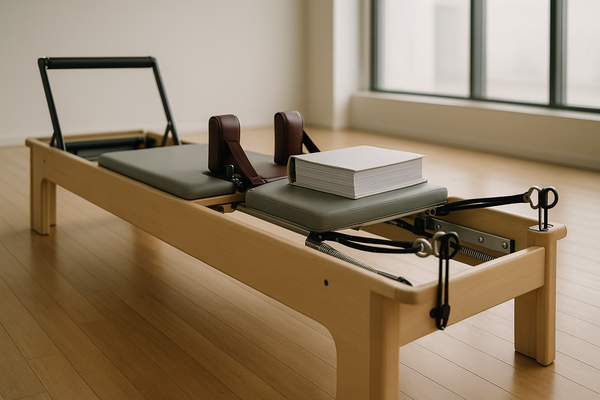
The Reformer Revenue Trap Draining Studio Profits
Reformer classes require 10-15x more capital than mat but generate lower per-hour revenue in many markets. Why busy reformer studios still lose money.

Key Takeaways
- Reformer revenue per hour trails mat classes in many markets despite reformers requiring 10-15x capital investment, creating a silent profitability drain for equipment-heavy studios.
- Mat classes generate $18 per available instructor hour, while adding 5 reformer slots weekly increases revenue by $1,750, but fixed machine count caps revenue growth even when demand exists.
- Migrating 25% of mat members to reformer pricing ($120 to $180/month) increases average revenue per member by only $15, revealing weak pricing leverage on studios' most expensive asset class.
- U.S. studio count grew +0.2% from 2025 to 2026 while industry revenue declined -0.8%, signaling margin compression as expansion outpaces unit-level profitability.
- Stabilized studio owners earn $150,000-$450,000 annually, but reaching the upper range requires 70% occupancy by Year 3 and class mix optimization most studios aren't achieving.
- Instructor recruitment remains the #1 operational challenge per franchisee feedback, constraining studios' ability to fill high-margin reformer time slots even when machines sit idle.
Why Reformer Classes Are Becoming a Revenue Trap
Pilates studios are caught in a structural profitability squeeze. Pilates offerings on Mariana Tek platforms grew from 17% of studios in 2021 to 45% in 2025, and 43% of Xplor Mariana Tek studios now list Pilates as their primary modality. Yet while the category expands, the economics of reformer-based business models are deteriorating.
The core problem is a revenue-to-capital mismatch. Reformers represent the single largest capital outlay for most studios—$3,000-$5,000 per machine, plus maintenance, real estate footprint, and instructor certification costs. But pricing power hasn't kept pace. U.S. studio count growth from 2025 to 2026 registered just +0.2%, while industry revenue declined -0.8%. More studios are chasing flat or shrinking revenue, and reformer-heavy models are absorbing the margin impact.
Meanwhile, Club Pilates posted a 3% drop in same-store sales for North American locations in 2025, signaling that even the largest system in the category is feeling unit-level pressure. Expansion continues—Riser Fitness signed the largest development agreement in Xponential Fitness history in April 2026, committing to 127 new Club Pilates studios across six states—but growth at the system level masks stagnation at the studio level.
The Real Math Behind Mat vs. Reformer Revenue Per Hour
According to data from the 2026 Pilates Trends Report by Mariana Tek, mat classes yield $18 per available instructor hour, while adding 5 reformer slots weekly increases revenue by $1,750 per week. That sounds like a clear win for reformers—until you account for the bottleneck.
Reformer capacity is fixed by machine count and floor space. A studio with 8 reformers can run a maximum of 8 clients per class, and most studios schedule reformer classes in 50-60 minute blocks. If you're charging $30 per drop-in reformer class and averaging 6 clients per session, that's $180 revenue per hour—but only if the class is near capacity. Mat classes, by contrast, scale elastically: one instructor can teach 15-20 clients in the same time block with zero equipment constraint, generating $450-$600 per hour at the same $30 drop-in rate.
The membership pricing model compounds the issue. Revenue growth hinges on migrating members from the $120/month Mat Work tier to the $270/month Advanced Reformer classes, but the primary lever is the intermediate step: moving mat members to the $180/month Intermediate Reformer tier. Yet if you migrate just 25% of your mat base to reformer pricing, overall average revenue per member increases by only $15.
How Studios Ended Up Here: The Equipment Arms Race and Instructor Shortage
The reformer-heavy model became the industry standard for three reasons: consumer perception, competitive differentiation, and franchise template replication. Reformers signal "authentic" Pilates to consumers who associate the apparatus with classical training. Early movers like Club Pilates built brand identity around reformer access, and independent studios followed to compete.
But the model assumed elastic pricing power and stable labor supply. Neither held. Instructor recruitment is now the #1 operational challenge per franchisee feedback, according to operator surveys. The studio model requires recruiting and retaining certified Pilates instructors, a labor pool constrained by the time and cost of comprehensive certification (often $3,000-$5,000 and 6-12 months).
When you can't staff reformer slots, machines sit idle. And when competitors flood the market, pricing becomes a race to the bottom. The result is a double bind: high fixed costs, weak pricing leverage, and labor constraints that prevent studios from capturing demand even when it exists.
The Profitability Gap: Busy Doesn't Mean Profitable
Stabilized Pilates studio owners typically earn between $150,000 and $450,000 annually, with the upper range contingent on achieving 70% occupancy by Year 3. But occupancy alone doesn't guarantee profitability if the class mix skews toward low-margin offerings.
A studio running 30 reformer classes per week at 75% capacity (6 clients per 8-machine class) may look healthy on the schedule but still underperform financially if membership pricing is depressed and drop-in revenue is negligible. Average Club Pilates studio revenue is approximately $969,000 per the 2025 FDD, yet parent company Xponential Fitness reported revenue down 2% year-over-year to $314.9 million and net losses of $53.7 million in 2025.
This revenue-to-profit disconnect reflects structural issues: high royalty and marketing fees in franchise models, instructor wage inflation (now often 50-60% of revenue in tight labor markets), and equipment depreciation that isn't offset by pricing gains. Studios feel busy but operate at 6-8% net margins, leaving little buffer for economic shocks or competitive pressure.
Fixing the Model: Repricing, Class Mix, and Hybrid Formats
The path out of the reformer trap involves three levers: pricing architecture, class mix optimization, and format innovation.
Repricing Reformer Access
Studios must decouple reformer pricing from legacy membership tiers. Rather than a flat $180/month for unlimited reformer, consider tiered reformer access: $120/month for 4 reformer classes plus unlimited mat, $200/month for 8 reformer classes, $280/month for unlimited. This captures willingness-to-pay from high-frequency users while preserving entry-level access.
Class Mix Rebalancing
Run the revenue-per-hour math for every time slot. If 6pm reformer classes average 4 clients while 6pm mat classes average 12, shift one reformer slot to mat and redeploy the instructor to a higher-demand reformer window (early morning or weekend). Adding 5 reformer slots weekly increases revenue by $1,750, but only if those slots fill.
Hybrid Formats and Technology
Blended mat-and-reformer classes (30 minutes mat, 30 minutes reformer rotation) increase perceived value without requiring additional machines. AI-driven scheduling tools can predict demand patterns and auto-adjust class mix, preventing empty reformer slots from eroding margins.
How Emerging Brands Are Solving This Differently
Newer entrants are experimenting with models that sidestep the reformer bottleneck. JETSET Pilates, which began franchising in 2022 and expanded to over 270 studios open or in development with 24 new openings announced in January 2026, emphasizes compact footprints and streamlined equipment packages that reduce upfront capital.
Other studios are leaning into mat-centric models with reformer as an upsell rather than the default, inverting the traditional hierarchy. This allows higher per-hour revenue on mat classes while preserving reformer as a premium add-on that doesn't constrain overall capacity.
Retention Still Trumps Acquisition
Amid the reformer pricing debate, one metric remains decisive: second-visit conversion. Pilates clients show a unique pattern—the return rate from first visit to second visit is slightly lower than the average across all studio types, but clients who continue beyond their first two visits demonstrate incredibly strong retention. Studios that focus on getting first-timers back a second time unlock long-term value that dwarfs any single class pricing decision.
This argues for front-loading retention efforts: personalized follow-up after visit one, low-friction second-class offers, and onboarding that emphasizes consistency over intensity. A client who attends twice is far more likely to convert to a high-value membership than one who drops in once for a reformer class and never returns.
What This Means for Studio Operators
Editorial analysis—not reported fact:
If your studio runs 20+ reformer classes per week but your net margin is below 10%, the reformer-to-revenue ratio is likely inverted. Start by calculating revenue per instructor hour for every class format. If mat classes generate higher per-hour revenue than reformer in any time slot, that's a signal to rebalance your schedule.
Repricing is uncomfortable but necessary. The $180 unlimited reformer membership that worked in 2022 doesn't pencil in 2026 when instructor wages are up 15-20% and occupancy growth has stalled. Test tiered reformer access and track willingness-to-pay by cohort. High-frequency users will often pay 30-40% more for unlimited access if the value proposition is clear.
Finally, stop thinking of reformers as your only differentiation. Mat classes, when taught well and marketed as skill-building progressions rather than "beginner" alternatives, can command premium pricing and generate higher margins. The studios that will thrive in 2026 and beyond are those that treat reformers as one tool in a diversified revenue mix, not the foundation of the entire business model.
Sources & Further Reading
- 2026 Pilates Trends Report by Mariana Tek—comprehensive data on studio growth, membership pricing, and revenue-per-hour benchmarks
- Athletech News coverage of Mariana Tek's boutique fitness report—analysis of Pilates modality growth from 2021 to 2025
- Wellyx Pilates industry statistics roundup—U.S. market growth rates, studio count trends, and JETSET Pilates expansion data
- Financial Models Lab profitability analysis for Pilates studios—owner income ranges and occupancy targets
- Franchise Chatter's 2026 Club Pilates franchise review—average studio revenue, same-store sales trends, and Xponential Fitness financial performance
- Franchising.com coverage of the Riser Fitness 127-unit Club Pilates development agreement—April 2026 expansion announcement
Editorial coverage of publicly reported industry developments. The Pilates Business has no commercial relationship with any companies named.