Wearable Tech Now a Pilates Studio Retention Essential
Wearable integration drove 25% retention gains at one boutique studio. With 178M trackers shipped in 2025, client expectations have shifted permanently.

Key Takeaways
- Wearable technology claimed the number-one spot in the American College of Sports Medicine's 2025 fitness trends survey, making integration a competitive necessity for Pilates studios in urban markets.
- Global fitness tracker shipments reached 178 million units in 2025, with the market projected to exceed $95 billion by 2028, reflecting widespread consumer adoption and rising expectations for data-driven workouts.
- Club Pilates launched Apple Watch integration in 2021 as part of Xponential Fitness's studio-wide rollout, enabling real-time performance tracking, class check-ins, milestone celebrations, and challenge participation across all eight boutique fitness brands.
- One boutique Pilates studio operator reported a 25% retention increase within six months of implementing wearable integration, according to Forbes Technology Council coverage, driven by members' desire to validate workout intensity with shareable heart rate data.
- Heart rate variability (HRV) monitoring offers Pilates-specific value by revealing how clients respond to daily stress, allowing instructors to adjust sessions toward restorative movements when recovery metrics indicate elevated stress levels.
Why Wearable Integration Has Become a Competitive Imperative
Wearable technology remained the number-one fitness trend in 2025 according to the American College of Sports Medicine, with devices such as smartwatches, heart-rate monitors, and recovery trackers now central to both personal training and professional coaching environments. For Pilates studios competing in crowded markets or refining retention strategies, wearable integration has shifted from optional to baseline expectation.
The numbers underscore this shift. Global fitness tracker shipments reached 178 million units in 2025, with the market projected to exceed $95 billion by 2028. Among users who purchased fitness wearables in 2024, adoption reached 50%, with wearables now commanding over 70% share of fitness tracking. 44% of users track their heart rate and 40% monitor sleep, while a growing segment uses wearables for blood pressure and advanced health metrics.
What Major Chains Have Already Implemented
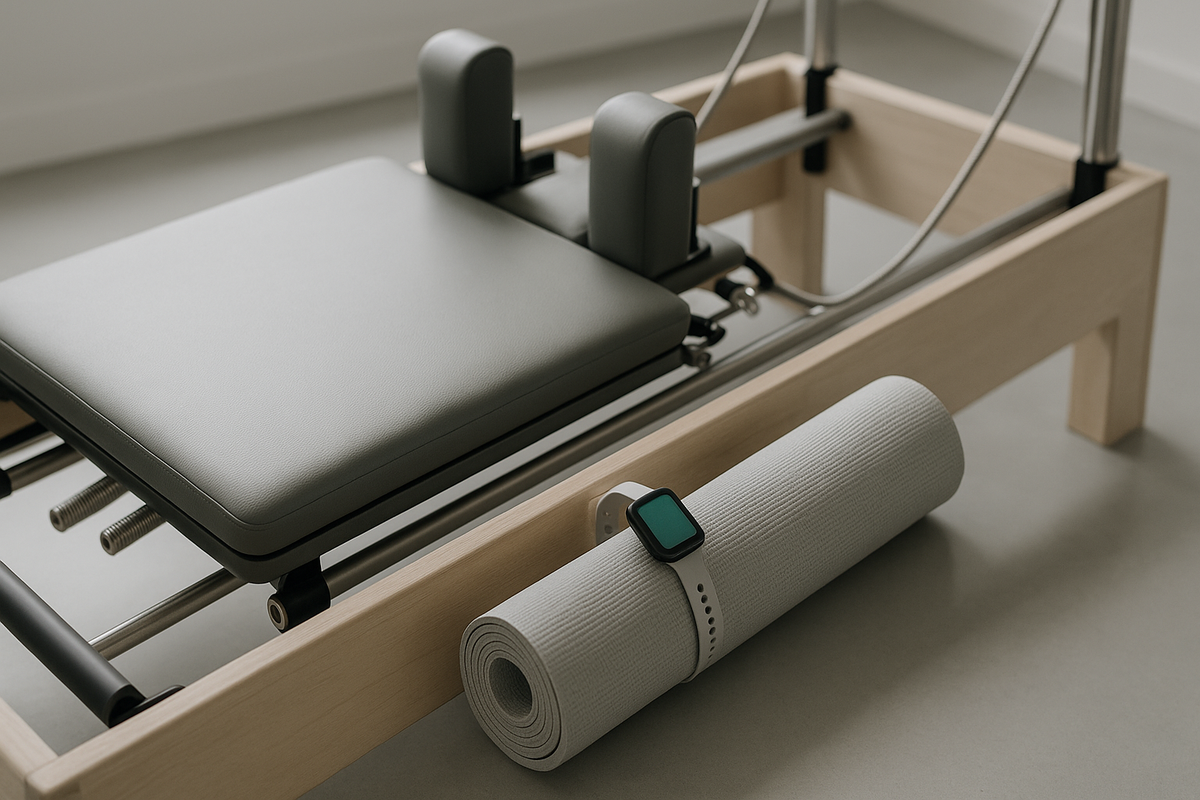
Xponential Fitness launched an upgraded studio experience through Apple Watch technology across all eight of its brands, including Club Pilates, in 2021. Members and guests can now view upcoming classes, check in to class, celebrate milestones, participate in challenges, and track real-time performance data.
The Club Pilates President stated at launch: "As our users become increasingly data and goal-oriented, this technology will help us continue to curate the best of the best workout experiences across every vertical of boutique fitness." Studios like Orangetheory Fitness have similarly integrated heart rate monitors into workouts for real-time performance tracking and coaching, setting member expectations across the boutique fitness sector.
Real Retention Impact and Client Validation
A boutique Pilates studio operator reported being initially skeptical about wearable tech mattering for their clientele but found that members love seeing their heart rate data after reformer classes. The data validates the intensity of the workout in a way clients can share with friends, with retention up 25% since implementing wearable integration six months prior.
Consumers expect their devices to do more than just count steps, with heart rate monitoring, sleep tracking, blood oxygen, and even ECG readings becoming baseline expectations. People expect personalization, real-time feedback, and engaging experiences, with AI-powered coaching adjusting on the fly, biometric data enabling smarter and safer training, and gamified platforms turning workouts into something people actually want to return to.
Pilates-Specific Use Cases Beyond Calorie Burn
Unlike high-intensity interval training, Pilates presents unique opportunities for wearable integration that align with the practice's mind-body focus. For Pilates sessions, wearable heart rate monitoring is especially useful when incorporating cardio-based exercises like jumping on the Reformer or dynamic mat sequences, helping monitor that clients stay within a safe and effective range tailored to their fitness level.
Many devices measure heart rate variability (HRV), which indicates how clients' bodies respond to stress. For Pilates teachers, this can provide valuable insight into how clients' bodies are coping with their daily lives, allowing instructors to adjust sessions to include more calming, restorative movements if stress levels are high. Wearables like the Apple Watch, Oura Ring and WHOOP are giving users unprecedented insights into their health, with metrics like HRV, sleep cycles and recovery scores just the start.
Recovery Metrics That Support Pilates Philosophy
Popular devices in Pilates contexts include Apple Watch, Oura Ring, WHOOP, Garmin, and Fitbit. These tools measure recovery scores and sleep quality, enabling instructors to position Pilates as a recovery-focused practice rather than purely performance-driven. Future advancements may enable real-time tracking of hydration and glucose levels, further supporting personalized session design.
Practical Implementation for Independent Studios
Wearable integration can add real-time performance tracking for users, recognition of milestones to keep clients motivated, automated class check-ins for convenience, and features for participation in challenges and competitions, boosting engagement while seamlessly blending physical and virtual experiences. Devices like the Apple Watch excel when used for single-purpose applications, focusing on specific needs like checking in for a class, tracking workout performance or ordering a post-session beverage.
Studios should prioritize simplicity so wearable integrations fit seamlessly into routines. Starting with class check-in and performance tracking through a platform that supports the most popular devices (Apple Watch, Fitbit, Garmin) addresses the broadest member base without requiring proprietary hardware purchases.
Balancing Metrics With Mind-Body Values
The tension between data-driven workouts and Pilates' traditional emphasis on internal awareness requires thoughtful positioning. Studios can frame wearable data as validation rather than motivation, showing clients that controlled, precise movements deliver measurable cardiovascular and recovery benefits. This approach respects the practice's roots while meeting contemporary expectations for quantifiable results.
What This Means for Studio Operators
Editorial analysis, not reported fact:
Independent studio owners face a strategic choice in mid-2026: implement wearable integration proactively or risk member attrition to competitors already offering data-driven experiences. The 25% retention increase reported by one operator suggests meaningful ROI, but implementation complexity and platform costs vary widely. Studios should evaluate their specific member demographics before committing to full integration.
For studios serving younger, tech-engaged clients in competitive urban markets, wearable integration has likely already become a retention factor. For communities with older demographics or clients specifically seeking low-tech refuge, the urgency may be lower. The middle ground is enabling integration for members who want it without mandating participation or making metrics central to the class experience.
Start with platforms that support multiple device types rather than requiring members to purchase specific hardware. Focus first on post-class data sharing and milestone recognition, which drive social engagement and validate effort without disrupting the teaching flow. Reserve real-time heart rate display for cardio-focused classes where it adds instructional value, not for every session. Position wearables as tools for personal insight rather than competition, aligning technology with Pilates' individualized approach.
Sources & Further Reading
- American College of Sports Medicine 2025 Fitness Trends Survey, wearable technology as the top fitness trend
- Fitness Tracker Market Trends 2026, global shipment data and market projections
- Club Pilates Apple Watch Integration Announcement, Xponential Fitness studio-wide rollout details
- Forbes Technology Council: How Studios Can Keep Up, boutique studio retention case study
- Monitoring Your Body With Wearable Watches in Pilates, HRV and heart rate applications
- What Today's Consumers Expect From Fitness Wearables, 2025 user expectations analysis
Editorial coverage of publicly reported industry developments. The Pilates Business has no commercial relationship with any companies named.