Why 2026 is the Year AI Becomes Part of Studio Operations
Pilates studios are deploying AI for scheduling, customer service, and smart equipment while preserving human expertise where it matters most.

Key Takeaways
- Operational automation has matured: AI-powered systems reduce administrative time by 8 to 10 hours per week for studio managers and instructors, freeing capacity for teaching and client relationships.
- Booking software dominates but adoption varies: 92% of Pilates studios use automated booking, with MindbodyOnline capturing 33.6% market share and Acuity at 15.6%, yet 11.5% still operate on pen-and-paper systems.
- Smart equipment delivers real-time feedback: Modern reformers integrate motion sensors and AI-driven form correction that adapts resistance profiles dynamically, though instructors remain essential for nuanced adjustments.
- Hybrid models are now mainstream: Studios offering both in-studio and app-based sessions reflect client demand for flexibility, with hybrid membership models driving 30 to 40% higher revenue per client in related modalities.
- AI customer service resolves most inquiries autonomously: AI assistants handle 79.3% of common questions such as booking changes and waitlists in real time, reducing front-desk bottlenecks.
- Extended reality emerges as next frontier: Alo Moves XR on Meta Quest uses volumetric capture and spatial tracking to deliver studio-caliber instruction at home, with 67% of Quest users citing fitness as a primary use case.
The Automation Sweet Spot: What Studios Actually Deploy
In 2026, Pilates studios are no longer debating whether to adopt AI. They are choosing where. AI-powered systems now save 8 to 10 hours per week for managers and instructors by handling scheduling conflicts, waitlist management, substitute instructor recommendations, and equipment allocation across reformers, Cadillacs, chairs, and mat spaces.
Market data confirms the shift. 92% of Pilates studios rely on automated booking software, with MindbodyOnline capturing 33.6% of respondents and Acuity Scheduling at 15.6%. Together, these two platforms power nearly half of all studios. Yet 11.5% of studios still operate on pen-and-paper, often citing setup complexity as the barrier.
The operational landscape shows where studios invest effort. 56% rely on private training revenue, 50.6% run group classes, and only 7.1% maintain on-demand video libraries. Client self-booking is nearly universal at 86%, with package management at 73% and reporting tools at 66%. These adoption patterns reveal a preference for tools that reduce friction in existing workflows rather than reinvent business models.
AI Customer Service: The 24/7 Front Desk Assistant
One of the highest-impact deployments in 2026 is the AI-powered support agent embedded on studio websites. These systems resolve 79.3% of common inquiries such as booking changes, waitlist status, cancellation policies, and package point balances without human intervention. For first-level technical questions, resolution rates reach 52.4%.
The technology works because it is trained on studio-specific data: class schedules, pricing structures, intro packages, instructor bios, and policies. Clients receive instant answers at any hour, and staff avoid repetitive interruptions during teaching or training sessions. AI-powered booking platforms integrate conversational interfaces that handle inquiries through messaging channels, extending the front desk beyond business hours.
Smart Reformers and Form-Correction Technology
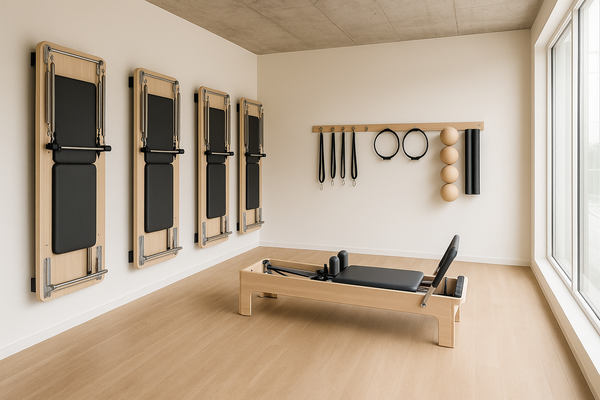
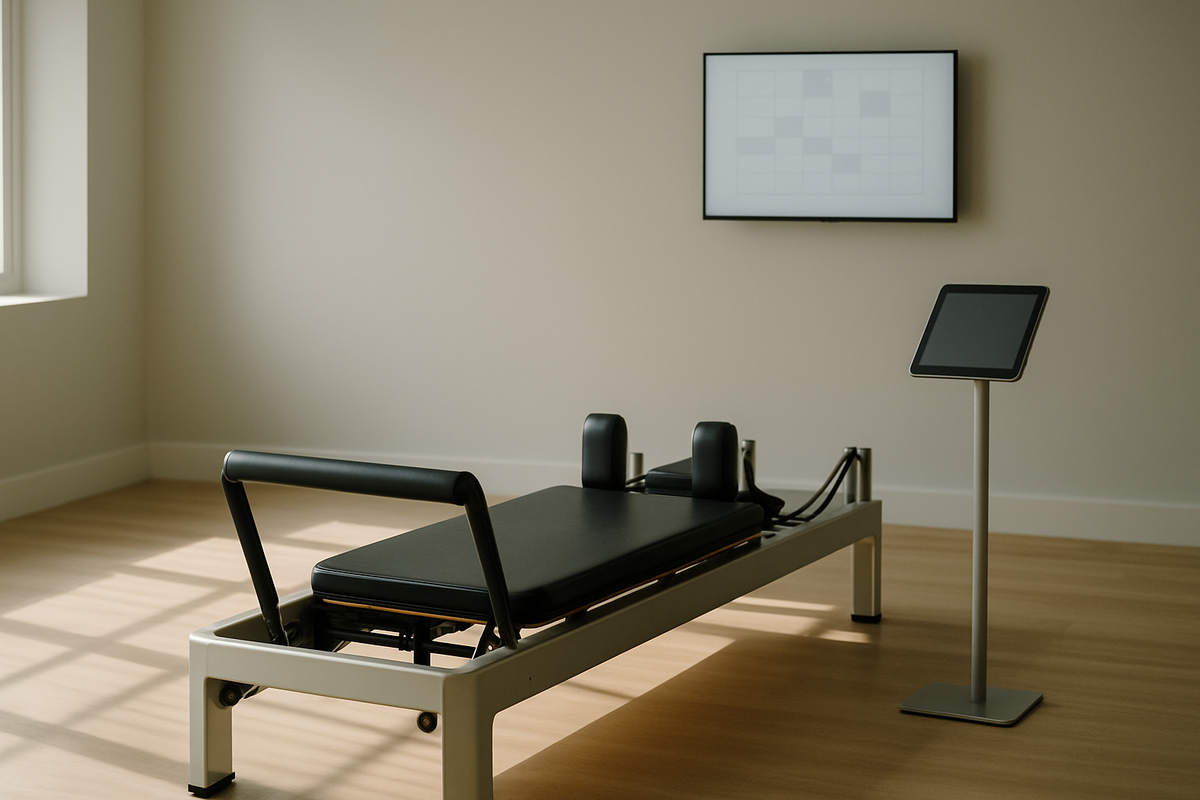
Equipment innovation has moved from prototype to production floor. Smart reformers now layer in motion sensors, AI-driven form correction, and resistance profiles that adapt in real time. Through advanced motion-sensing technology, these systems track client movements and detect deviations from ideal posture during exercises such as roll-ups or planks.
AI analyzes body positioning and provides corrective feedback when a client's back rounds or core engagement weakens. Asensei's integration with the Reform RX reformer enables form tracking and real-time coaching cues delivered through the equipment interface.
Yet the technology has clear limits. AI workout generators are built on pre-programmed datasets and movement libraries designed around average bodies, which do not account for limb length, joint mobility, past injuries, posture variations, strength imbalances, age, or daily stress levels. A great instructor modifies exercises on the spot, offers hands-on adjustments, and designs sequences that evolve alongside individual progress.
Hybrid Delivery Models Graduate to Mainstream
The either-or choice between in-studio and online has dissolved. In 2026, studios offer a smart mix: perhaps two reformer sessions per week on-site and one or two mat Pilates sessions at home via the studio app. This flexibility meets client demand for schedules that adapt to travel, childcare, and work commitments.
Hybrid membership models in related modalities deliver 30 to 40% higher revenue per client by layering digital access onto physical memberships. Studios that dismissed on-demand content in prior years now recognize it as a retention tool that keeps clients engaged between in-person visits.
Client expectations have changed: people no longer want just a class. They want a tailored experience that fits their lifestyle, schedule, and fitness goals. Operational complexity has grown accordingly, and managing multiple instructors, class formats, and peak booking times is harder than ever without intelligent support.
Extended Reality: The Emerging Edge
Alo Moves XR, a Meta Quest app, merges immersive Pilates, yoga, and meditation with real-time biomechanical feedback. The platform uses cutting-edge volumetric capture to render 3D instructors in mixed reality, while room mapping and object detection enable safe practice in home environments. An AI instructor corrects alignment through spatial tracking during poses such as downward dog, eliminating the need for mats or mirrors.
Adoption data suggests this is not a niche experiment. 67% of Quest users report fitness as a key motivator, making XR a purposeful pivot toward movement training rather than gaming. The technology is early but directionally significant for instructors considering how to extend their reach beyond physical studio capacity.
The Guardrails: Where AI Should Stay Behind the Scenes
AI should live behind the scenes, powering systems so instructors can stay fully present with clients. When deployed this way, it does not replace personalization. It protects it by removing administrative drag that dilutes attention and energy.
Automation reducing administrative chaos allows studios to focus on instruction and community rather than scheduling conflicts and billing errors. AI-driven retention systems in martial arts studios demonstrate parallel benefits, with predictive churn engines identifying at-risk clients and triggering automated outreach before they disengage.
The difference between helpful and intrusive AI lies in deployment philosophy. Tools that automate repetitive tasks preserve human capacity for judgment, empathy, and connection. Tools that attempt to automate teaching itself expose the limits of programmed datasets versus adaptive expertise.
What This Means for Studio Operators
Editorial analysis, not reported fact:
Studio operators in 2026 face a practical decision: which parts of the operation benefit from automation, and which require human judgment. The evidence suggests that scheduling, inquiry handling, and equipment allocation are high-value targets. These tasks are repetitive, rule-based, and time-intensive, making them ideal candidates for AI support.
For studios still operating on manual systems, the risk is not technological obsolescence but competitive disadvantage. Clients increasingly expect instant booking confirmation, real-time waitlist updates, and flexible hybrid options. Studios that cannot deliver these basics lose clients to competitors who can, regardless of teaching quality.
Conversely, studios that over-automate risk losing the human touch that differentiates Pilates from fitness content. AI cannot replicate the instructor who notices a client favoring one hip, adjusts a spring setting mid-exercise, or offers encouragement during a difficult sequence. The strategic opportunity lies in using AI to eliminate distractions so instructors can focus entirely on these irreplaceable interactions.
For operators evaluating platforms, prioritize tools that integrate with existing workflows rather than require wholesale replacement. Look for systems that handle the specific complexity of Pilates studios: equipment scheduling across multiple apparatus types, instructor certifications and specializations, and package management that accommodates private sessions, duets, and group classes.
Sources & Further Reading
- The Pilates Studio Owner's Practical Guide to AI, operational time savings and deployment strategies
- Best Pilates Software, market share data for booking platforms
- AI Chatbot for Pilates, inquiry resolution rates and customer service automation
- Alo Moves XR on Meta Quest, extended reality fitness and volumetric capture technology
- The Future of AI in Video Pilates, form correction and motion-sensing capabilities
- Can AI Replace Your Pilates Instructor?, limitations of programmed movement datasets
- Best Pilates Booking Software for United States Studios in 2026, conversational AI and booking automation
- AI Studio Software for Yoga: 2026 Operational Guide, no-show reduction and administrative efficiency
- 2026 Yoga Studio Expansion: Hybrid Formats & Growth Capital, hybrid membership revenue data
Editorial coverage of publicly reported industry developments. The Pilates Business has no commercial relationship with any companies named.