Pilates Instructor Licensing: What's Actually Required
No US state requires a Pilates license, but certification, insurance, and studio hiring standards create a different reality for instructors and operators.

Key Takeaways
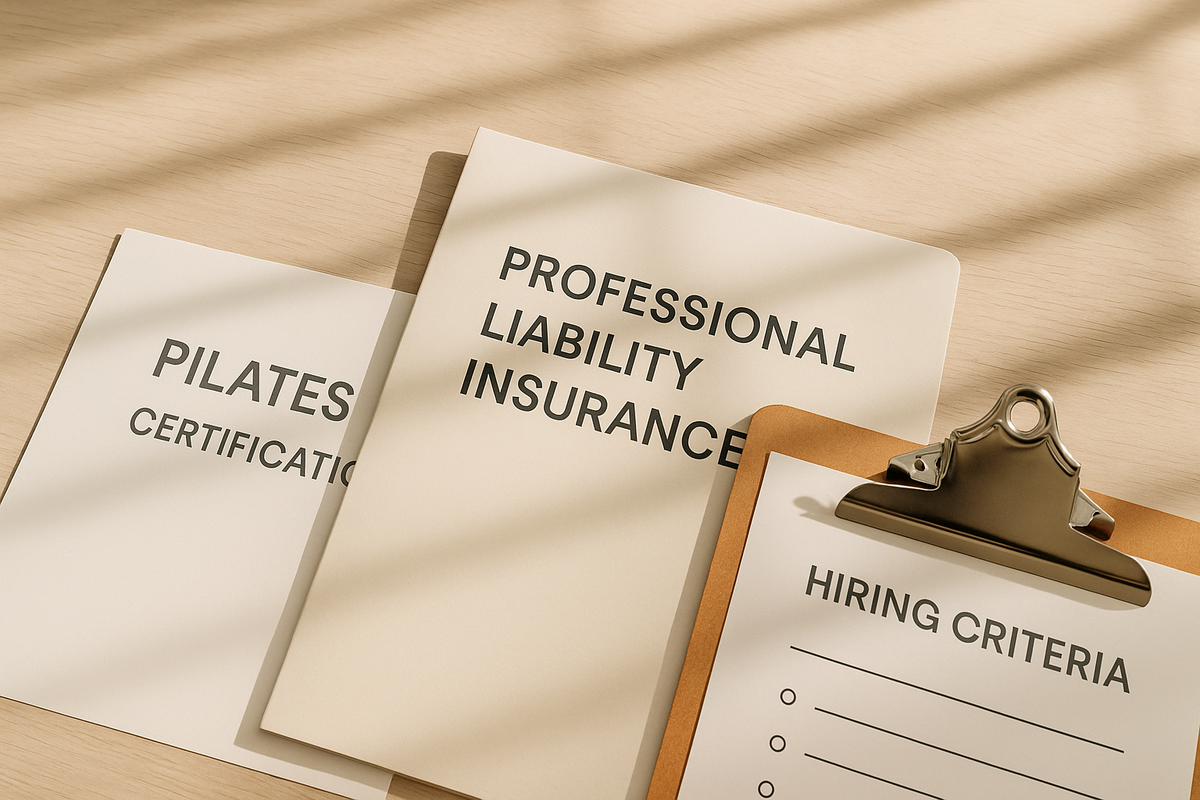
- No state license exists: No US state requires a Pilates teaching license, but certification from a recognized training program is the industry standard for employment and insurance coverage.
- Studios require 450+ hour certifications: Reputable studios list comprehensive certification (400–450 hours minimum) plus current CPR/AED as hiring requirements, with total certification costs ranging from $3,700 to $6,000+.
- Reformer training is now essential: Reformer certification has become essential rather than optional in 2026 studio hiring, with reformer instructors earning $62–$150 per hour compared to $33.86–$40.84 for general instruction.
- Insurance requires certification: No insurance carrier will cover uncertified Pilates instruction, and teaching equipment outside your certified scope can result in denied claims.
- Studio owners face different requirements: Owners need business licenses and permits that vary by municipality, but instructors teaching classes are expected to hold recognized certification while owners may come from business backgrounds.
The Legal Reality: Why "License" Is the Wrong Word
No government body in the United States issues a Pilates teaching license. Pilates instruction is a self-regulated field, unlike licensed professions such as physical therapy or massage therapy that require state-issued credentials.
The confusion stems from terminology. People often use the word "license" when they mean certification, which is a credential from a private training program rather than legal permission from a government agency. In most US states, no specific license or certification is legally required to teach Pilates or even to own a studio.
What Studios Actually Require in 2026
The gap between legal requirements and employment reality is substantial. Reputable studios and gyms list certification as a hiring requirement, often a comprehensive certification of 400 hours or more, plus current CPR and first aid. Job postings from major employers reflect this standard consistently.
Club Pilates, one of the largest franchised studio networks, lists "current full apparatus Pilates Certification with 450 hours of experience or equivalent" as a requirement. Current CPR/AED certification is mandatory, and First Aid certification is strongly preferred across most studio job postings reviewed in 2026.
The 450-Hour Standard
The Pilates Method Alliance (PMA) recommends a minimum of 450 hours of training for a comprehensive certification. This typically includes classroom instruction, apprenticeship hours, self-study, and observation. Comprehensive Pilates certification costs $3,700 to $6,000+ and requires 450+ hours of training over 9 to 18 months, not including books ($300–$400) or exam fees ($200–$300).
To maintain certification, instructors must earn 14 continuing education credits (CECs) every two years. Major certification programs recognized in US hiring include Balanced Body, Polestar, BASI, STOTT PILATES, Power Pilates, and Fletcher.
The Reformer Shift: Equipment Training Is No Longer Optional
Reformer training has become essential for 2026 studio hiring, with mat-only certification rarely meeting equipment-based studio requirements. This represents a significant shift from earlier years when mat certification alone could open employment doors.
The compensation difference reflects market demand. Certified reformer instructors earn $62 to $150 per hour, compared to $33.86 to $40.84 hourly averages for general Pilates instruction. For studio operators, this means budgeting higher wages for apparatus-certified instructors and potentially limiting your hiring pool if you accept mat-only credentials.
Insurance and Liability: Where Certification Becomes Non-Negotiable
Most reputable carriers require proof of an active certification before issuing professional liability insurance to a Pilates instructor. This is where the legal versus practical distinction collapses entirely.
Coverage also follows your certified scope, so teaching Reformer with only a mat certification can leave a claim denied. For studio operators hiring independent contractors or employees, verifying that instructor certifications match the equipment they will teach is essential for maintaining your own liability protection.
The bottom line from insurance carriers is unambiguous: no insurance carrier will cover uncertified Pilates instruction, and if a client gets injured, you're personally liable with no coverage.
What Studio Owners Need to Know
Instructors who teach classes are generally expected to hold a recognized certification, while the owner can come from a business or investment background. You do not need to be a certified Pilates instructor to own a studio, but you will need certified staff.
Opening a Pilates studio typically involves several licenses and permits, with requirements varying by state, county, and municipality. These include business licenses, occupancy permits, health department clearances, and potentially zoning approvals. These are operational licenses, not Pilates-specific teaching credentials.
What This Means for Studio Operators
Editorial analysis, not reported fact:
The practical takeaway for hiring is straightforward: treat certification as mandatory even though it is not legally required. Your insurance carrier will, your clients expect it, and the competitive instructor market rewards it with measurably higher compensation. Studios that attempt to hire uncertified instructors to save on wages expose themselves to uninsurable liability and reputational risk.
For budgeting, factor in that reformer-certified instructors command premium hourly rates, and that the pipeline of newly certified instructors carries a $4,000 to $6,000 training cost plus nine to 18 months of lead time. If you are expanding your team, consider whether you can support instructor trainees through apprenticeships or continuing education stipends to build loyalty and reduce turnover.
When reviewing resumes, verify that certifications cover the specific apparatus your studio uses. A mat certification does not cover reformer, and a reformer certification may not cover tower, chair, or barrel work depending on the program. Mismatches between certified scope and assigned teaching responsibilities are the most common insurance denial scenario.
Sources & Further Reading
- Coreva Pilates on Pilates certification requirements, June 2026 overview of legal versus industry standards
- The Real Cost of Pilates Certification, May 2026 cost breakdown for comprehensive training
- The 2026 Pilates Instructor Shortage Is About Sustainability, May 2026 analysis of reformer training trends
- Insure Fitness guide to becoming a Pilates instructor, May 2026 insurance and certification requirements
- How to Open a Pilates Studio, June 2026 operational licensing for studio owners
- Wellsphere Pilates Instructor Requirements and Salary Guide, July 2026 compensation data
Editorial coverage of publicly reported industry developments. The Pilates Business has no commercial relationship with any companies named.