Smart Reformers & the 2026 Equipment Buying Decision
The smart Pilates reformer market hit $1.26B in 2024 and is growing 8.2% annually. How AI, sustainability, and franchise standardization are reshaping studio equipment strategy.

Key Takeaways
- Smart reformer market growth: The global smart Pilates reformer market reached $1.26 billion in 2024 and is projected to grow at 8.2% annually to $2.52 billion by 2033, driven by AI-powered form correction, motion sensors, and app connectivity.
- Commercial studio capital requirements: A fully outfitted boutique studio with six reformers, one Cadillac, and accessories requires $40,000–$80,000 in upfront investment, with individual commercial reformers typically priced at $3,000–$6,000 before tech upgrades.
- Bulk purchasing advantages: Purchasing reformers in sets of four to six units reduces per-unit cost by 15–30%, but premium commercial equipment currently ships with 8–16 week lead times that affect studio opening schedules.
- Franchise standardization trends: Emerging franchise concepts like Pilates Addiction deploy proprietary equipment as a competitive differentiator, while brands like JetSet Pilates have signed over 200 franchise agreements with plans for 50 open studios by early 2026.
- Sustainability and modularity: Equipment innovation in 2026 emphasizes eco-friendly materials including carbon fiber and nanomaterials, plus modular, space-efficient systems aligned with Pilates' minimalist ethos.
- Industry consolidation signal: Merrithew's acquisition of Align-Pilates Equipment in November 2024 reflects mid-tier supplier consolidation and portfolio expansion among legacy commercial brands.
Why Equipment Decisions in 2026 Lock Studios Into Five-to-Ten-Year Cycles
The Pilates equipment market has entered a pivotal inflection point. When iFIT acquired Reform RX, transforming it into NordicTrack Pilates with a connected reformer ecosystem, the acquisition signaled that smart hardware is no longer experimental. For studio operators and instructors making equipment decisions in 2026, the choice is no longer simply Balanced Body versus Merrithew or reformer versus mat. The decision now involves whether to invest in AI-connected hardware, verify durability specifications for high-volume commercial use, and align purchasing with franchise equipment standards or remain independent.
According to market research published in 2025, the global smart Pilates reformer market reached $1.26 billion in 2024 and is projected to expand at a compound annual growth rate of 8.2% from 2025 to 2033, reaching an estimated $2.52 billion by 2033. Equipment purchases made this year will define studio operations through the early 2030s, making 2026 a decision year with decade-long consequences.
The Smart Reformer Wave: AI-Driven Form Correction and Real-Time Resistance
Modern smart reformers integrate motion sensors, AI-driven form correction, and resistance profiles that adapt in real time during sessions. Yfete McGaffin, Director of Product at iFIT, predicts that reformers and platforms will quietly adapt to the individual, measuring effort, guiding alignment, and elevating technique without breaking the instructor's flow. Per McGaffin's recent commentary, technology will not replace instructors but will empower them, creating more personalized, precise, and intuitive client experiences.
Recent funding activity validates the commercial viability of smart-hardware ventures. Pavo Fitness raised over $650,000 on Kickstarter from more than 350 backers for its AI-powered foldable Pilates reformer, positioning the product at the intersection of luxury design and artificial intelligence. Reform RX, now branded as NordicTrack Pilates, offers a commercial-grade, digitally connected reformer featuring smart-spine technology that tracks every movement and delivers real-time and post-workout feedback with measurable performance metrics.
Leading manufacturers including Balanced Body, Merrithew, and Peak Pilates are prioritizing technological differentiation through AI-driven workouts and app connectivity, alongside strategic partnerships with commercial studios. Balanced Body and Gratz Industries together hold approximately 35% of the commercial reformer market, establishing benchmarks for durability and performance in high-volume studio environments.
Commercial Studio Capital Investment: $40,000–$80,000 for Full Equipment Packages
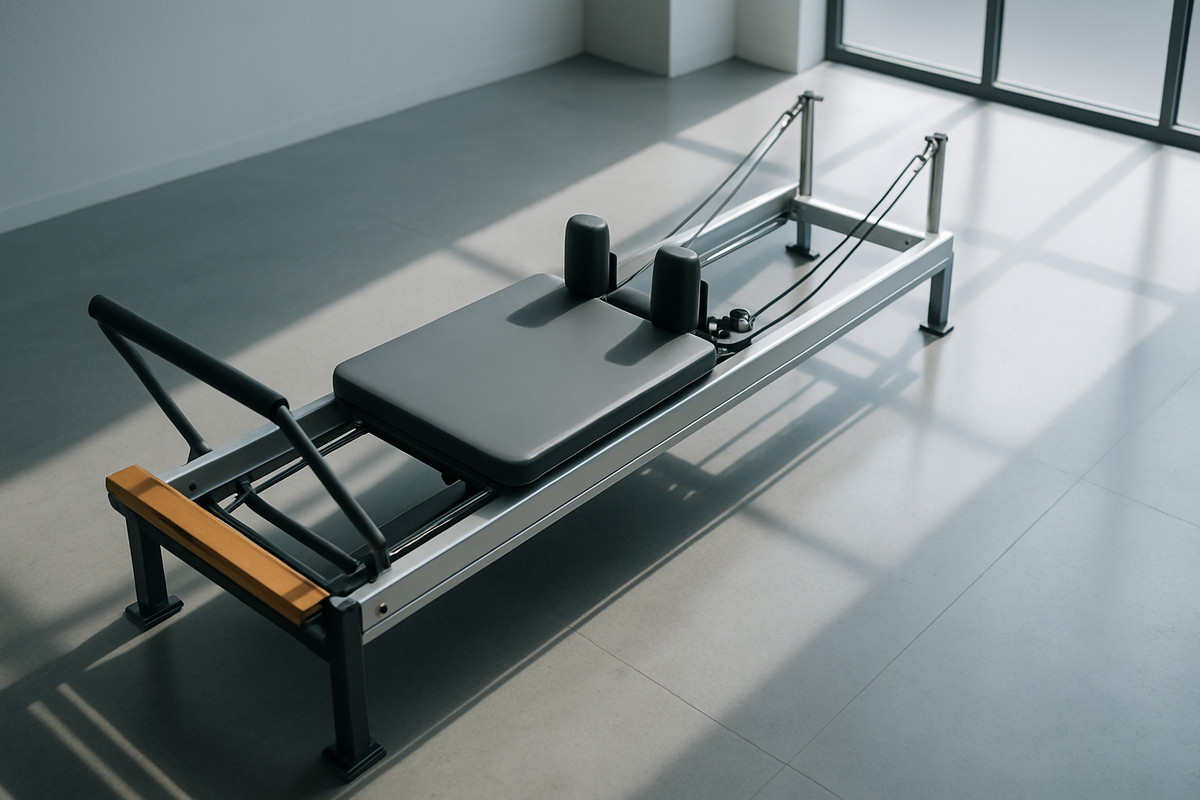
A fully outfitted boutique studio with six commercial reformers, one Cadillac, and a complete accessory set typically requires a capital investment between $40,000 and $80,000, depending on brand, configuration, and whether smart-connected features are included. Individual commercial reformers generally cost $3,000–$6,000, with premium tech-enabled models priced higher based on features and included accessories.
Purchasing equipment in sets of four to six units typically reduces per-unit cost by 15–30% compared to buying individually, making bundles the most practical choice for studios scaling their reformer count. However, premium commercial Pilates equipment often ships with 8–16 week lead times as of mid-2026, requiring studios to plan opening timelines and pre-sale campaigns accordingly to avoid revenue delays.
When selecting reformers for commercial settings, prioritize specifications that reduce maintenance and enhance instructor efficiency. The Align Pilates A8-Pro delivers commercial-grade performance with 113 cm carriage travel that matches top-tier commercial ranges. Its 8-wheel polyurethane glide system produces the smooth, quiet ride necessary for full-day teaching schedules. What distinguishes the A8-Pro is the Align Pilates service kit ecosystem, where springs, wheels, ropes, and upholstery panels are available as affordable replacement parts rather than expensive proprietary repairs.
Critical specs for high-volume commercial use include quiet, smooth ride enabled by 8-wheel polyurethane carriage systems that reduce noise and require less upkeep, plus fast setup changes facilitated by rapid-change spring bars that save time between back-to-back classes.
Franchise Equipment Standardization and Proprietary Hardware Strategies
Emerging Pilates franchise concepts are leveraging proprietary equipment as a competitive differentiator and brand identity anchor. Pilates Addiction, led by CEO Sarah Luna, a former Club Pilates executive, uses proprietary WundaFormer machines to distinguish its studio experience. According to recent franchise industry reports, Pilates Addiction's new studios are preselling dozens of memberships before opening, driven by the brand's proprietary equipment, studio design, and go-to-market sales and marketing strategies executed by local franchise operators.
JetSet Pilates, founded in 2010, has expanded rapidly in recent years, recently surpassing 200 franchise agreements signed with plans to have 50 studios open by the beginning of 2026. Franchise concepts typically mandate specific equipment suppliers and models to maintain brand consistency and instructor training standardization across locations, a consideration for studio operators evaluating franchise affiliation versus independent operation.
Sustainability Innovation: Eco-Friendly Materials and Modular Systems
iFIT predicts that 2026 will feature a rise in modular, space-efficient, and sustainable equipment systems, a trend directly influenced by Pilates' minimalist design ethos. Product innovations such as BASI Systems' enhanced pulley system reformer and the shift toward eco-friendly materials including nanomaterials and carbon fiber are key factors contributing to market expansion, per recent industry analysis.
The rising demand for lightweight, sustainable equipment, coupled with Pilates' growing popularity in developed countries, further fuels market growth. Studios prioritizing environmental responsibility in their brand positioning may find sustainable equipment lines resonate with wellness-focused clients seeking alignment between fitness practice and environmental values.
Industry Consolidation: Merrithew Acquires Align-Pilates Equipment
Merrithew acquired Align-Pilates Equipment in November 2024, signaling consolidation among mid-tier commercial suppliers and strengthening Merrithew's portfolio depth. This acquisition reflects a broader trend of legacy brands expanding market share through strategic purchases of established suppliers with loyal commercial customer bases.
For studio operators, consolidation may affect parts availability, service networks, and the long-term viability of niche equipment brands. Evaluating manufacturer stability and post-acquisition support commitments is an increasingly relevant consideration when making capital equipment purchases with expected lifespans of seven to ten years.
Market Growth Projections: $450 Million by 2030 and 10% Year-Over-Year Increases
The Pilates equipment market is rising 10% year-over-year, with projections indicating the market will eclipse $450 million by 2030, according to Technavio's 2025 market analysis. The market size is valued to increase by $218.52 million at a compound annual growth rate of 14.2% from 2025 to 2030. Global market projections vary by research firm, with estimates ranging from a CAGR of 8.5% to 16.62% through 2033, reaching between $1.2 billion and $15.07 billion depending on segment definitions and geographic scope.
This growth is driven by increasing Pilates adoption in corporate wellness programs, the expansion of franchise concepts into secondary and tertiary markets, and the integration of Pilates equipment into multi-modality fitness facilities that previously offered only mat classes or yoga.
What This Means for Studio Operators
Editorial analysis — not reported fact:
Studio operators making equipment decisions in 2026 face a fundamentally different landscape than those who purchased reformers even three years ago. The arrival of AI-powered feedback and connected ecosystems introduces both opportunity and risk. Smart reformers create new revenue possibilities through hybrid in-studio and digital memberships, performance tracking that increases client retention, and marketing differentiation in competitive markets. However, the technology also introduces dependencies on software subscriptions, firmware updates, and the financial stability of hardware manufacturers operating in a nascent category.
For studios opening or expanding this year, the 8–16 week lead times on premium commercial equipment require aggressive pre-sale timelines and lease negotiations that account for delayed revenue. The 15–30% bulk-purchase discount available on four-to-six reformer orders makes a compelling case for larger initial equipment buys rather than phased expansion, particularly for operators with strong pre-sale traction or franchise funding.
Independent studio operators should weigh the trade-offs between franchise equipment standardization and purchasing flexibility. Franchise affiliation provides negotiated equipment pricing, established supplier relationships, and brand recognition that accelerates pre-sales. However, proprietary equipment mandates lock operators into specific supply chains and limit future pivots to newer technologies or sustainability-focused brands.
The Merrithew acquisition of Align-Pilates Equipment underscores the importance of evaluating manufacturer longevity and post-sale support infrastructure. Studios betting on niche brands should verify parts availability, certified technician networks, and whether warranties transfer in the event of future acquisitions. The 5–10 year replacement cycle for commercial reformers means that a 2026 purchase will still be in active use in 2031–2036, making long-term supplier viability a material financial consideration.
Finally, the sustainability and modularity trends present both a marketing opportunity and a practical advantage for studios operating in space-constrained urban markets or targeting environmentally conscious demographics. Equipment that disassembles for storage, uses renewable materials, or ships with documented carbon offset programs can differentiate a studio's brand narrative while reducing real estate and operational costs.
Sources & Further Reading
- iFIT acquisition of Reform RX and NordicTrack Pilates ecosystem — details on connected reformer technology and product vision
- Market Research Future's 2025 smart Pilates reformer market analysis — global market sizing, growth projections through 2033
- Pavo Fitness Kickstarter campaign — AI-powered foldable reformer crowdfunding success
- Balanced Body commercial reformer product line — leading US manufacturer specifications and pricing
- Merrithew's acquisition of Align-Pilates Equipment — November 2024 consolidation transaction
- Align Pilates A8-Pro specifications and service kit ecosystem — commercial-grade reformer details
- Pilates Addiction franchise model and proprietary WundaFormer equipment — franchise differentiation strategy
- JetSet Pilates franchise growth and agreement count — expansion data through early 2026
- BASI Systems enhanced pulley reformer innovation — product development in sustainability and design
- Technavio's Pilates equipment market growth analysis — 2025–2030 market size projections
Editorial coverage of publicly reported industry developments. The Pilates Business has no commercial relationship with any companies named.