Teaching Identity: Classical vs. Contemporary Pilates in 2026
How the classical-contemporary divide shapes instructor careers, from lineage claims and certification costs to equipment choice and the legitimacy gap.

Key Takeaways
- Instructor identity in 2026 Pilates is shaped by a decisive methodological fork: classical practitioners preserve Joseph Pilates' original sequences and equipment specifications through direct lineage claims, while contemporary instructors adapt the method using modern biomechanics and rehabilitation science.
- Certification pathways diverge significantly: comprehensive classical programs (600+ hours) cost $4,500–$5,500 and emphasize generational lineage from Romana Kryzanowska and other direct Pilates students, while contemporary mat-only certifications start under $1,000 and complete in months, creating a legitimacy gap between rigorously trained and minimally credentialed contemporary instructors.
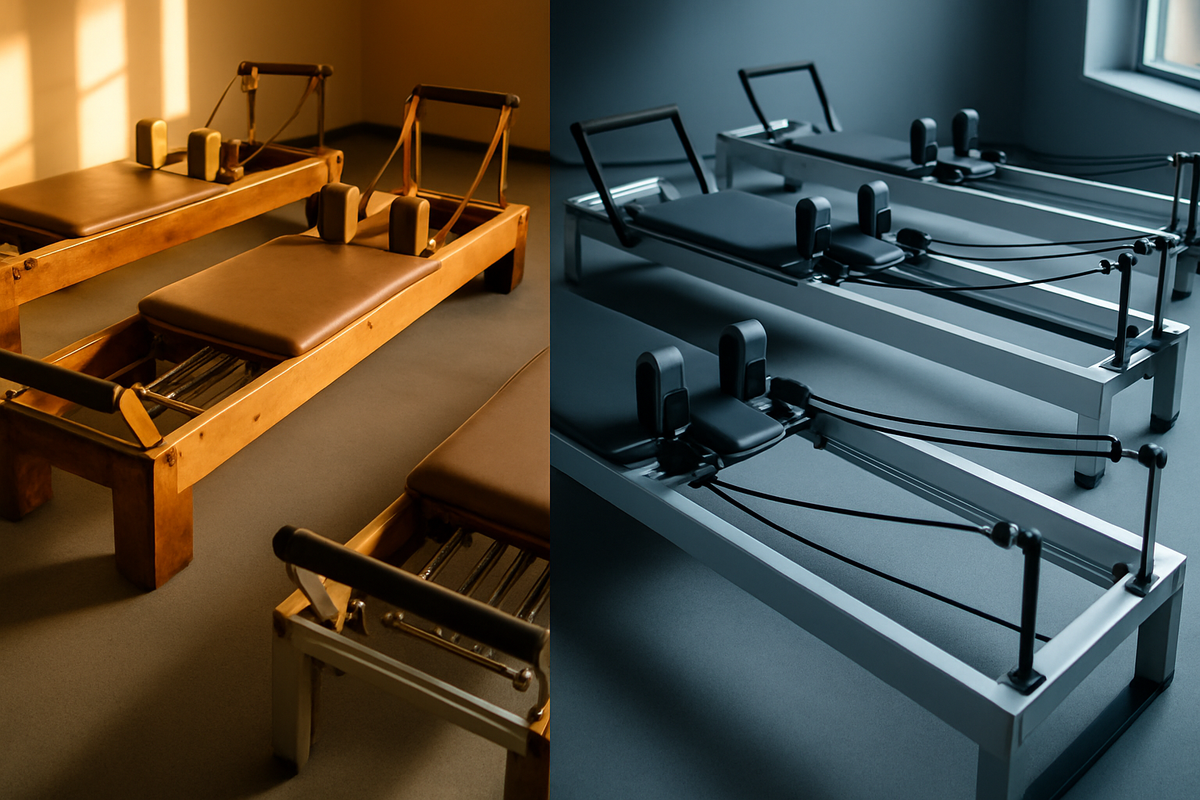
- Equipment choice functions as identity marker: classical studios use Gratz apparatus built to original 1920s–1940s specifications with uniform spring tension and leather straps, while contemporary reformers feature adjustable components designed to accommodate wider populations and injury modifications.
- Teaching philosophy splits on system completeness: classical instructors teach Pilates as an interconnected whole with prescribed exercise sequences, often in private or semi-private sessions Joseph Pilates himself used, while contemporary teachers mix exercises into group reformer classes (10+ clients) that purists note Joseph never taught.
- Hybrid positioning has emerged as market strategy: many instructors in 2026 identify as "classical base with contemporary application," reflecting that most US studios now post "recognized Pilates certification" rather than requiring specific lineage, opening career options across traditions.
- The legitimacy crisis centers on variation: contemporary Pilates encompasses both years-long biomechanics-focused training and weekend gym workshops, creating professional confusion about what "teaching identity" means when 10 instructors in one room disagree on the right way to teach.
The Lineage Question: How Generational Distance Defines Classical Identity
In 2026, more than 10,500 Pilates studios operate across the United States, and the method has splintered into competing lineages that go far beyond simple technique differences. For classical instructors, lineage mapping to Joseph Pilates through figures like Romana Kryzanowska, Carola Trier, Kathy Grant, and Ron Fletcher provides a specific professional identity rooted in historical continuity. Power Pilates students, for example, stand just three or four generations from Joseph Pilates himself, carrying what the organization describes as "the responsibility and honor of preserving this classical legacy for future generations."
This generational language gives classical practitioners an authenticity claim that contemporary teachers cannot make. Notable classical schools including Romana's Pilates, Power Pilates, and The Pilates Center emphasize specific exercise order, traditional terminology, and no significant deviation from the original 1920s–1940s method. The identity becomes inseparable from direct transmission: you are classical because you learned from someone who learned from someone who worked with Joseph.
Contemporary Pilates answers the foundational question differently. According to Balanced Body and other contemporary training organizations, the divergence reflects whether Joseph Pilates' original method is complete as he designed it or a foundation to develop further. Contemporary schools including BASI, Stott, Polestar, and Balanced Body maintain core principles but adapt exercises and cueing using current biomechanics and rehabilitation science.
Certification Costs, Duration, and the Legitimacy Gap
The choice between classical and contemporary training represents a significant financial and time investment that shapes instructor careers from the start. Comprehensive classical programs require 600+ hours and cost between $4,500 and $5,500, while contemporary mat-only certifications can run under $1,000 and complete in months. Both pathways lead to employment in 2026, as most US studios now post "recognized Pilates certification" in hiring requirements rather than demanding specific lineage.
However, the contemporary pathway faces a legitimacy crisis that classical training largely avoids. As one industry analysis notes, a contemporary instructor could have studied for years perfecting biomechanics knowledge or taken a weekend workshop at a gym—by current definition both are Pilates instructors and both are contemporary. This variation in training rigor and ability creates professional confusion about what "teaching identity" actually means within the contemporary tradition.
Classical training's higher barriers to entry and tighter curricular control have thus far protected it from this credentialing dilution. The big classical and contemporary schools—BASI, Stott, Polestar, Romana's—carry industry recognition built over decades that proves especially useful for instructors seeking credential portability across markets or international teaching opportunities.
Equipment as Philosophical Statement: Gratz vs. Adjustable Apparatus
Equipment choice in 2026 functions as an immediate identity marker that communicates teaching philosophy before a single cue is given. Classical studios invest in Gratz apparatus, meticulously crafted to Joseph Pilates' original specifications with precise dimensions, correct spring tensions, and original materials including uniform tension and leather straps. The classical reformer was engineered to create specific challenges: the practitioner's body must find the engagement rather than the machine providing it.
Contemporary reformers, by contrast, feature adjustable components designed to support wider populations, including clients with injuries, varied body proportions, and different fitness backgrounds. This design philosophy reflects the contemporary teaching model: Pilates principles applied through individualized modifications rather than universal adherence to original sequencing.
Classical instructors view equipment comprehensiveness as essential. According to classical teaching philosophy, studios should use the complete Pilates system where each apparatus exercise builds synergistically upon others, rather than contemporary studios that typically focus on just one or two pieces of equipment. This distinction shapes studio business models: classical studios often maintainmat, reformer, Cadillac, chairs, barrels, and specialty apparatus, while contemporary boutiques may operate profitably with reformers alone.
Group Classes vs. Private Sessions: Joseph Never Taught 10-Person Reformer Flows
Perhaps the starkest teaching identity division concerns class format. Contemporary boutique studios offering group reformer classes have proliferated across the US market, yet purists note that Joseph Pilates himself never taught group apparatus classes, only private or semi-private sessions. This gap between Joseph's original teaching model and mass-market group reformer classes (often 10+ clients) represents a fundamental fracture in professional identity.
Classical instructors view Pilates as a complete, interconnected system where each exercise builds upon others in specific sequences crafted by Joseph himself—not arbitrary flows but intelligent progressions that maximize results. Teaching this system effectively, they argue, requires the attention and individualized cueing possible only in private or small semi-private formats.
Contemporary teachers counter that operational necessity and market access require group formats. Bodybar Pilates, for example, positions itself as middle ground between the classical style offered by brands like Club Pilates and the more hardcore athletic style of Lagree studios like Solidcore, appealing to clients who want both classic-type and athletic versions. Co-founder Matt McCollum told Athletech News in 2026 that this best-of-both-worlds approach reflects market demand, not pedagogical compromise.
The Hybrid Strategy: Classical Base, Contemporary Application
Faced with this identity divide, many instructors and training programs have adopted hybrid positioning. Programs like the IDP teacher training uniquely combine a classical Pilates base with a contemporary approach to biomechanics, giving graduates the ability to utilize the Pilates method to improve posture and alignment, increase joint mobility, and promote overall health while adapting to individual client needs.
This "classical-trained-and-flexibly-applied" identity has become common market strategy in 2026, reflecting the reality that most instructors don't identify as purely classical or purely contemporary. The approach allows teachers to claim lineage authenticity while maintaining the programming flexibility and group class formats that contemporary studios demand.
Yet the hybrid path doesn't resolve the underlying tension. As one industry observer notes, you could have 10 Pilates instructors in one room and they would probably never agree on what is the right way to teach—some believe classical foundation is a good start but one should always be willing to evolve, while no one can really say if one method is better than another. That determination, ultimately, remains a matter of opinion and professional values.
What This Means for Studio Operators
Editorial analysis—not reported fact:
Studio operators hiring in 2026 must recognize that "recognized Pilates certification" now encompasses instructors with profoundly different teaching identities, training philosophies, and equipment competencies. An instructor certified through a 600-hour classical program with Gratz apparatus training brings different skills, expectations, and marketing positioning than a contemporary mat-certified teacher trained in group reformer flows. Neither is inherently superior, but they are not interchangeable.
If your studio positioning emphasizes heritage, small group or private sessions, and apparatus variety, classical-trained instructors will align more naturally with your brand promise and may require less retraining on sequencing and cueing philosophy. If your business model depends on group reformer classes, contemporary instructors trained specifically in that format will be operationally easier to onboard, though you may face greater variation in foundational knowledge depending on certification rigor.
The hybrid instructor—classical base, contemporary application—may offer the best of both worlds or the weaknesses of both, depending on training quality and teaching experience. When hiring hybrid-identified instructors, probe deeply into both their lineage training hours and their practical group teaching experience. The label alone tells you little about actual competency in either tradition.
Sources & Further Reading
- Power Pilates classical training philosophy and lineage—explains generational connection to Joseph Pilates and classical preservation responsibility
- Balanced Body contemporary Pilates training—covers contemporary adaptation using modern biomechanics and rehabilitation science
- Pilates Anytime classical vs. contemporary analysis—detailed comparison of teaching philosophy, equipment standards, and instructor identity formation
- Athletech News coverage of Bodybar Pilates positioning—market strategy blending classical and athletic contemporary approaches in 2026
Editorial coverage of publicly reported industry developments. The Pilates Business has no commercial relationship with any companies named.